Diabetic Ischemic Toe Ulcer Following Revascularization
Clinical presentation, surgical treatment and documented healing.
- 01 / Problem
- Clinical presentation
- 02 / Procedure
- Surgical approach
- 03 / Outcome
- Healing & follow-up
Clinical photographs below include wounds and surgical treatment.
01 / CLINICAL PRESENTATION
Problem
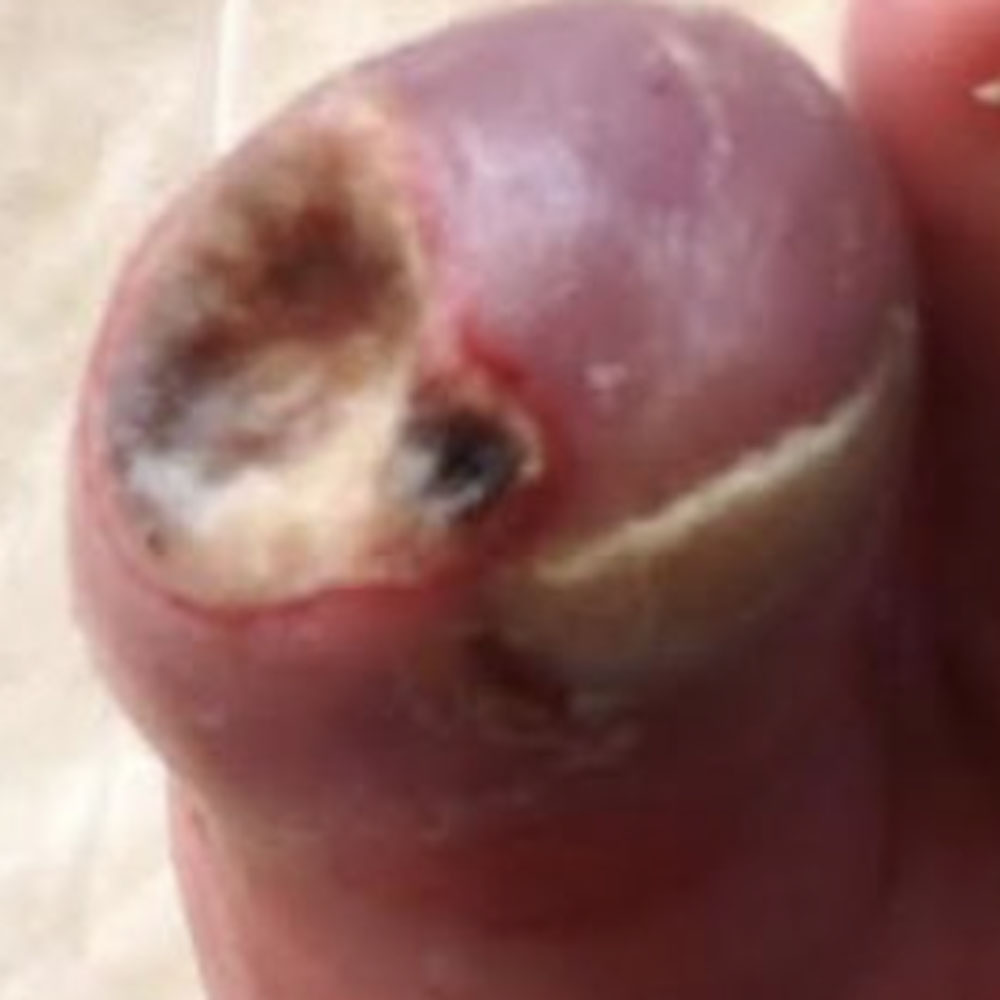
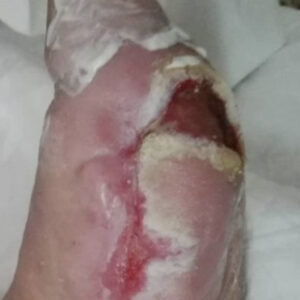
An 84-year-old woman presented with an infected ischemic diabetic toe ulcer caused by critical limb ischemia. Because adequate tissue perfusion is essential for wound healing, revascularization was required before definitive surgical wound management could be undertaken.
02 / SURGICAL APPROACH
Procedure
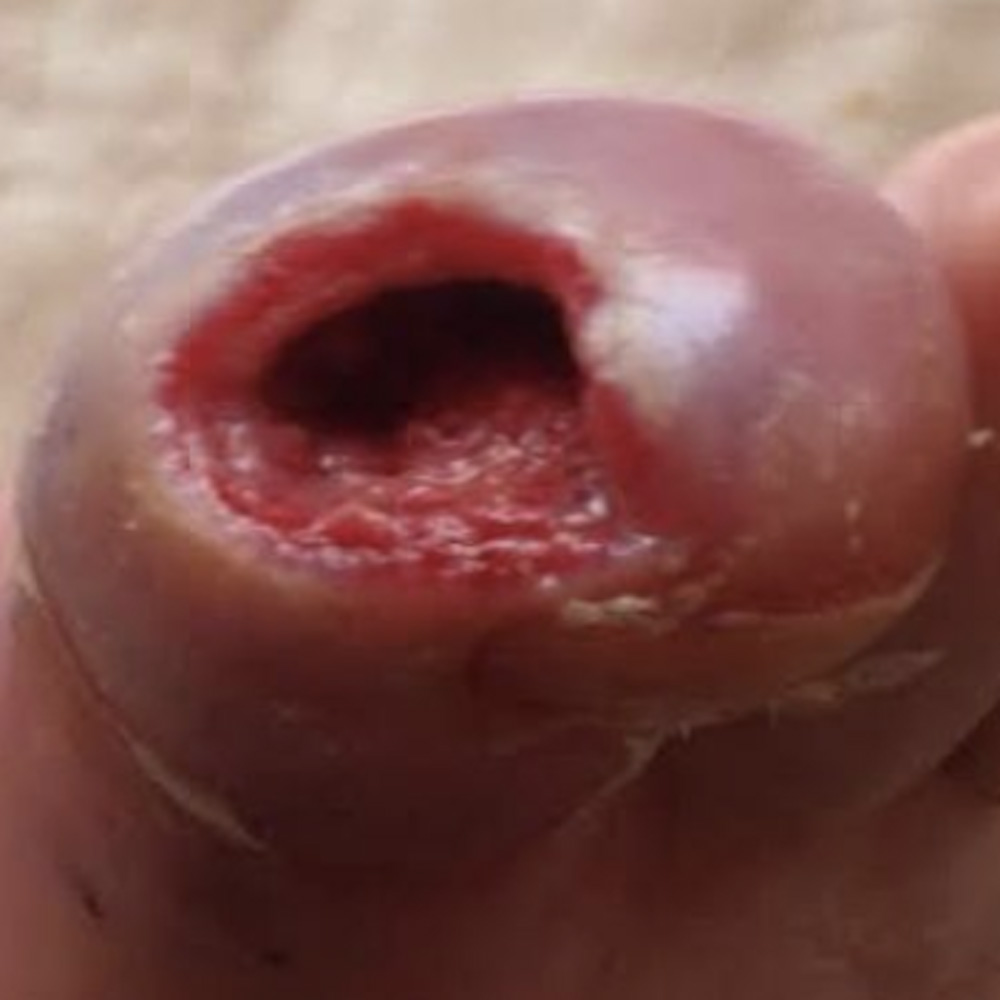
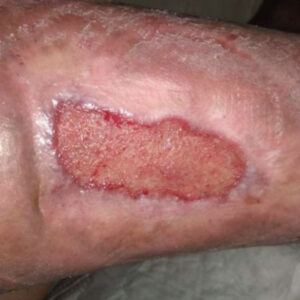
Successful lower-limb revascularization was performed, restoring adequate blood flow to the foot. Following reperfusion, surgical debridement removed all non-viable and infected tissue until healthy, bleeding margins were achieved, allowing the wound to heal by secondary intention.
03 / HEALING & FOLLOW-UP
Outcome
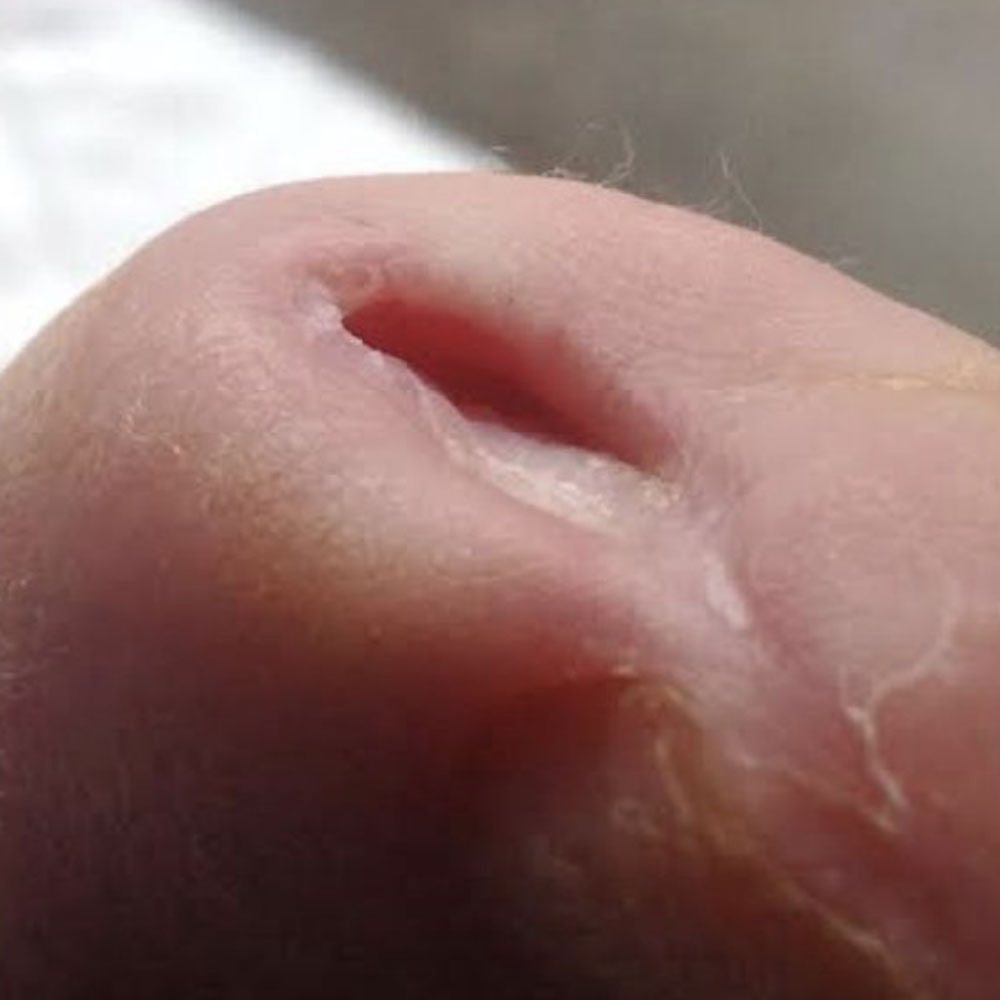
The wound healed completely within approximately 2.5 months, with preservation of the toe and resolution of the infection.
This case highlights that successful revascularization is often the cornerstone of limb salvage, transforming a non-healing ischemic wound into one capable of complete healing while avoiding amputation.
Concerned About a Diabetic Foot Problem?
Request a diabetic foot assessment and provide our team with the information needed to review your case.
Request a Diabetic Foot Assessment