Chronic Venous Leg Ulcer
Clinical presentation, surgical treatment and documented healing.
- 01 / Problem
- Clinical presentation
- 02 / Procedure
- Surgical approach
- 03 / Outcome
- Healing & follow-up
Clinical photographs below include wounds and surgical treatment.
01 / CLINICAL PRESENTATION
Problem
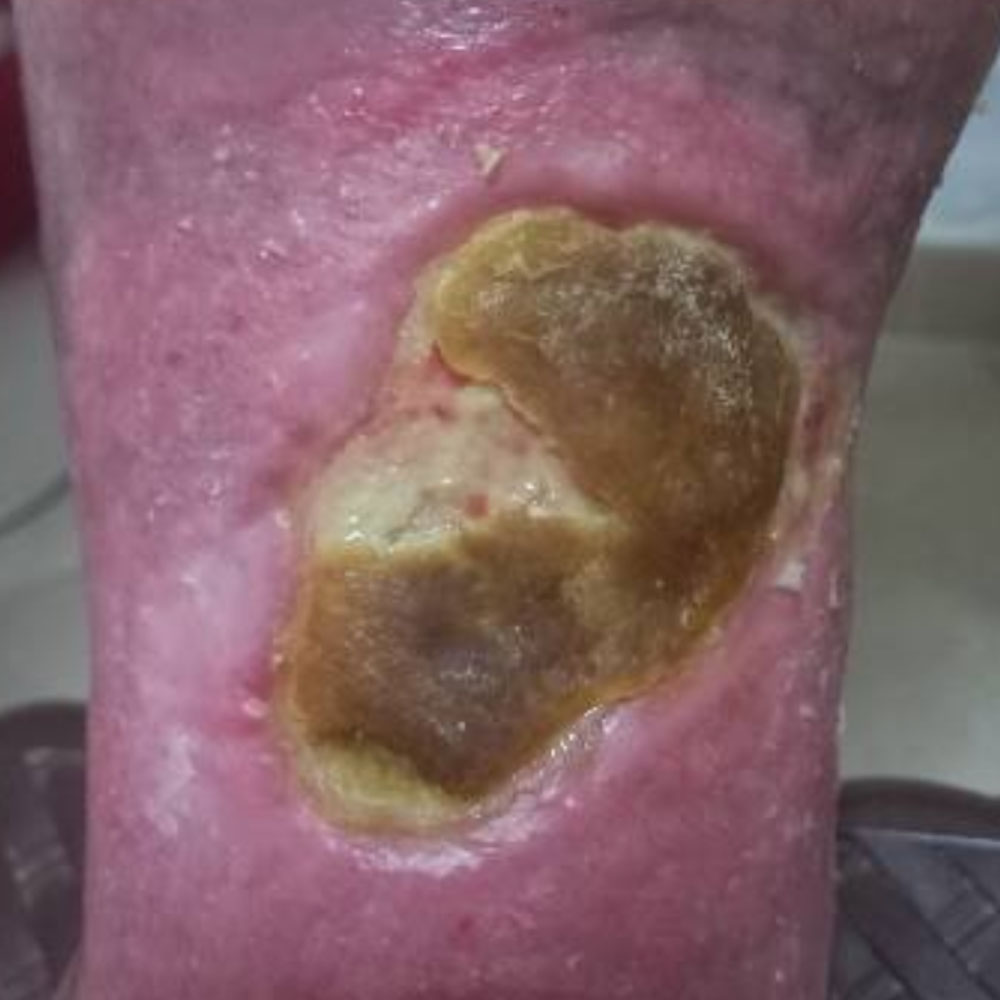
A 62-year-old woman with obesity presented with a chronic venous leg ulcer that had persisted for approximately four years despite prolonged conservative treatment. The ulcer remained painful, with extensive devitalized tissue and persistent inflammation, significantly limiting mobility and quality of life. The chronic nature of the wound made spontaneous healing highly unlikely without surgical intervention.
02 / SURGICAL APPROACH
Procedure
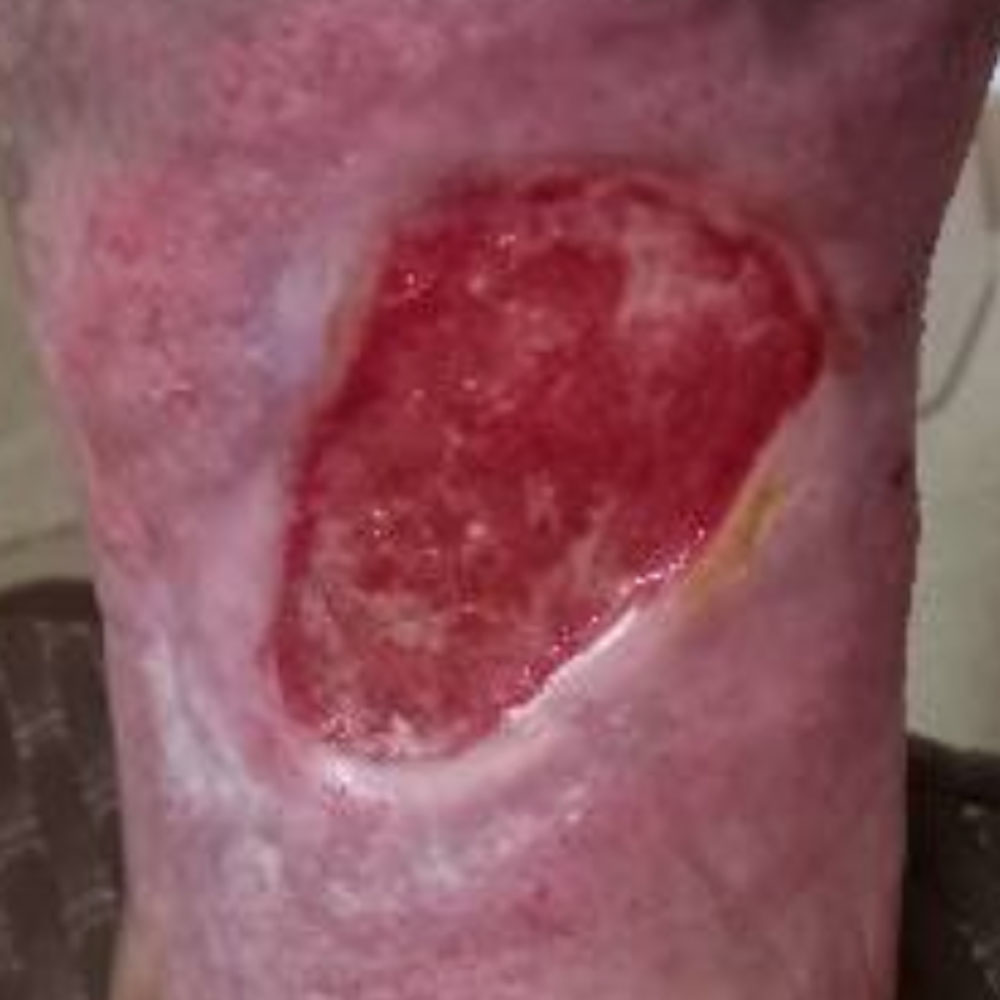
The ulcer was initially managed with meticulous surgical debridement to remove all non-viable tissue and create a healthy wound bed suitable for reconstruction. Once adequate granulation tissue had developed, a split-thickness skin graft was applied to achieve wound coverage. Throughout treatment, compression therapy with elastic bandaging was used to improve venous return, reduce edema, support graft integration, and promote optimal wound healing.
03 / HEALING & FOLLOW-UP
Outcome
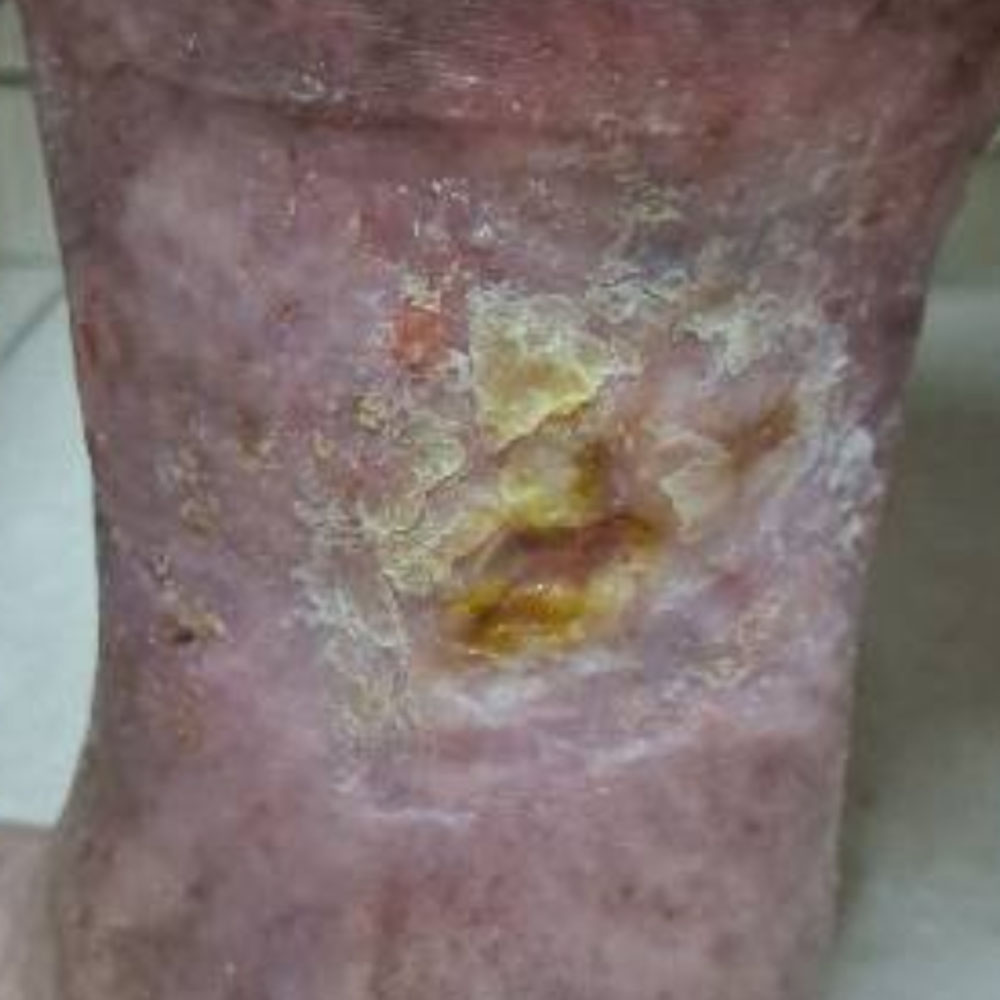
The wound progressively healed over approximately eight months, resulting in complete and durable closure. This case demonstrates that even long-standing venous ulcers can heal successfully when meticulous debridement, appropriate skin grafting, and sustained compression therapy are combined as part of a comprehensive limb-preservation strategy. The patient continues compression treatment to reduce the risk of recurrence and maintain long-term skin integrity.
Related Clinical Cases
Concerned About a Diabetic Foot Problem?
Request a diabetic foot assessment and provide our team with the information needed to review your case.
Request a Diabetic Foot Assessment