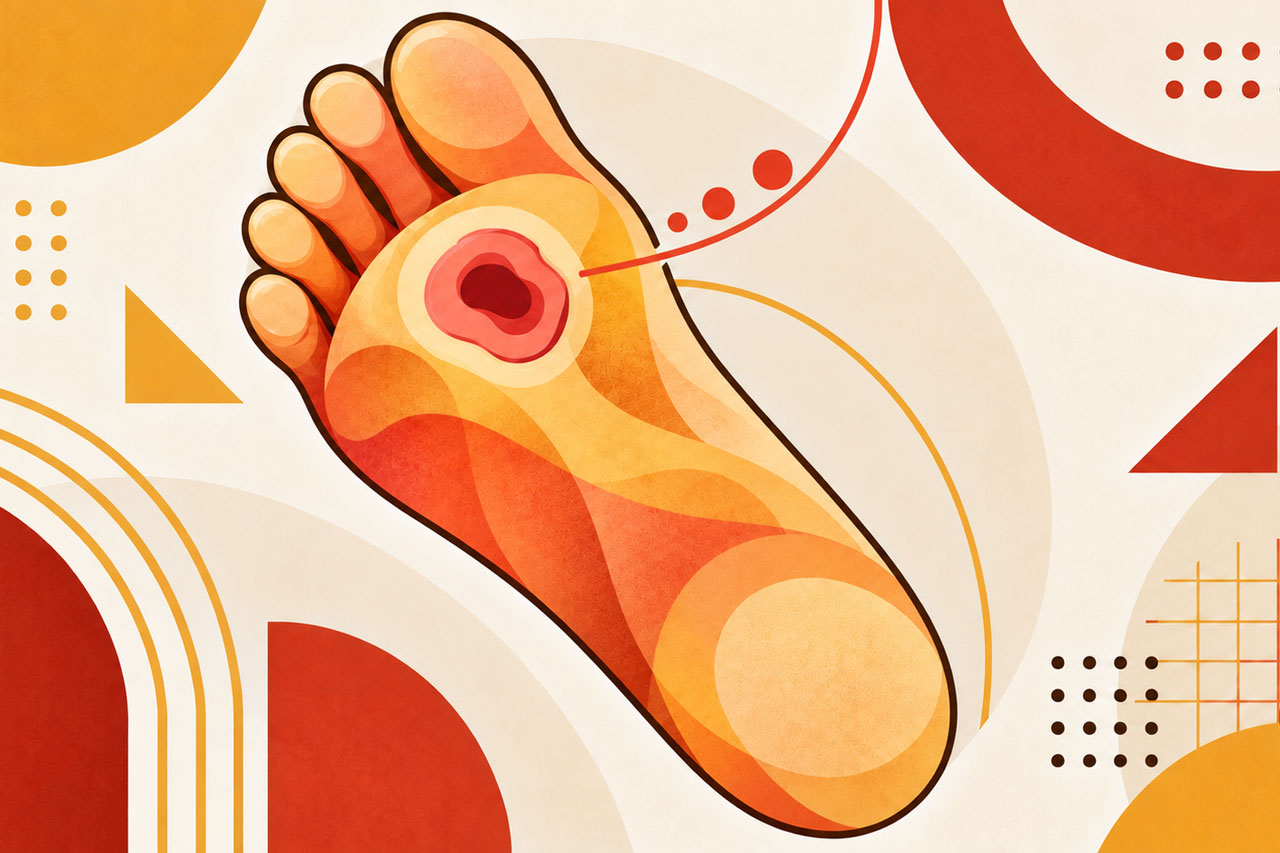
A diabetic foot ulcer is an open wound or area of skin breakdown on the foot of a person with diabetes. It may begin with something minor, such as a blister, cracked skin, a small cut, rubbing from footwear or a callus. However, diabetes can reduce sensation, impair circulation and delay healing. As a result, a small diabetic foot wound can become serious if it is not assessed promptly.
If you have diabetes and notice a new wound, blister, swelling, discharge, change in skin colour or damaged skin on your foot, arrange medical assessment promptly. Do not wait for the area to become painful. Diabetic neuropathy may prevent you from feeling the injury or the pressure that is making it worse.
When to Seek Urgent Medical Help
Seek urgent medical assessment if redness is spreading, swelling or warmth is increasing, pus or an unpleasant smell develops, bleeding does not stop, or tissue becomes black or rapidly changes colour. Fever, chills, marked weakness or feeling generally unwell may indicate a more serious infection. A deep wound, a rapidly enlarging ulcer, or a foot that becomes cold, pale, blue or suddenly painful also requires urgent evaluation.
What Is a Diabetic Foot Ulcer?
A diabetic foot ulcer is a break in the skin that may extend into the deeper tissues of the foot. It may be difficult to heal because of continued pressure, loss of protective sensation, reduced blood flow or infection. Ulcers can occur on the sole, toes, heel or sides of the foot, particularly at sites exposed to repeated pressure or friction.
An ulcer is not automatically infected. Infection is diagnosed clinically from local or systemic signs of inflammation, not simply from the presence of an open wound or bacteria in a wound sample.
Why Do Diabetic Foot Ulcers Develop?
Diabetic Neuropathy and Loss of Protective Sensation
Diabetic neuropathy can reduce the ability to feel pain, heat, sharp objects, rubbing or excessive pressure. This is known as loss of protective sensation.
A seam in a sock, a tight shoe or a small stone may then cause repeated injury without being noticed. If the pressure continues, the skin can break down and an ulcer may develop without the usual warning of pain.
Pressure, Friction and Repetitive Trauma
Every step places force on the foot. Foot deformity, limited joint movement, a prominent bone, thick callus or poorly fitting footwear can concentrate that force in a small area.
A callus is not always harmless. It may indicate repeated pressure, and bleeding or tissue damage can develop beneath it. Once the skin breaks down, continued walking on the same area repeatedly damages the wound and prevents healing.
Poor Circulation and Peripheral Arterial Disease
Peripheral arterial disease (PAD) narrows the arteries and reduces blood flow to the legs and feet. Because damaged tissue needs oxygen and nutrients to heal, inadequate perfusion can delay healing and increase the risk of tissue loss.
Neuropathy, mechanical pressure and poor circulation often coexist. Their combined effect can make an apparently minor wound much more difficult to heal.
Where Do Foot Ulcers in People with Diabetes Usually Develop?
Diabetic foot ulcers commonly occur at sites of high pressure or repeated rubbing, including:
- the ball of the foot, particularly beneath the metatarsal heads
- the underside or tips of the toes
- the heel
- the outer edge of the foot
- the top or side of a toe where footwear rubs
- beneath a callus or near a foot deformity
An ulcer may also follow a blister, burn, unnoticed cut or injury during nail or callus care. The soles and the spaces between the toes should be checked carefully because they are easy to overlook.
What Does a Diabetic Foot Wound Look Like?
A diabetic foot ulcer may appear as a shallow area of broken skin, an open blister, a crater-like wound or a wound with drainage. The surrounding skin may be dry, thickened, callused, red, pale, purple or darkened.
Yellow material, slough or dead tissue may be visible. Necrotic tissue can appear black, brown or grey. Importantly, a wound that looks small at the surface may extend much deeper beneath the skin. Its visible diameter alone does not show its true severity.
What Are the Early Warning Signs of a Foot Ulcer?
Early Warning Signs
Early changes include a new callus, blister, crack in the skin, redness, local warmth, swelling or a change in the colour or shape of the foot. Wetness or unexplained staining in a sock or shoe may be the first sign of drainage. Because sensation may be reduced, these visible changes may appear before pain.
Signs That May Suggest Infection
Increasing redness, warmth, swelling, tenderness, purulent discharge, unpleasant odour and deterioration of the wound may indicate infection. Neuropathy and poor circulation can make the usual inflammatory signs less obvious, so limited pain does not exclude a serious infection. Fever, chills or general illness suggest a more severe process and require urgent assessment.
Why Is a Diabetic Foot Wound Not Healing?
A non-healing diabetic foot ulcer usually has one or more underlying causes that must be identified. Common reasons include:
- continued pressure or repeated walking on the affected area
- infection in the wound or surrounding tissues
- reduced blood flow caused by peripheral arterial disease
- thick callus, debris or non-viable tissue at the wound
- extension into deeper soft tissues, a joint or bone
- poor glycaemic control or other medical conditions that impair healing
A deep or long-standing ulcer may involve tendons, joints or bone. Infection that reaches bone causes osteomyelitis. A wound that is deteriorating, becoming deeper or failing to improve should therefore be assessed by an experienced diabetic foot team rather than treated at home.
How Is a Diabetic Foot Wound Assessed?
Clinical assessment includes the ulcer’s location, size, depth and edges; the amount and character of drainage; the condition of the surrounding skin; and the presence of callus, necrotic tissue or infection. The clinician also evaluates sensation, foot deformity, pressure distribution, footwear and any history of previous ulceration.
Circulation must be assessed as part of the same evaluation. Examination may include the colour and temperature of the foot, palpation of pulses and further vascular testing when indicated. The purpose is to determine whether the ulcer is predominantly neuropathic and pressure-related, ischaemic, infected, or caused by a combination of these factors. If deeper tissue or bone involvement is suspected, additional investigations may be required.
How Is a Diabetic Foot Ulcer Treated?
Treatment depends on the cause, depth and severity of the ulcer. Successful management addresses the wound itself, mechanical pressure, infection and perfusion together rather than treating only the visible skin defect.
Pressure Relief and Offloading
Offloading means reducing mechanical pressure on the ulcer so that the tissue is not injured again with every step. Depending on the wound and the person’s clinical condition, it may involve a cast, removable walker, therapeutic footwear, insole, padding or temporary restriction of weight-bearing.
The offloading method must be selected by a clinician after considering the ulcer’s location, circulation, infection, balance, mobility and ability to use the device safely. Simply trying to walk less is not a substitute for an appropriate offloading plan.
Wound Care and Debridement
Professional wound care may include cleansing and an appropriate dressing to protect the ulcer, manage exudate and maintain a suitable healing environment. The wound must also be reviewed regularly so that changes are recognised early.
Debridement is the removal of callus, debris or non-viable tissue when clinically appropriate. It can expose the true depth of the ulcer, reduce pressure at its margins and prepare the wound bed for healing. Calluses or dead tissue should never be cut at home, and chemical corn-removal products should not be used on a diabetic foot.
Advanced Wound Healing and Long-Term Wound Closure
Some complex or postoperative wounds require more than a basic dressing after infection has been controlled, adequate perfusion has been established, pressure has been relieved and the wound bed has been prepared. In selected cases, advanced wound-healing strategies may include negative pressure wound therapy (VAC), tissue matrices, placental-derived products or other biological wound products. Their purpose may be to manage exudate, support granulation tissue, provide temporary tissue coverage or assist closure.
These treatments are not interchangeable and are not routinely appropriate for every diabetic foot ulcer. Negative pressure wound therapy is mainly supported as an adjunct for selected postsurgical diabetic foot wounds. Biological products or graft-based therapies may be considered for carefully selected non-healing ulcers when best standard care alone has been insufficient and the wound is suitable for their use.
Treating Infection and Using Antibiotics
Not every diabetic foot ulcer requires antibiotics. Antibiotics are indicated when clinical examination shows infection; they should not be used for an uninfected ulcer simply to prevent infection or accelerate healing. They also do not replace offloading, wound care, debridement or assessment of circulation.
When infection is present, treatment depends on its severity and extent. Tissue or bone samples may be required in selected cases. Moderate or severe infection may require hospital care, intravenous antibiotics, urgent drainage, removal of infected or necrotic tissue, or other surgery.
Restoring Blood Flow When Circulation Is Reduced
If reduced perfusion contributes to tissue damage or delayed healing, vascular assessment is essential. When appropriate, revascularisation may improve blood flow and create the conditions needed for wound healing and limb preservation.
When Does a Foot Wound in Diabetes Need Urgent Medical Assessment?
Every newly discovered ulcer on a diabetic foot should be assessed promptly. Urgent assessment is particularly important when the wound is rapidly enlarging or deepening, develops pus or odour, is surrounded by spreading redness or swelling, contains black tissue, or is accompanied by fever or general illness.
Urgent advice is also needed if the foot becomes unusually cold, pale, blue or suddenly painful, if a deep structure is visible, or if a foreign object may have entered the foot. These changes should not be observed at home while waiting to see whether they improve.
Can a Foot Ulcer Lead to Osteomyelitis or Amputation?
An ulcer can progress to deep soft-tissue infection, osteomyelitis, necrosis or gangrene, particularly when pressure, infection or poor circulation is not addressed promptly. These complications increase the risk of tissue loss and amputation.
Amputation is not inevitable. Early recognition, effective offloading, appropriate wound care, timely control of infection and restoration of blood flow when needed can promote healing and help preserve the foot.
How Can Foot Ulcers in People with Diabetes Be Prevented?
Prevention depends on identifying small problems before they become open wounds. Daily care is especially important for people with neuropathy, peripheral arterial disease, foot deformity, a previous ulcer or a previous amputation.
- Inspect the tops, soles, heels and spaces between the toes every day.
- Use a mirror or ask for help if you cannot see the soles clearly.
- Check the inside of footwear before putting it on.
- Wear well-fitting footwear and clean socks, and avoid walking barefoot, even indoors.
- Keep the feet clean and dry. Use moisturiser on dry skin, but not between the toes.
- Do not treat corns, calluses, ingrown nails or skin wounds yourself.
- Arrange regular foot assessment and seek professional advice promptly for any new change.
Frequently Asked Questions About Diabetic Foot Ulcers
Can a Diabetic Foot Ulcer Heal Completely?
Yes. Many diabetic foot ulcers can heal when the factors responsible for the wound are identified and treated. Pressure, infection, reduced blood flow and non-viable tissue are particularly important. After healing, the area remains vulnerable to recurrence, so protective footwear, daily inspection and follow-up remain necessary.
Why Does My Foot Wound Not Hurt?
Diabetic neuropathy can reduce protective sensation. You may not feel pressure or tissue damage normally, so the absence of pain does not mean that an ulcer is superficial or safe.
Do All Diabetic Foot Ulcers Need Antibiotics?
No. Antibiotics are used when there is clinical evidence of infection. An uninfected ulcer still requires appropriate assessment and may need offloading, wound care, debridement or vascular evaluation.
How Can I Tell if a Diabetic Foot Wound Is Infected?
Possible signs include increasing redness, warmth, swelling or tenderness, purulent discharge, unpleasant odour and progressive deterioration. Fever, chills or feeling unwell may indicate a more severe infection. Because neuropathy can reduce pain and PAD can mask inflammation, professional assessment is important whenever infection is suspected.
When Should a Non-Healing Foot Wound Be Assessed by a Specialist?
A new ulcer should be assessed promptly. Specialist diabetic foot, surgical or vascular evaluation is particularly important when the ulcer is deep, recurrent, infected, associated with reduced circulation, failing to heal or suspected to involve bone.
The Bottom Line
A diabetic foot ulcer may begin with a small, painless injury but can progress if its cause is not recognised. Effective treatment addresses the wound, pressure on the foot, infection and blood flow. If you notice a wound or new skin breakdown on a diabetic foot, seek assessment early rather than waiting for pain or deterioration.