Salvage of the Last Remaining Ray Following Previous Partial Foot Amputation
Clinical presentation, surgical treatment and documented healing.
- 01 / Problem
- Clinical presentation
- 02 / Procedure
- Surgical approach
- 03 / Outcome
- Healing & follow-up
Clinical photographs below include wounds and surgical treatment.
01 / CLINICAL PRESENTATION
Problem
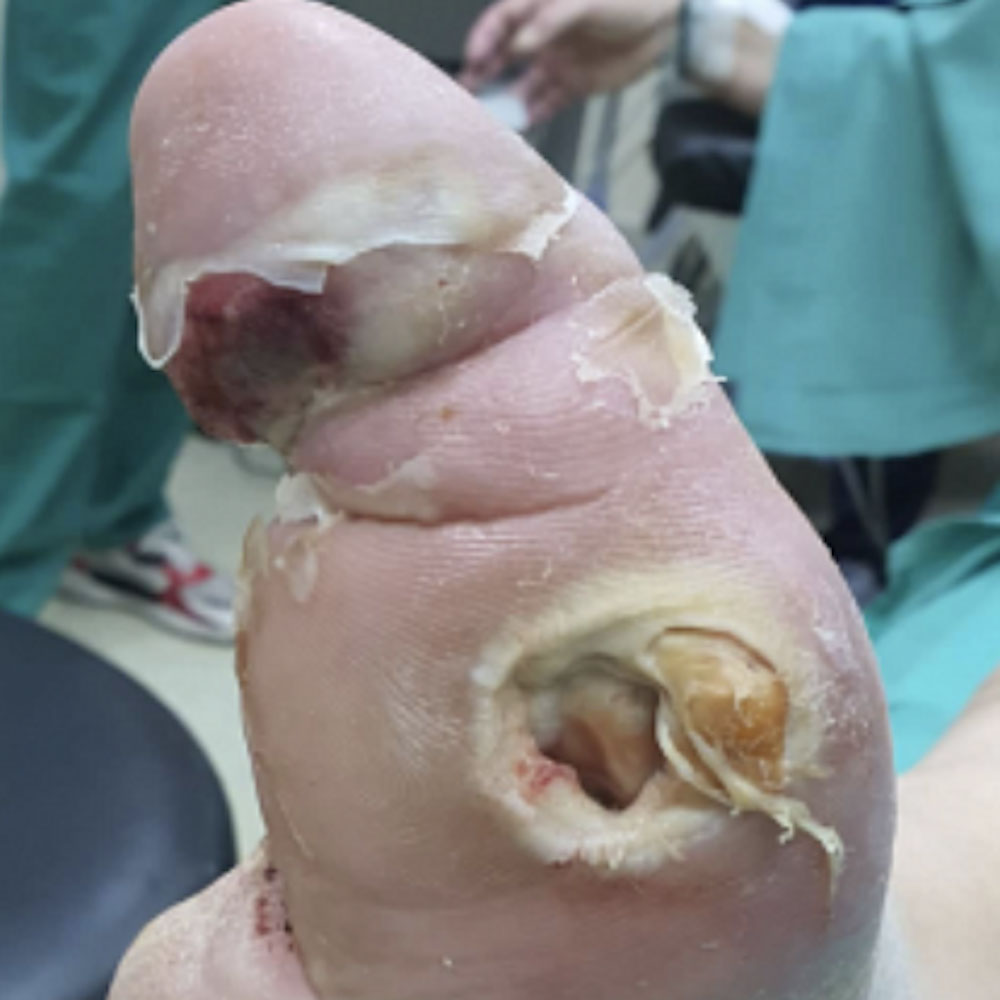
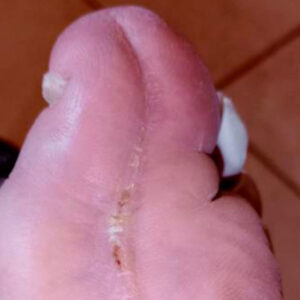
A 50-year-old man with type 2 diabetes was referred after previous amputation of the second, third, fourth, and fifth rays at another hospital. He subsequently developed osteomyelitis of the remaining first metatarsal, threatening complete loss of the forefoot and progression to a major lower-limb amputation.
02 / SURGICAL APPROACH
Procedure
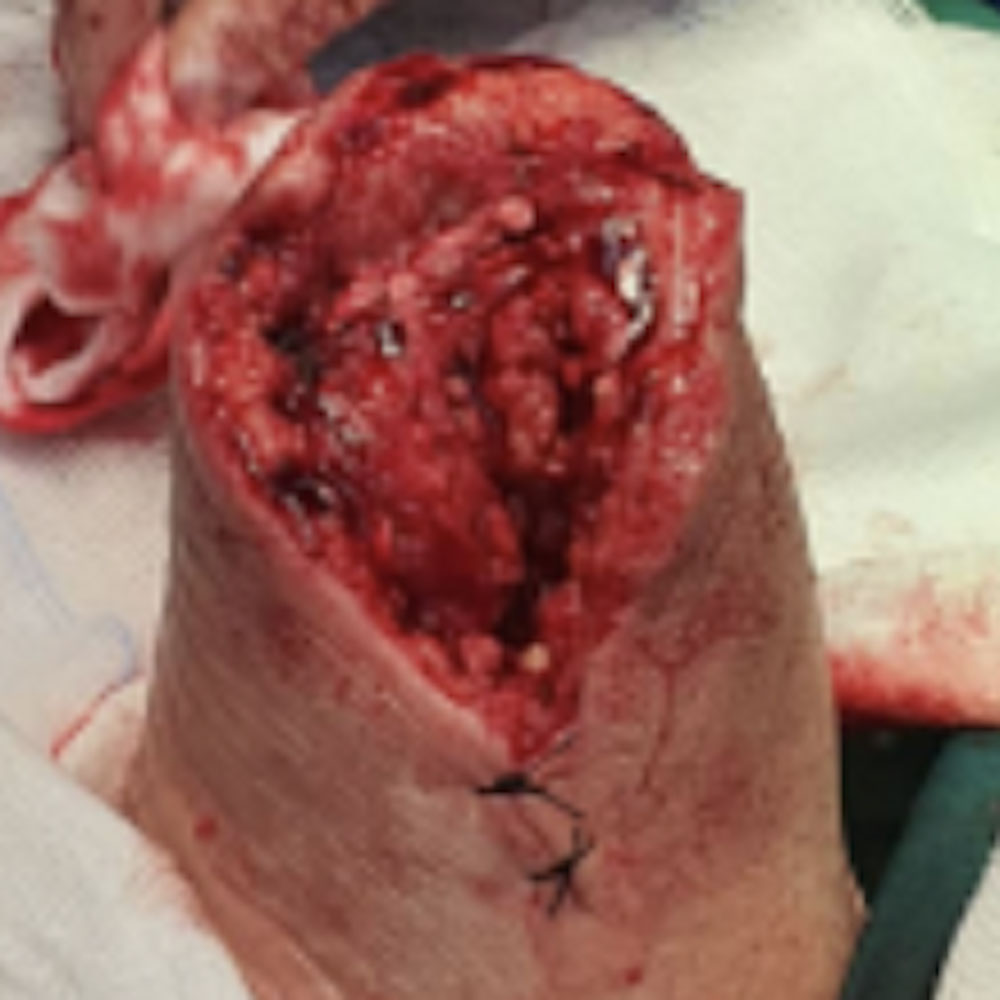
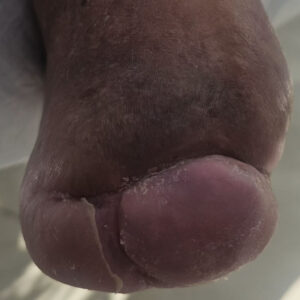
Limb-salvage surgery was performed with complete excision of the infected first metatarsal and hallux until healthy, bleeding bone margins were achieved. The procedure was carefully planned to eradicate the infection while preserving a stable plantar stump capable of supporting weight-bearing with appropriate custom footwear.
03 / HEALING & FOLLOW-UP
Outcome
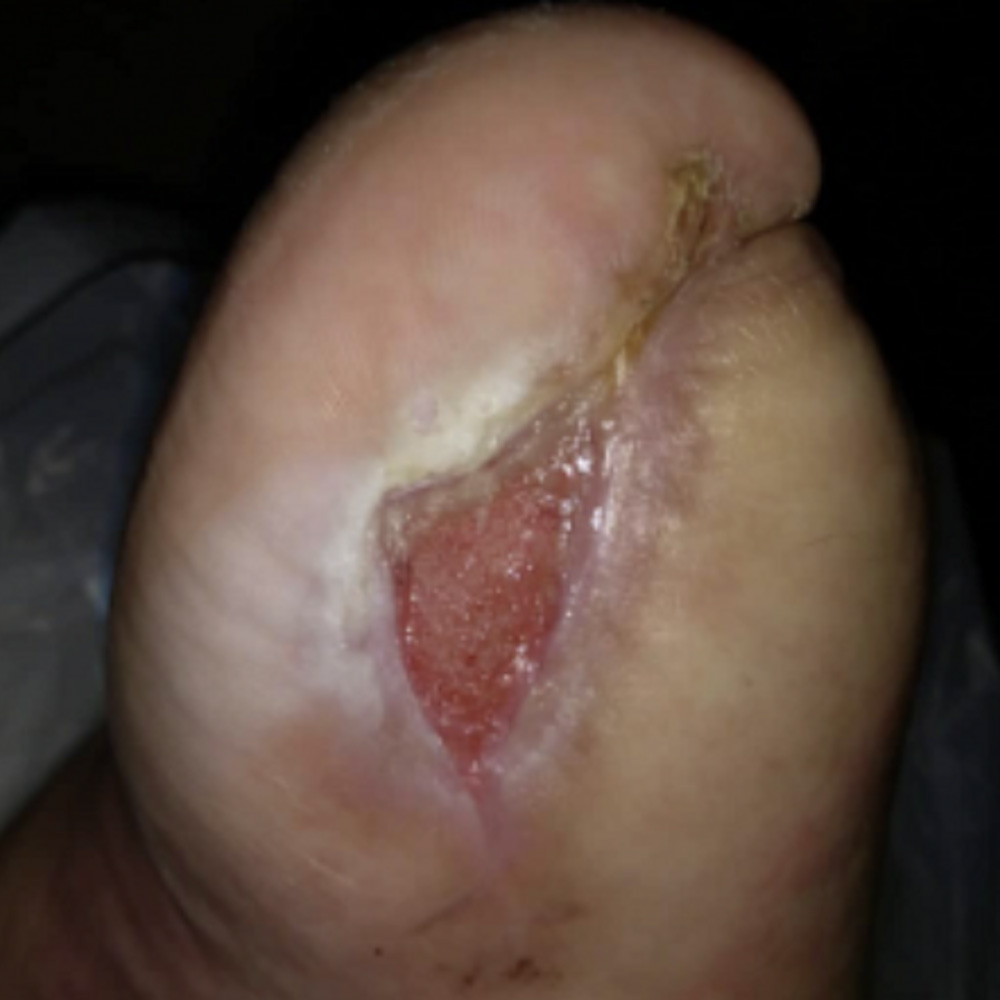
The wound healed successfully, and the patient regained independent ambulation using a customized therapeutic shoe.
This case demonstrates that even when osteomyelitis affects the last remaining ray after previous multiple ray amputations, limb preservation may still be achievable. Rather than progressing to a major amputation, careful surgical planning can eradicate infection while creating a stable, functional residual foot that allows continued walking and preserves the patient’s independence.
Concerned About a Diabetic Foot Problem?
Request a diabetic foot assessment and provide our team with the information needed to review your case.
Request a Diabetic Foot Assessment