Lisfranc Amputation for Extensive Forefoot Ischemic Gangrene
Clinical presentation, surgical treatment and documented healing.
- 01 / Problem
- Clinical presentation
- 02 / Procedure
- Surgical approach
- 03 / Outcome
- Healing & follow-up
Clinical photographs below include wounds and surgical treatment.
01 / CLINICAL PRESENTATION
Problem
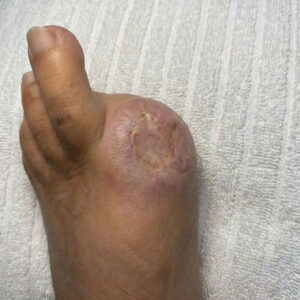
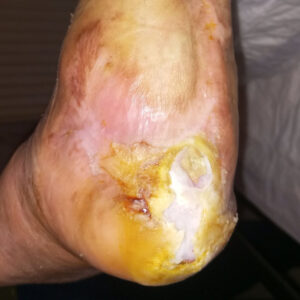
A patient with diabetes presented with extensive ischemic gangrene involving multiple toes and the forefoot, making local toe amputations insufficient for complete removal of non-viable tissue. Limb preservation required a more proximal but function-preserving approach.
02 / SURGICAL APPROACH
Procedure
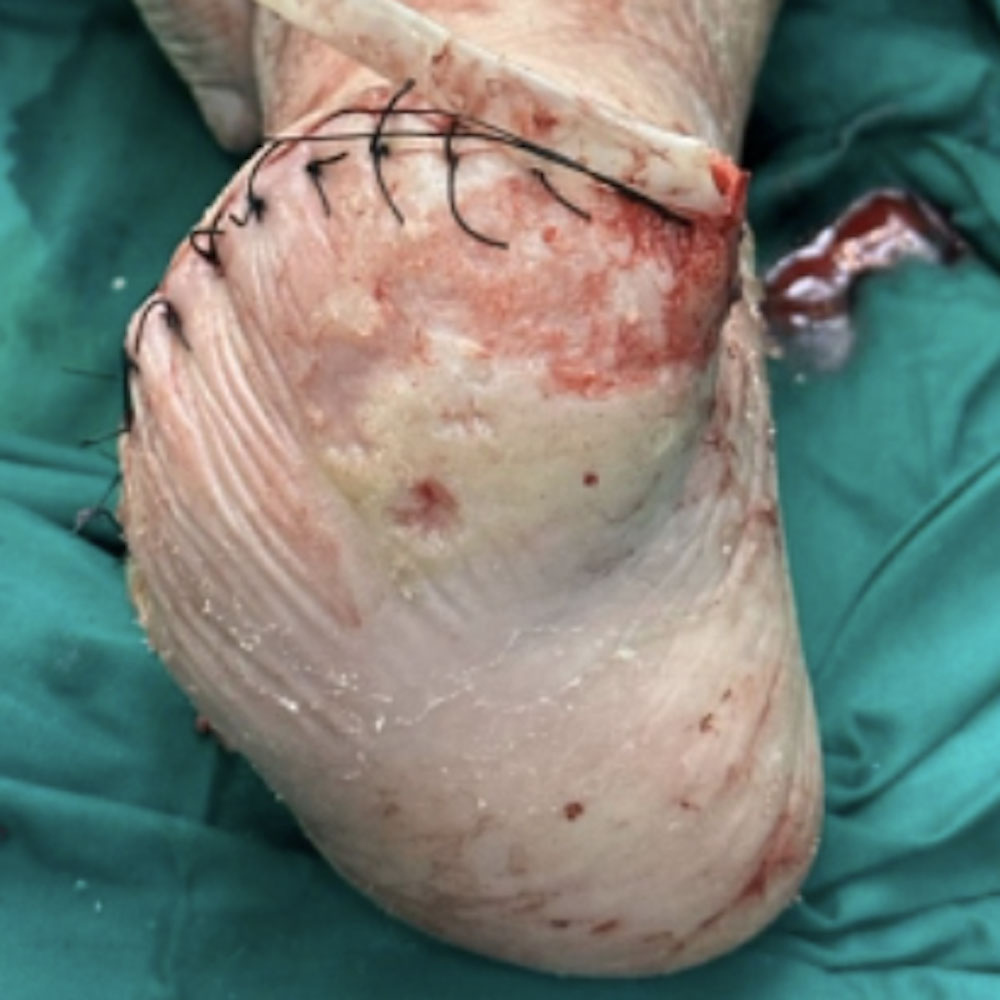
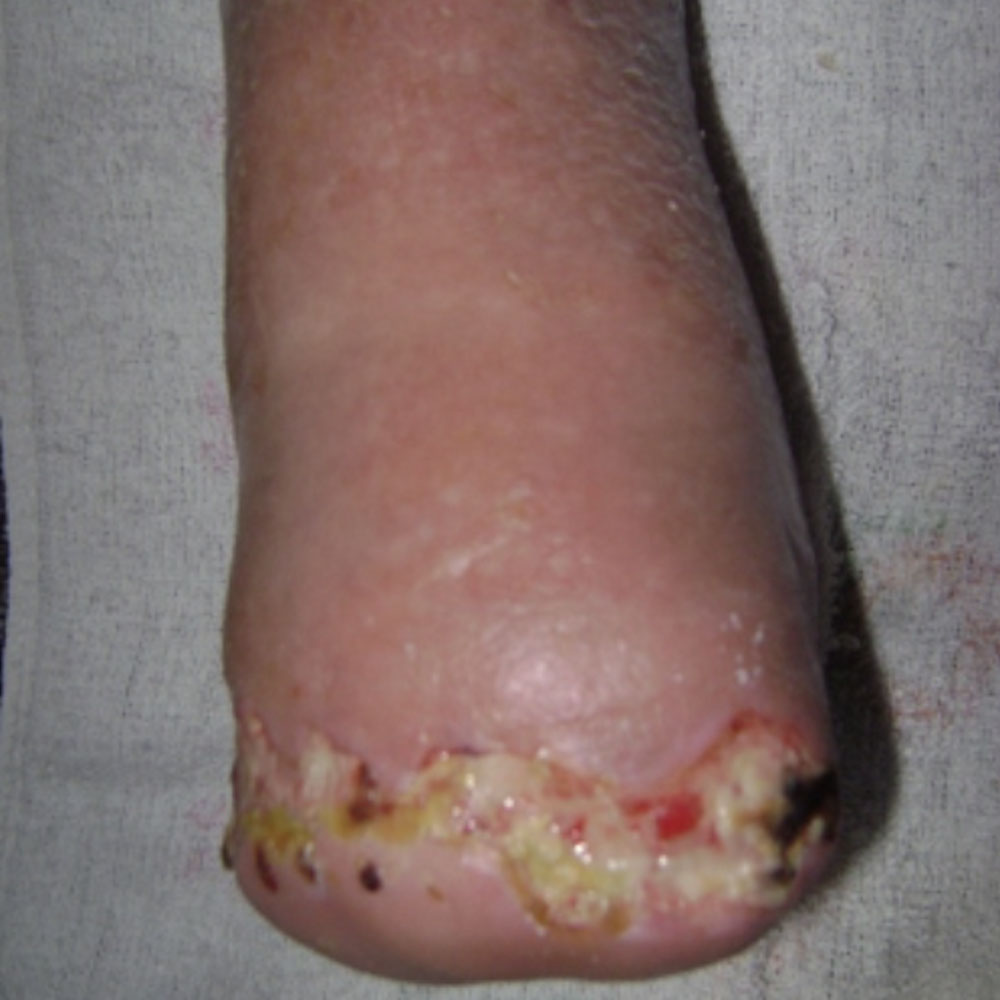
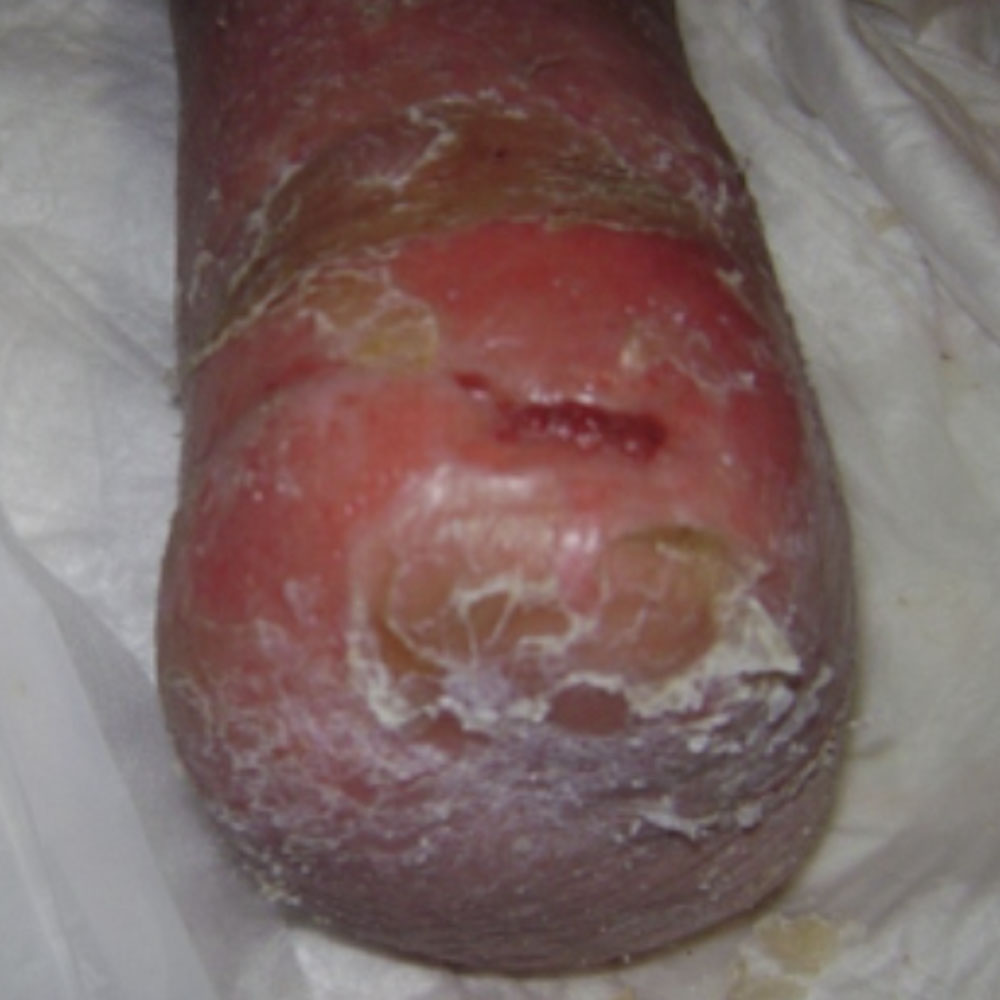
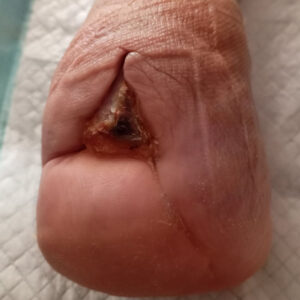
A Lisfranc amputation was performed, removing all toes and metatarsals while preserving the tarsal bones and hindfoot. The wound was closed primarily with sutures. Minor superficial wound-healing complications at the incision line resolved with local wound care over the following 6 weeks. After healing, the patient was fitted with a custom prosthetic filler integrated into a therapeutic shoe, restoring forefoot length and improving gait.
03 / HEALING & FOLLOW-UP
Outcome
The surgical site healed successfully, allowing the patient to regain functional ambulation with specialized footwear while preserving the heel and ankle. This case highlights that a Lisfranc amputation can provide an excellent limb-salvage solution for extensive forefoot ischemic gangrene, preserving a stable, weight-bearing foot and avoiding a higher-level amputation that would result in substantially greater functional disability.
Concerned About a Diabetic Foot Problem?
Request a diabetic foot assessment and provide our team with the information needed to review your case.
Request a Diabetic Foot Assessment