Heel-Sparing Partial Calcanectomy After Revascularization Case 1
Clinical presentation, surgical treatment and documented healing.
- 01 / Problem
- Clinical presentation
- 02 / Procedure
- Surgical approach
- 03 / Outcome
- Healing & follow-up
Clinical photographs below include wounds and surgical treatment.
01 / CLINICAL PRESENTATION
Problem
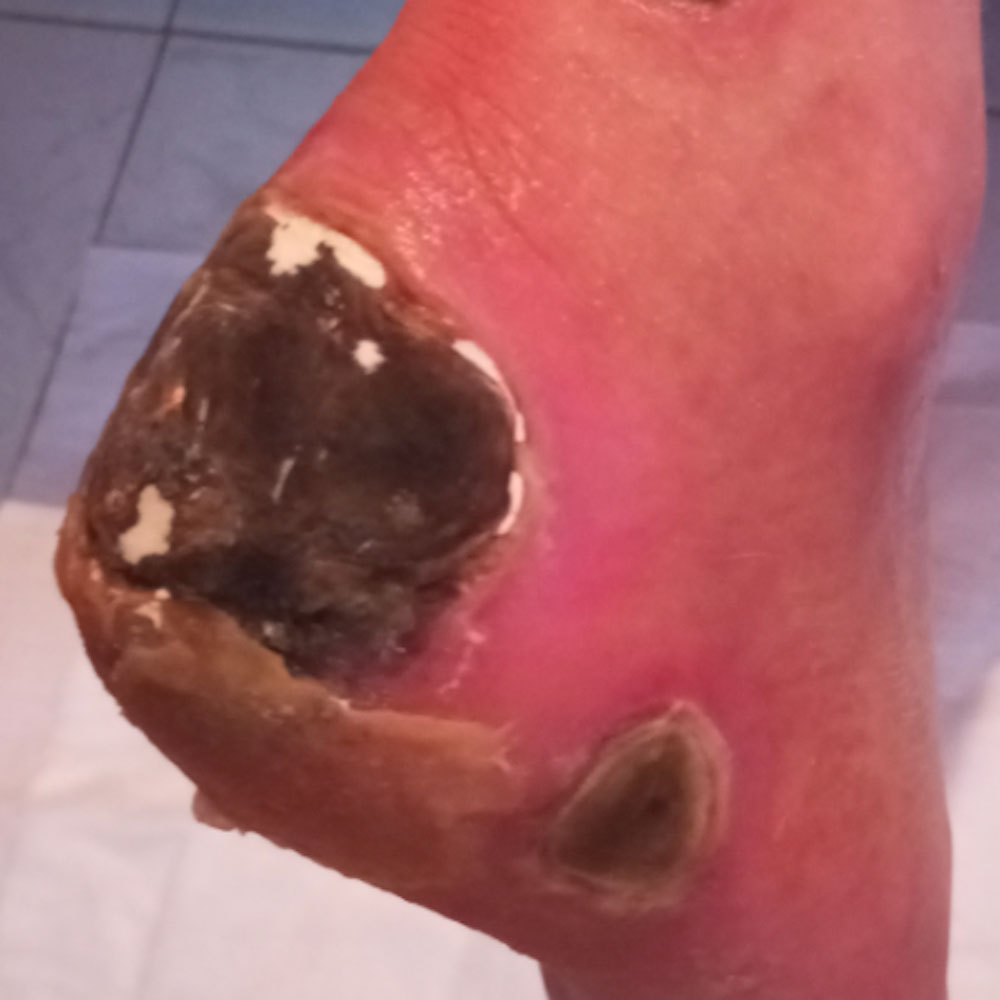
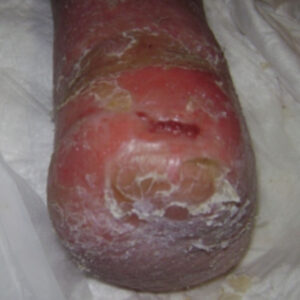
A 67-year-old patient with diabetes was referred from another hospital after undergoing endovascular revascularization (angioplasty) for a severe ischemic heel ulcer with gangrene. Because of the extensive tissue necrosis, the patient had been advised to undergo a major foot amputation.
02 / SURGICAL APPROACH
Procedure
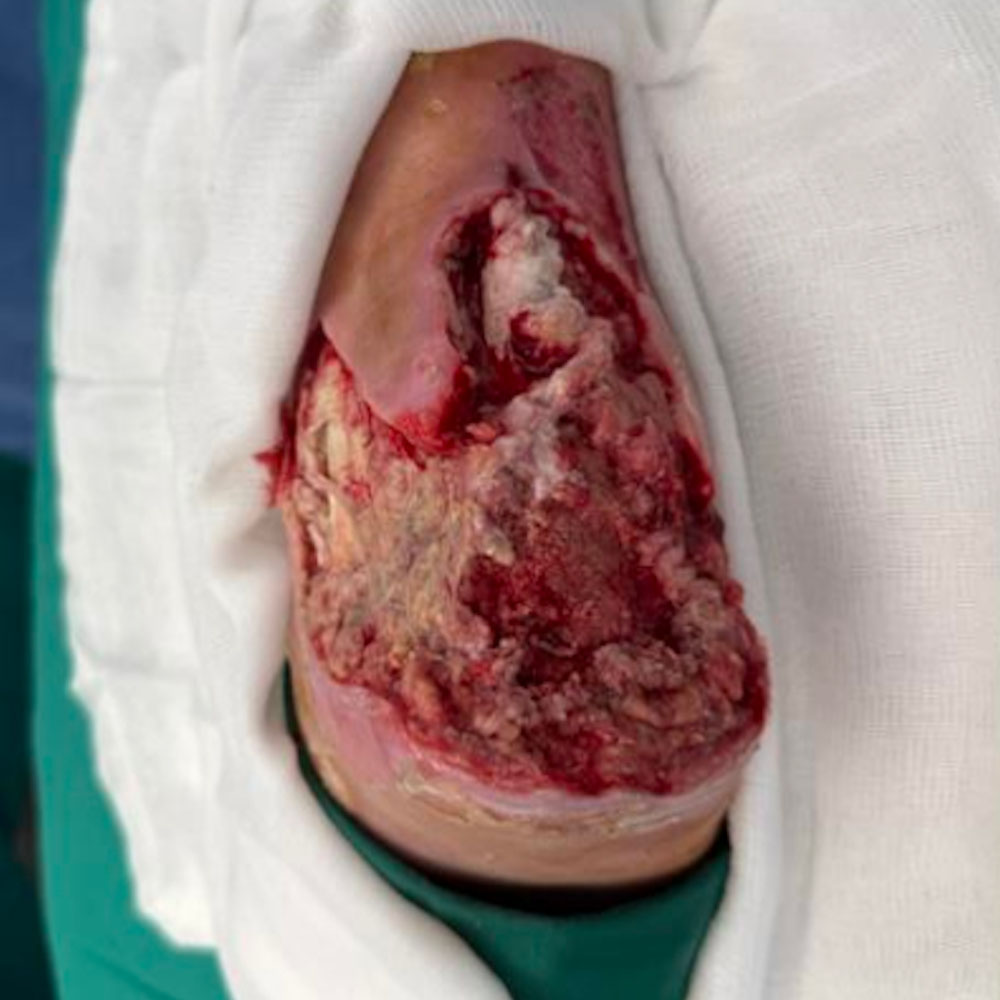
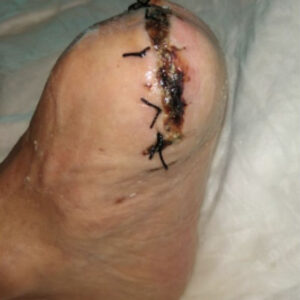
After confirming adequate limb perfusion, the patient underwent heel-sparing surgery with partial calcanectomy, removing the infected and non-viable portion of the calcaneus together with all necrotic soft tissue, while preserving as much of the heel as possible. The wound was intentionally left open and managed by secondary intention healing, with meticulous wound care and strict pressure off-loading throughout the healing period.
03 / HEALING & FOLLOW-UP
Outcome
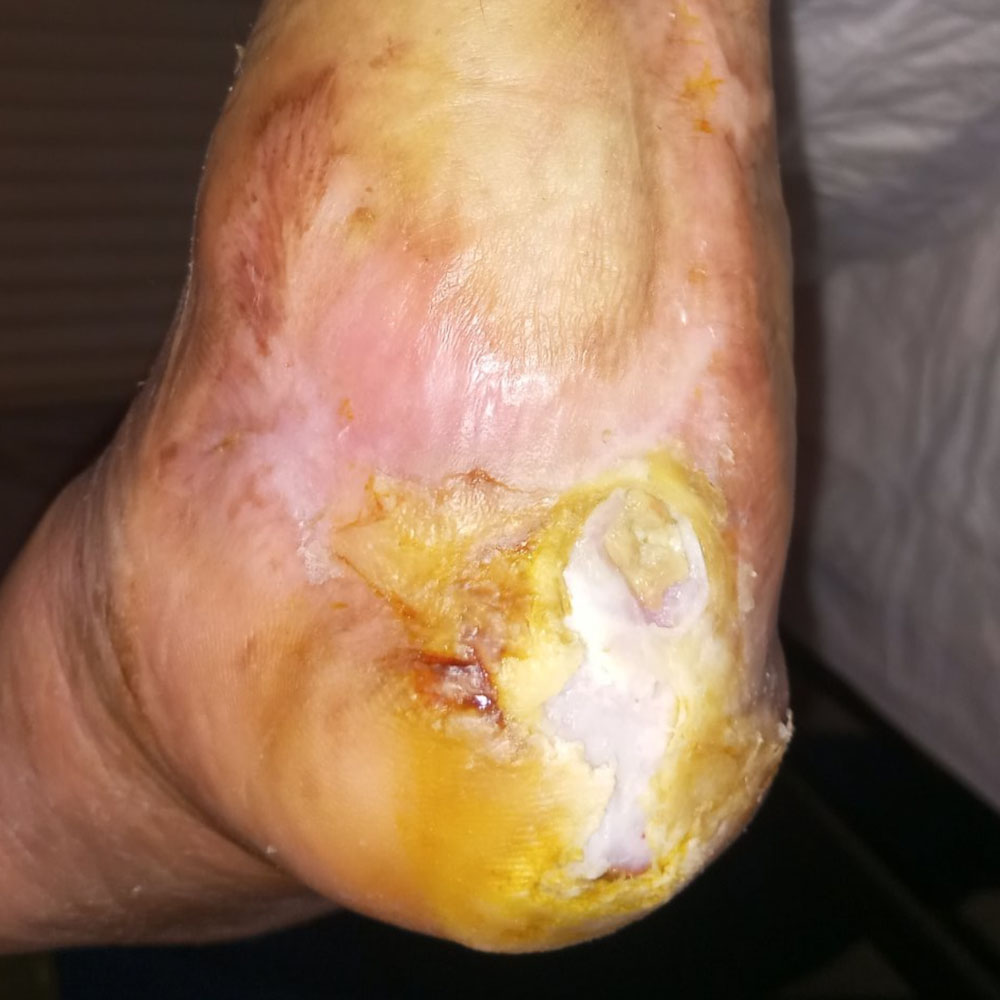
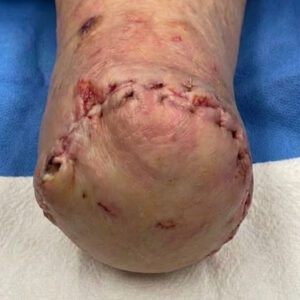
Complete healing was achieved by secondary intention within 6 months, preserving a stable, weight-bearing heel and avoiding a major amputation. This case demonstrates that even extensive ischemic heel gangrene—often considered an indication for below-knee amputation—can be successfully treated when revascularization is followed by carefully planned, tissue-preserving surgery. Preserving the heel preserves the patient’s ability to stand and walk, offering a functional limb instead of a prosthesis.
Concerned About a Diabetic Foot Problem?
Request a diabetic foot assessment and provide our team with the information needed to review your case.
Request a Diabetic Foot Assessment