Transmetatarsal Amputation for Forefoot Ischemic Gangrene
Clinical presentation, surgical treatment and documented healing.
- 01 / Problem
- Clinical presentation
- 02 / Procedure
- Surgical approach
- 03 / Outcome
- Healing & follow-up
Clinical photographs below include wounds and surgical treatment.
01 / CLINICAL PRESENTATION
Problem
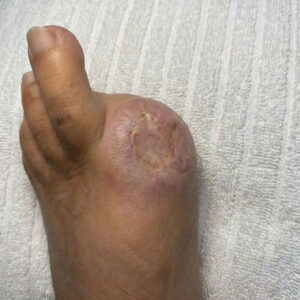
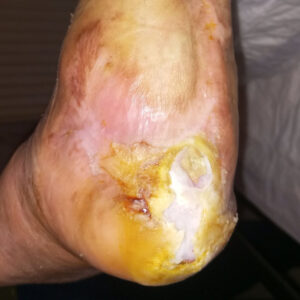
An 81-year-old patient with diabetes presented with ischemic gangrene of the first and second toes, threatening progression of infection and tissue loss. A limb-salvage strategy was selected to preserve as much foot length and function as possible.
02 / SURGICAL APPROACH
Procedure
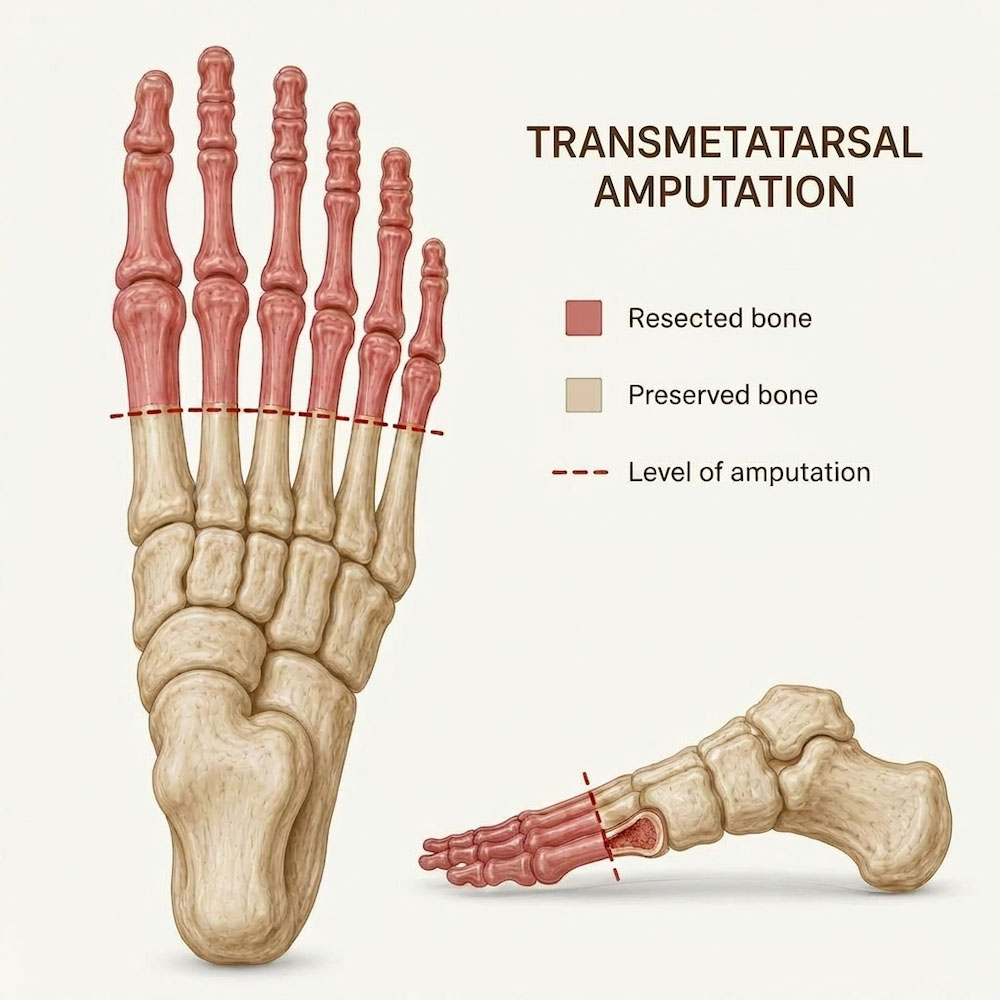
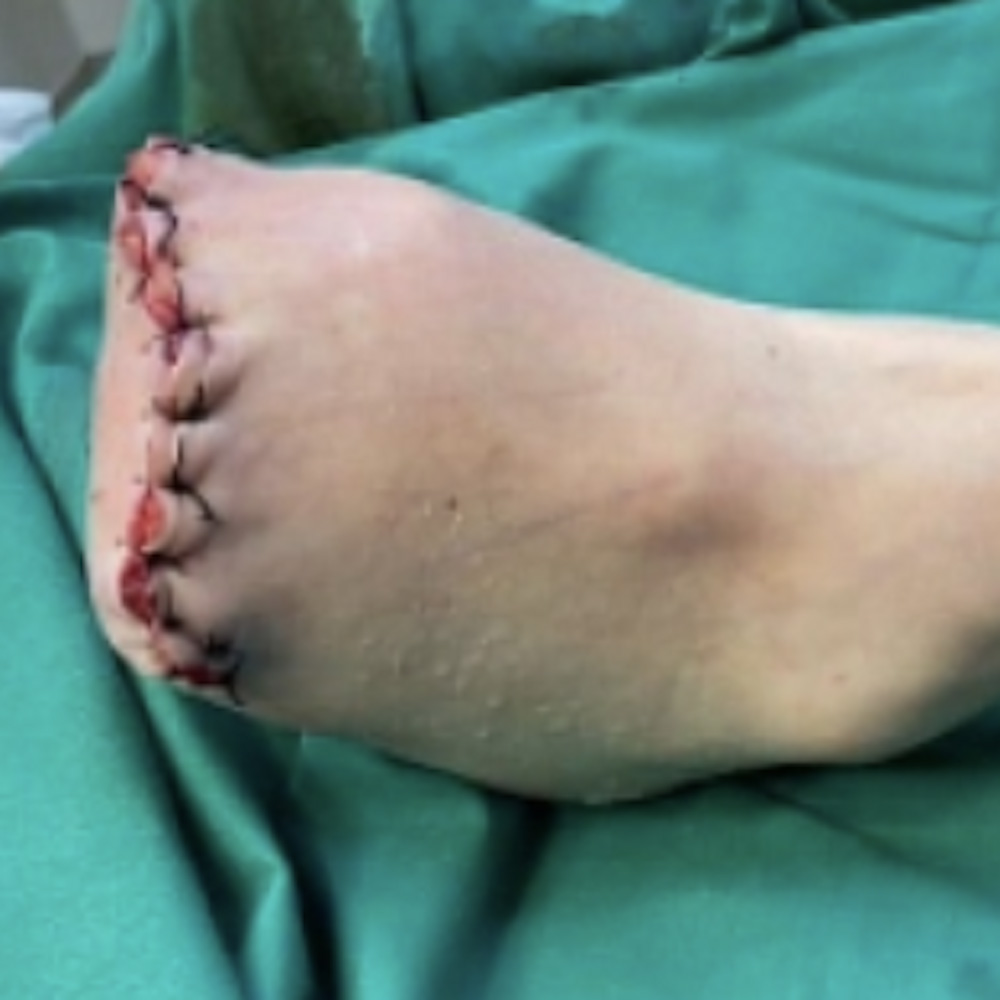
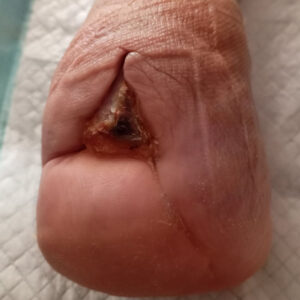
A transmetatarsal amputation was performed at the midshaft of the metatarsals, removing the gangrenous forefoot while preserving the midfoot and hindfoot. The wound was closed primarily with sutures and healed uneventfully. Following recovery, the patient was fitted with a custom forefoot prosthetic filler worn inside a regular therapeutic shoe to restore foot shape and improve gait.
03 / HEALING & FOLLOW-UP
Outcome
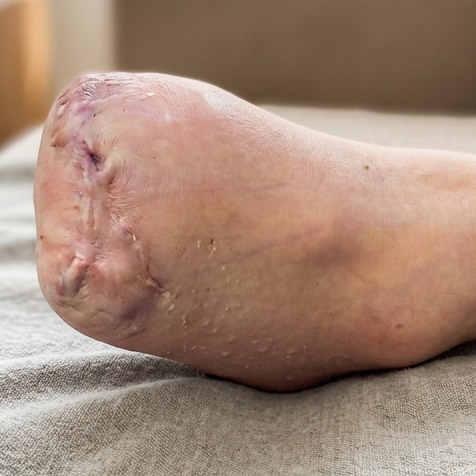
Primary wound healing was achieved with an excellent functional result, allowing the patient to return to walking using customized footwear. This case illustrates that transmetatarsal amputation can successfully preserve a stable, weight-bearing foot, offering an effective alternative to higher-level amputations while maintaining mobility, independence, and quality of life.
Concerned About a Diabetic Foot Problem?
Request a diabetic foot assessment and provide our team with the information needed to review your case.
Request a Diabetic Foot Assessment