Fifth Ray Amputation for Ischemic Gangrene
Clinical presentation, surgical treatment and documented healing.
- 01 / Problem
- Clinical presentation
- 02 / Procedure
- Surgical approach
- 03 / Outcome
- Healing & follow-up
Clinical photographs below include wounds and surgical treatment.
01 / CLINICAL PRESENTATION
Problem
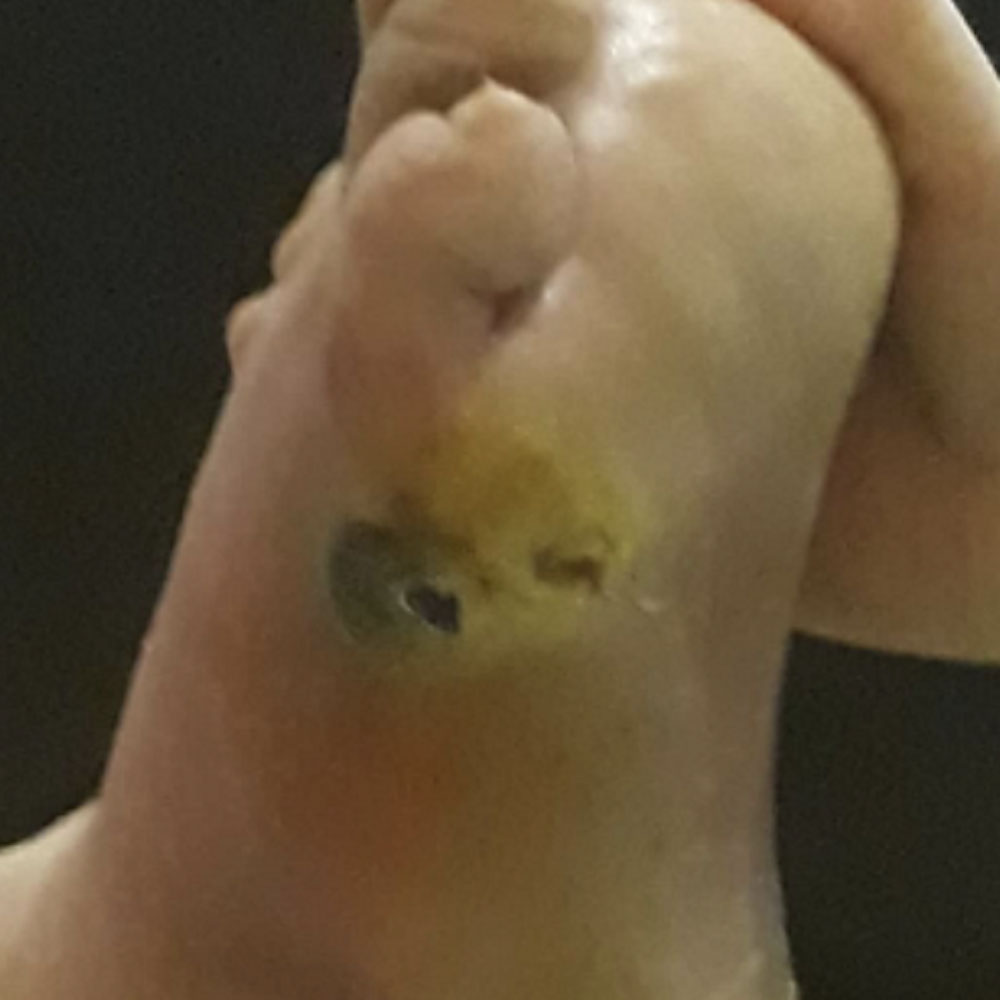
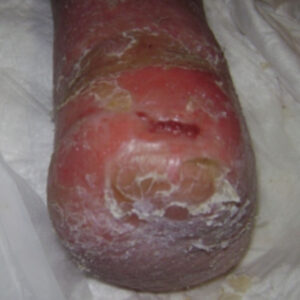
A 70-year-old patient presented with a diabetic foot complicated by a severe ischemic ulcer over the lateral aspect of the fifth metatarsal. Progressive tissue necrosis made limb-preserving treatment impossible, while the remaining forefoot was adequately perfused and suitable for a limited ray resection.
02 / SURGICAL APPROACH
Procedure
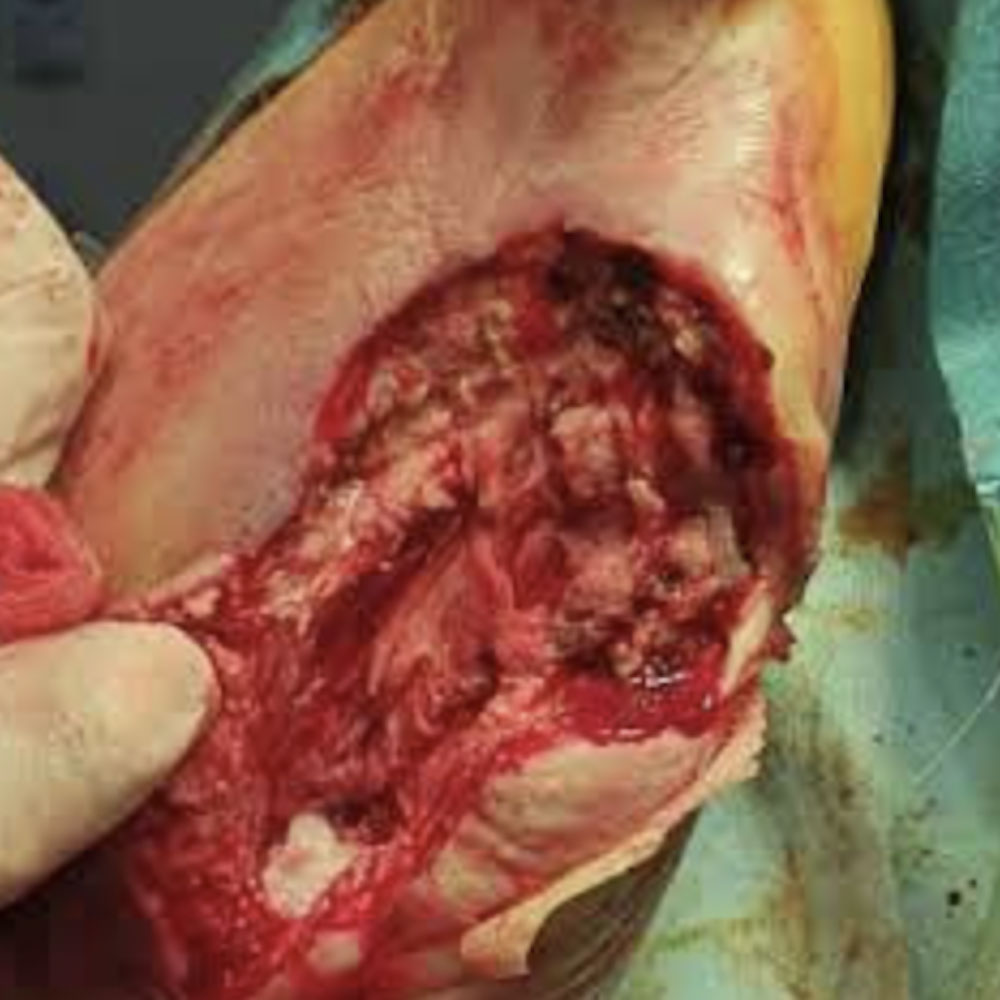
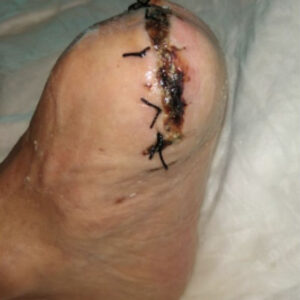
A fifth ray amputation, including the fifth toe and the corresponding fifth metatarsal, was performed to completely remove all ischemic and non-viable tissue. Because of the local tissue condition, the wound was intentionally left open and managed with secondary intention healing, together with meticulous wound care and pressure off-loading.
03 / HEALING & FOLLOW-UP
Outcome
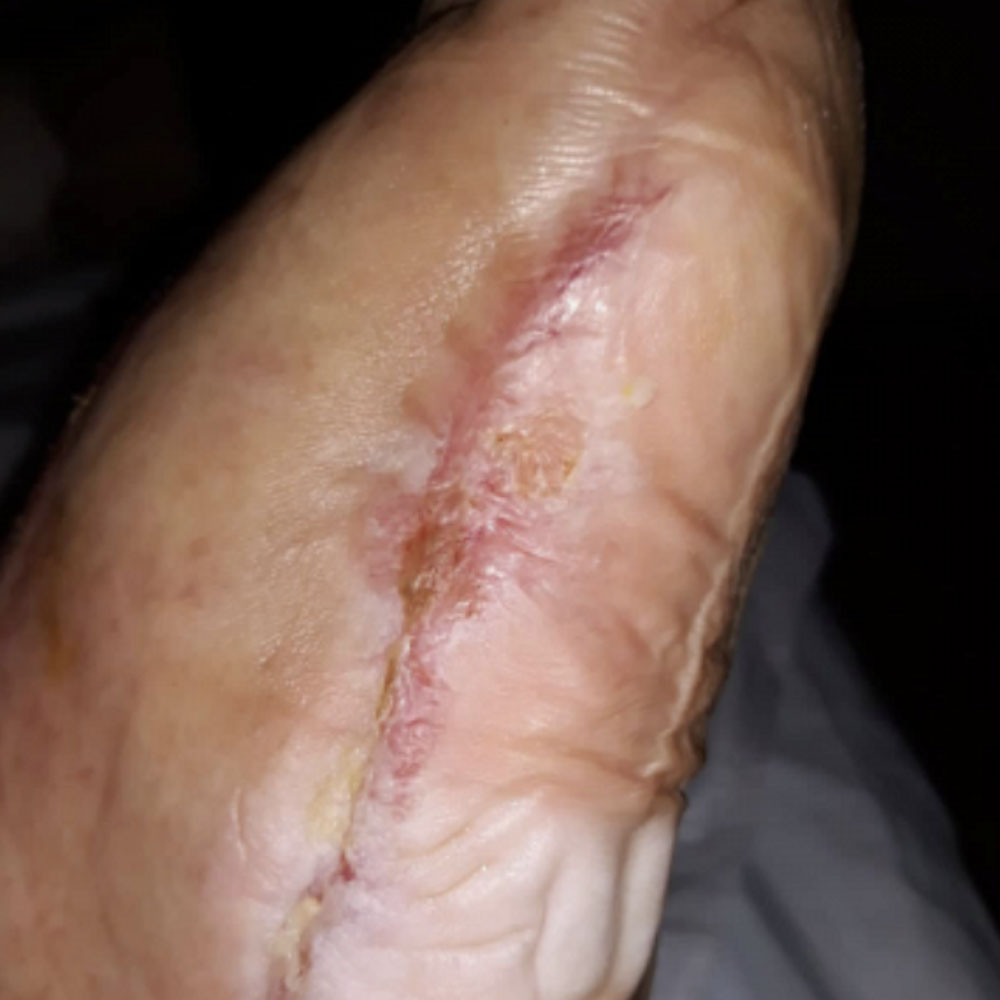
The wound healed completely by secondary intention within three months, resulting in a durable, plantigrade foot without recurrent infection or tissue loss. By limiting the amputation to a single lateral ray and preserving the remaining forefoot, normal weight distribution was largely maintained, allowing the patient to regain stable ambulation while maximizing long-term limb function.
Concerned About a Diabetic Foot Problem?
Request a diabetic foot assessment and provide our team with the information needed to review your case.
Request a Diabetic Foot Assessment