Lisfranc Amputation Following Successful Revascularization
Clinical presentation, surgical treatment and documented healing.
- 01 / Problem
- Clinical presentation
- 02 / Procedure
- Surgical approach
- 03 / Outcome
- Healing & follow-up
Clinical photographs below include wounds and surgical treatment.
01 / CLINICAL PRESENTATION
Problem
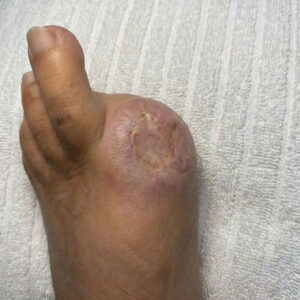
A 63-year-old man with type 2 diabetes presented with critical limb ischemia affecting the forefoot. Successful endovascular revascularization (angioplasty) restored adequate perfusion, allowing limb-salvage surgery instead of a major lower-limb amputation.
02 / SURGICAL APPROACH
Procedure
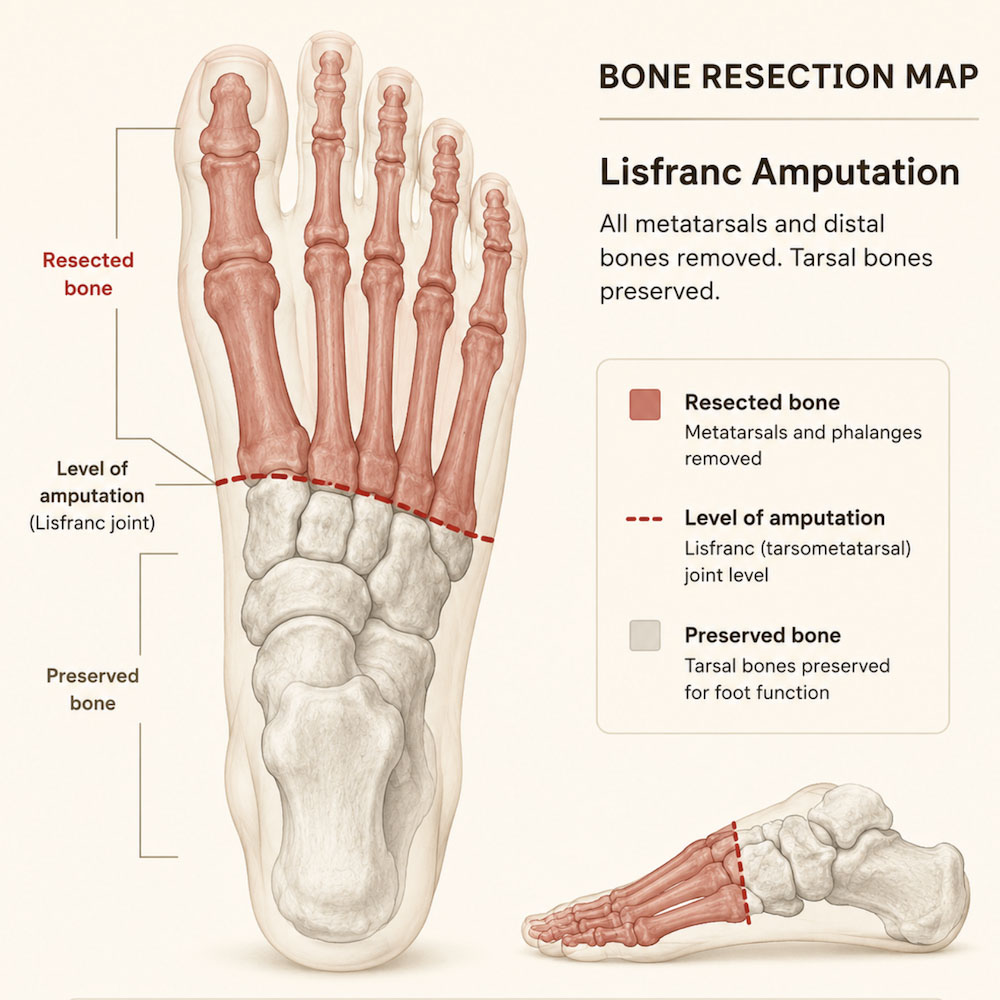
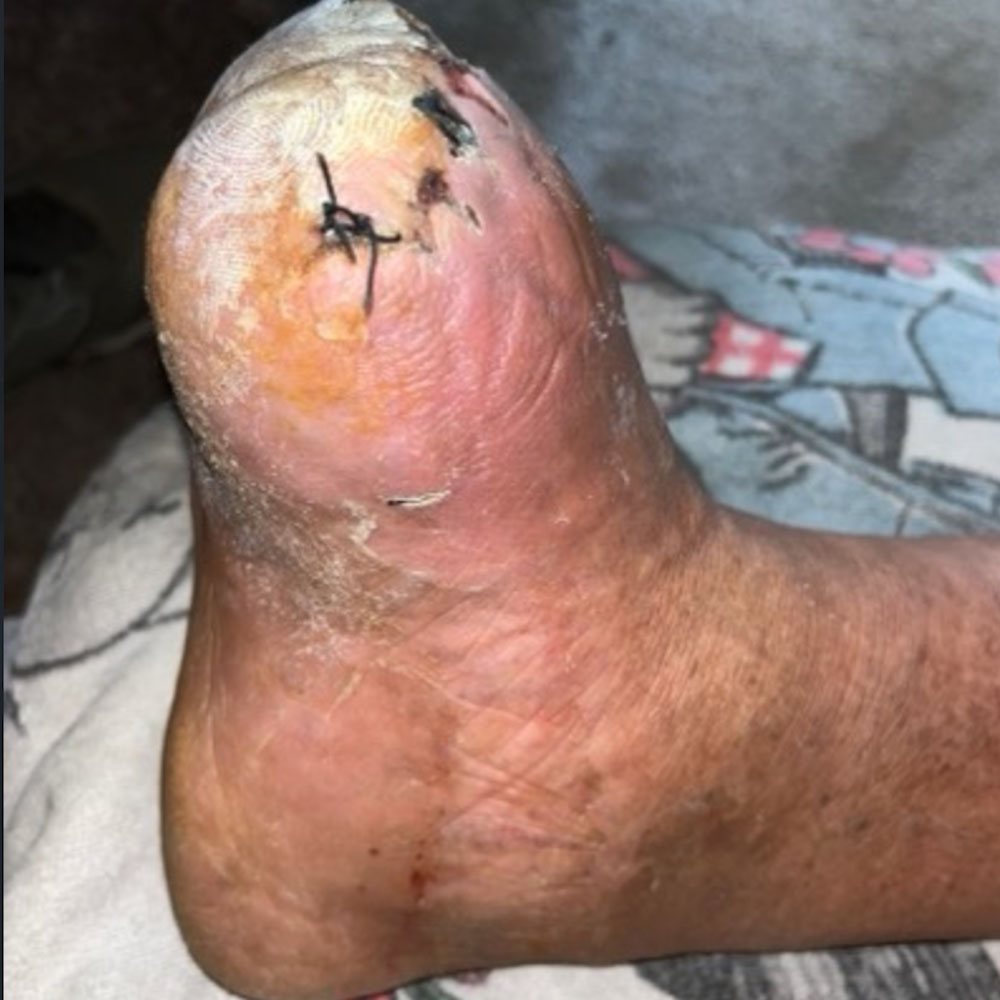
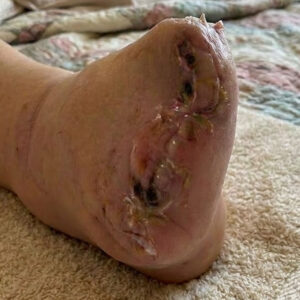
A Lisfranc amputation was performed, removing the toes and metatarsals while preserving the tarsal bones. Minor postoperative wound-healing delays occurred but resolved with local wound care over the following 2 months.
03 / HEALING & FOLLOW-UP
Outcome
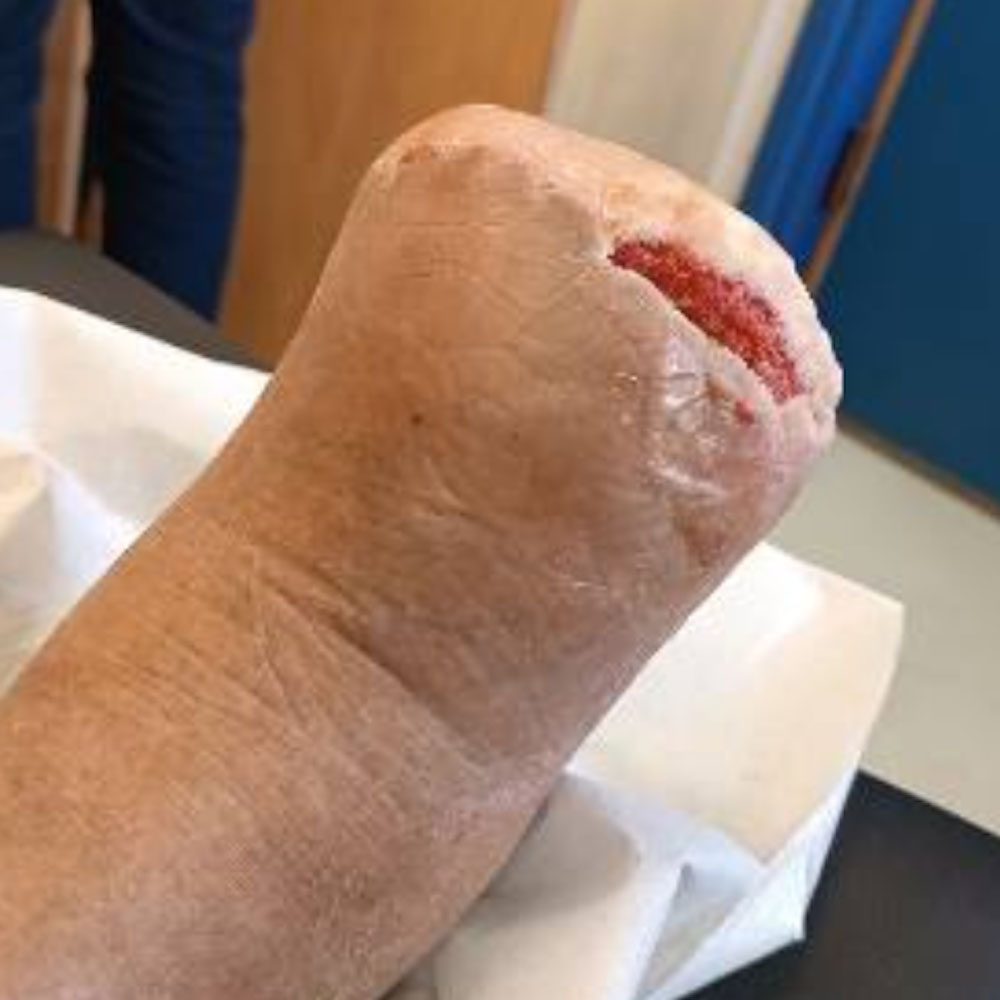
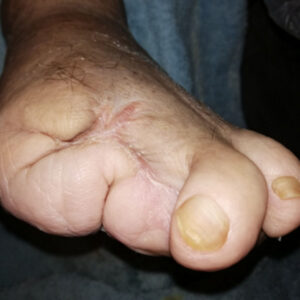
The surgical site healed successfully, preserving a functional, weight-bearing foot. The patient was fitted with a custom forefoot prosthetic filler and specialized therapeutic footwear, enabling him to return to work. This case illustrates how timely revascularization combined with a Lisfranc amputation can preserve limb function and restore mobility while avoiding a higher-level amputation.
Concerned About a Diabetic Foot Problem?
Request a diabetic foot assessment and provide our team with the information needed to review your case.
Request a Diabetic Foot Assessment