First Ray Amputation After Revascularization
Clinical presentation, surgical treatment and documented healing.
- 01 / Problem
- Clinical presentation
- 02 / Procedure
- Surgical approach
- 03 / Outcome
- Healing & follow-up
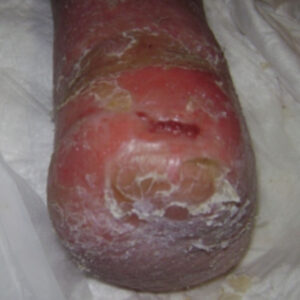
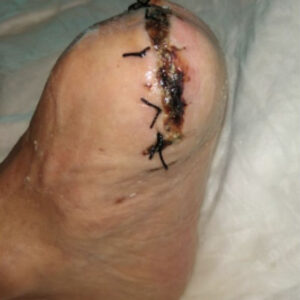
Clinical photographs below include wounds and surgical treatment.
01 / CLINICAL PRESENTATION
Problem
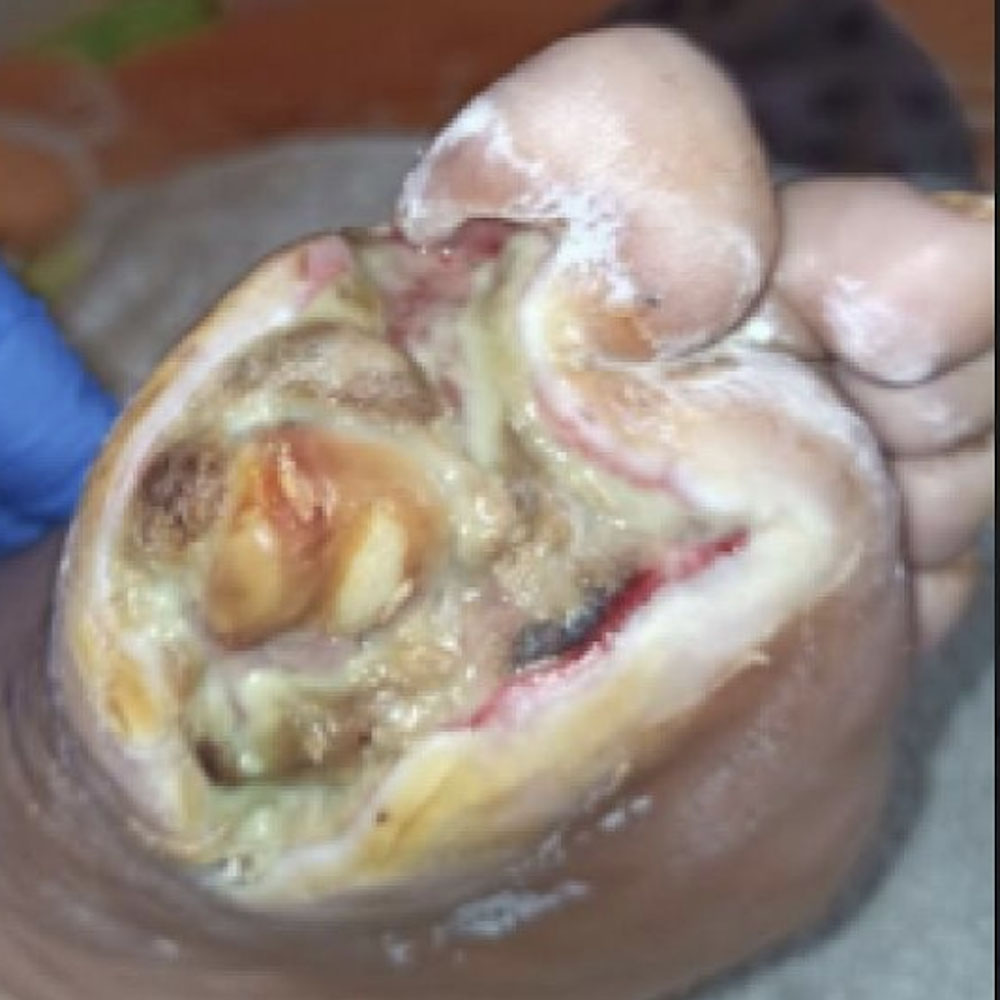
An 89-year-old patient with type 2 diabetes presented with a severe ischemic and infected ulcer involving the great toe and extending to the corresponding first metatarsal. Because of advanced diabetic peripheral arterial disease, endovascular revascularization (angioplasty) was performed before surgery to restore adequate perfusion and maximize the potential for limb salvage.
02 / SURGICAL APPROACH
Procedure
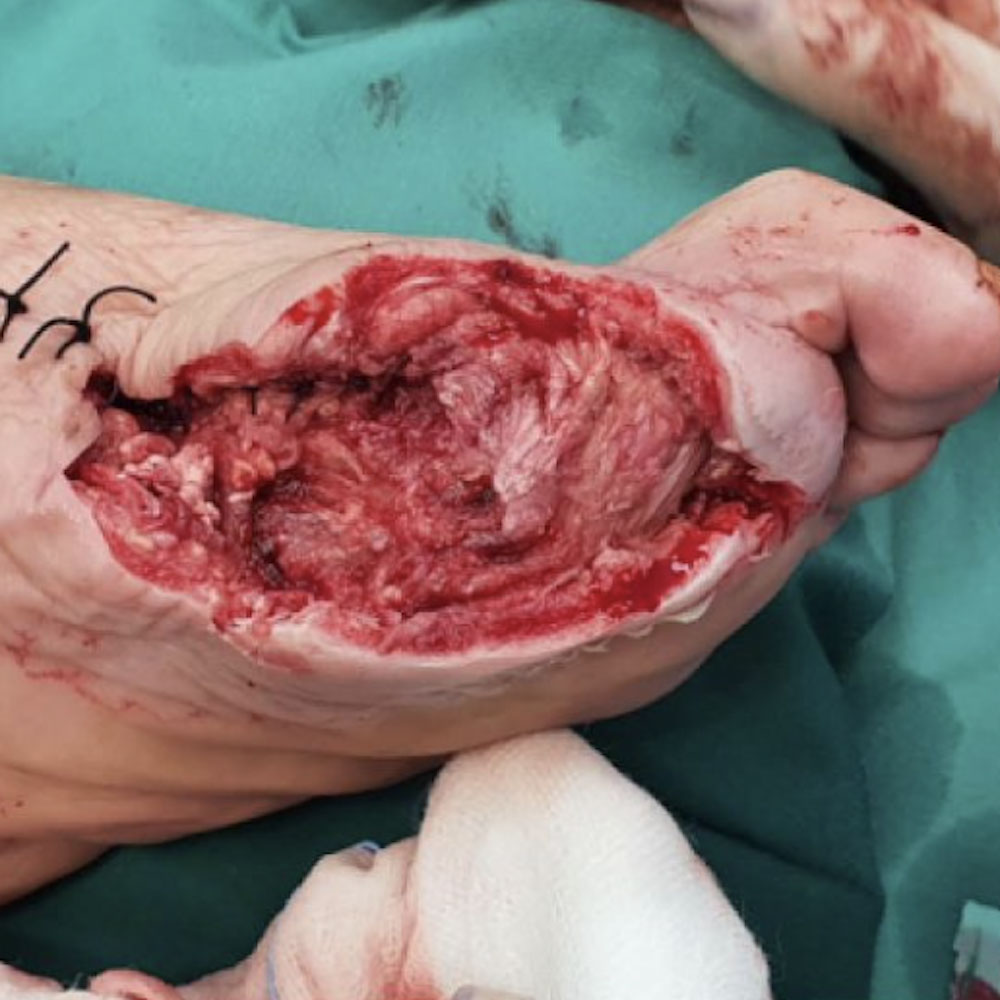
Following successful revascularization, the patient underwent first ray amputation, including removal of the great toe and the first metatarsal, with complete excision of all ischemic and non-viable tissue. The surgical wound was intentionally left open and managed by secondary intention healing, supported by meticulous wound care and pressure off-loading.
03 / HEALING & FOLLOW-UP
Outcome
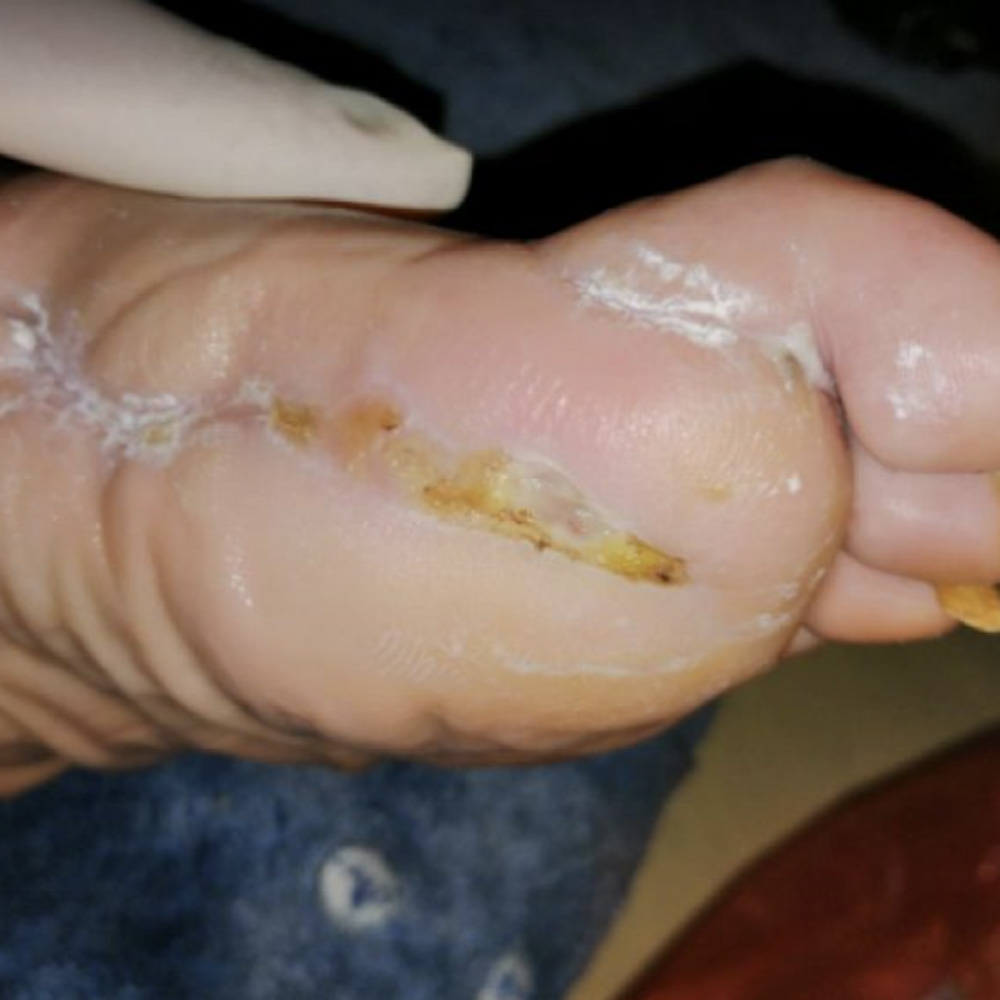
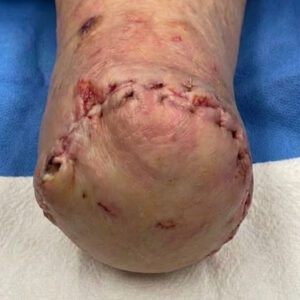
The wound healed completely by secondary intention within 5.5 months, resulting in a durable, stable stump without recurrent infection. This case demonstrates that major tissue loss does not necessarily require a major limb amputation. When blood flow is restored before surgery and non-viable tissue is removed while preserving the remaining foot, even extensive ischemic diabetic foot lesions can heal successfully and maintain functional ambulation.
Concerned About a Diabetic Foot Problem?
Request a diabetic foot assessment and provide our team with the information needed to review your case.
Request a Diabetic Foot Assessment