Fifth Ray Amputation After Revascularization
Clinical presentation, surgical treatment and documented healing.
- 01 / Problem
- Clinical presentation
- 02 / Procedure
- Surgical approach
- 03 / Outcome
- Healing & follow-up
Clinical photographs below include wounds and surgical treatment.
01 / CLINICAL PRESENTATION
Problem
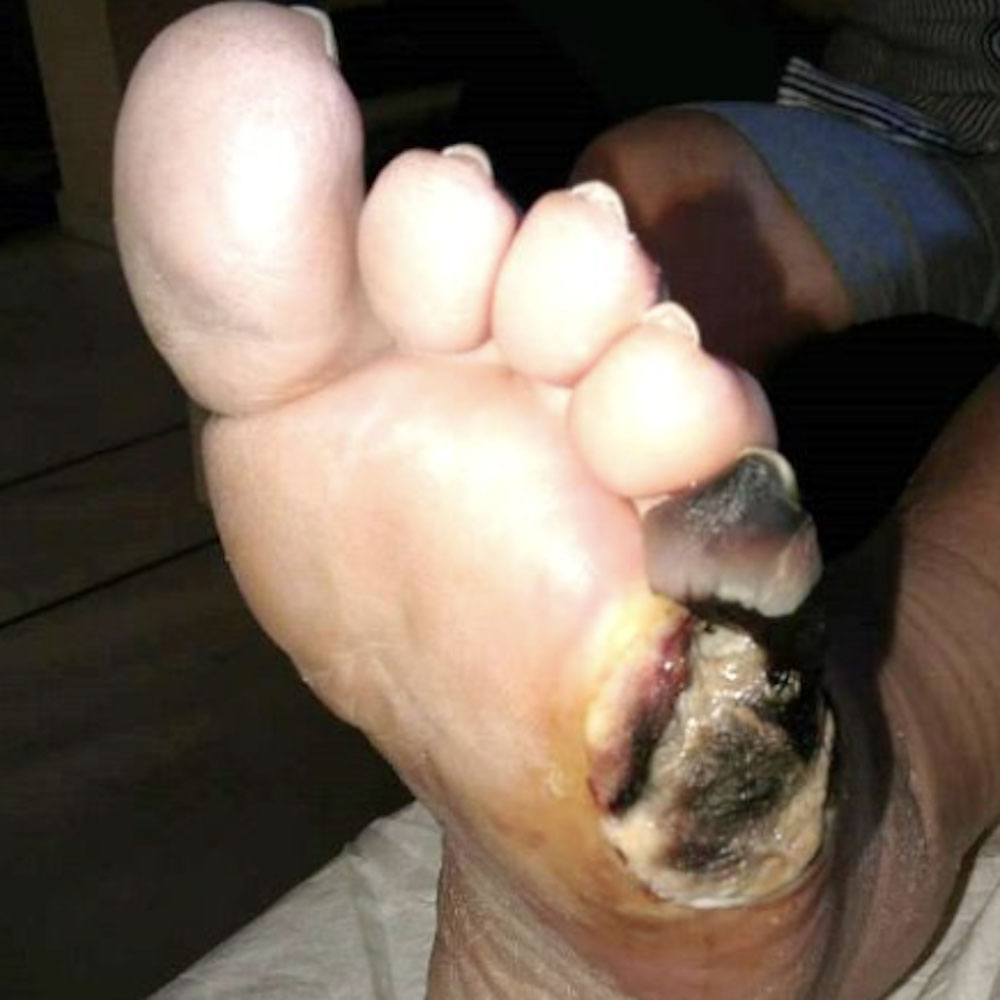
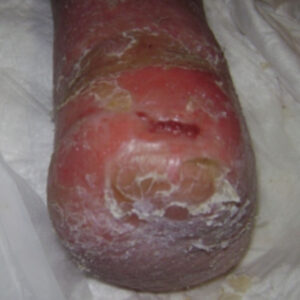
A 57-year-old man with type 2 diabetes presented with a severe ischemic ulcer and dry gangrene of the fifth toe, associated with diabetic peripheral arterial disease. To maximize tissue viability and limb salvage, the patient first underwent endovascular revascularization (angioplasty) before surgical treatment.
02 / SURGICAL APPROACH
Procedure
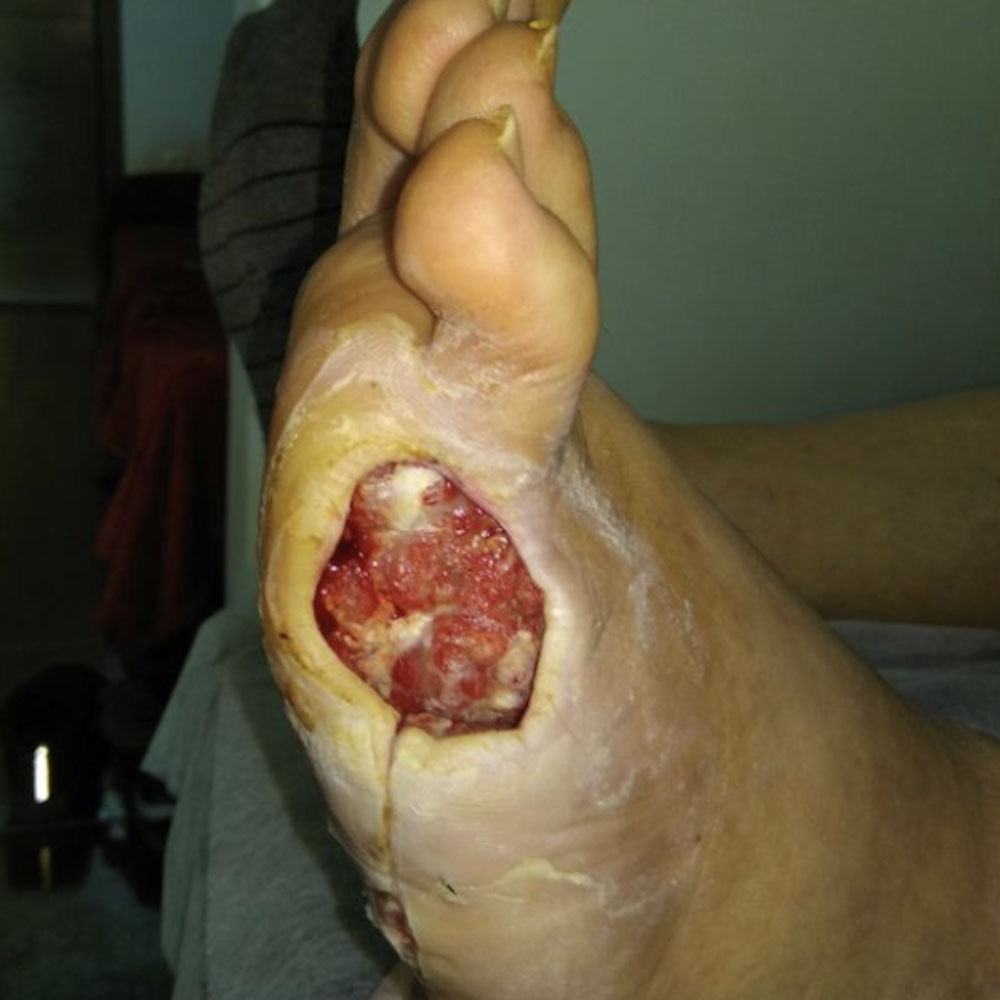
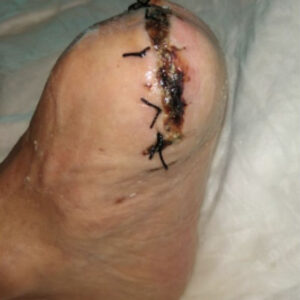
Following successful restoration of blood flow, a fifth ray amputation was performed, including removal of the fifth toe and the distal half of the fifth metatarsal. All ischemic and non-viable tissue was excised while preserving as much of the lateral column of the foot as possible. The wound was intentionally left open and managed by secondary intention healing with meticulous wound care and pressure off-loading.
03 / HEALING & FOLLOW-UP
Outcome
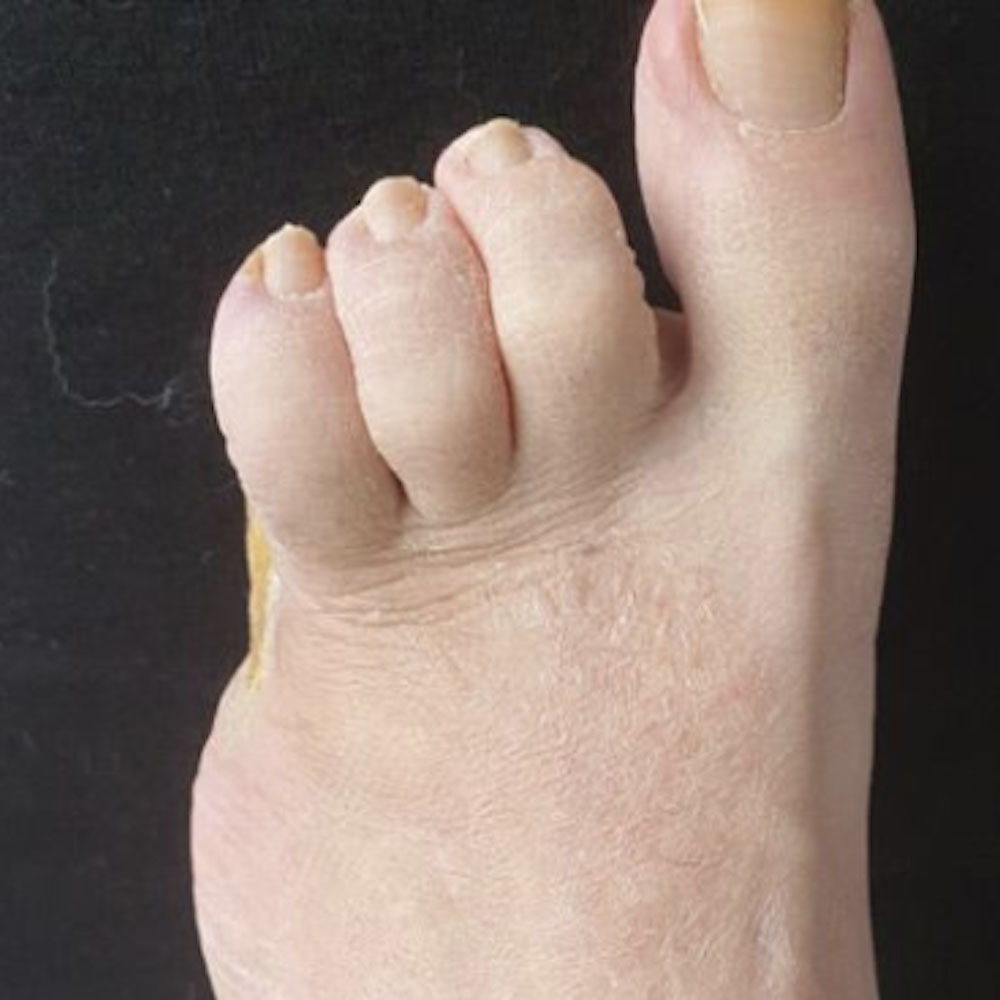
Complete healing was achieved by secondary intention within 3 months, resulting in a stable, infection-free lateral foot with preservation of overall foot function. This case highlights that revascularization followed by a limited, well-planned ray amputation can eradicate ischemic disease while preserving the architecture of the foot, avoiding more proximal amputations and allowing patients to regain functional ambulation.
Concerned About a Diabetic Foot Problem?
Request a diabetic foot assessment and provide our team with the information needed to review your case.
Request a Diabetic Foot Assessment