Lisfranc Amputation for Extensive Metatarsal Osteomyelitis
Clinical presentation, surgical treatment and documented healing.
- 01 / Problem
- Clinical presentation
- 02 / Procedure
- Surgical approach
- 03 / Outcome
- Healing & follow-up
Clinical photographs below include wounds and surgical treatment.
01 / CLINICAL PRESENTATION
Problem
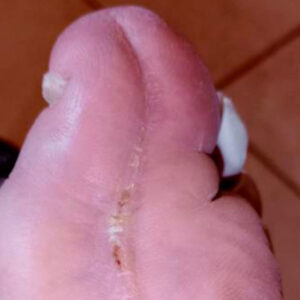
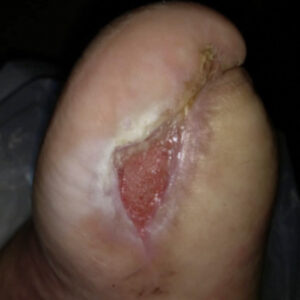
A 67-year-old patient with type 2 diabetes presented with osteomyelitis involving the second, third, and fourth metatarsals. Rather than performing multiple segmental metatarsal resections, a more functional limb-salvage strategy was selected to preserve foot stability and provide a durable weight-bearing surface.
02 / SURGICAL APPROACH
Procedure
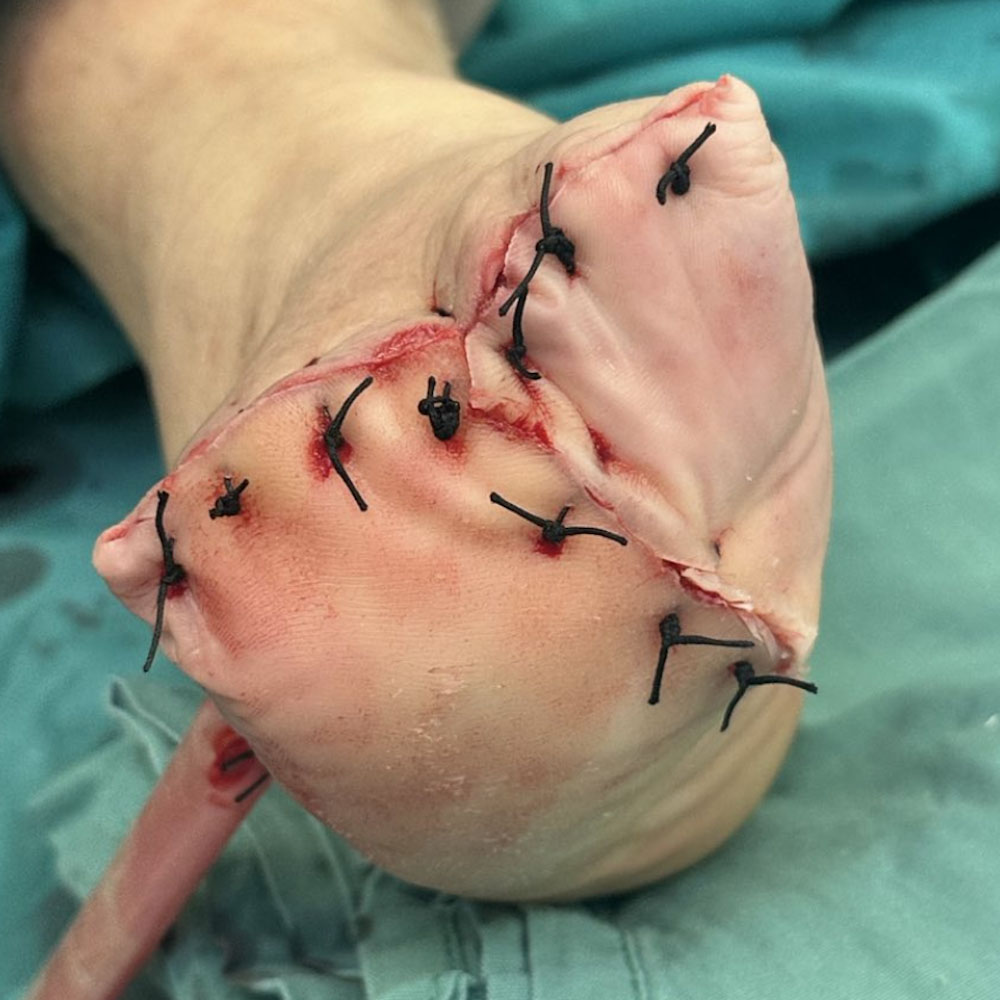
A Lisfranc amputation was performed, removing the metatarsals and phalanges at the tarsometatarsal joint while preserving the tarsal bones. This approach created a balanced residual foot, offering better alignment and more stable contact with the ground than partial metatarsal resections.
03 / HEALING & FOLLOW-UP
Outcome
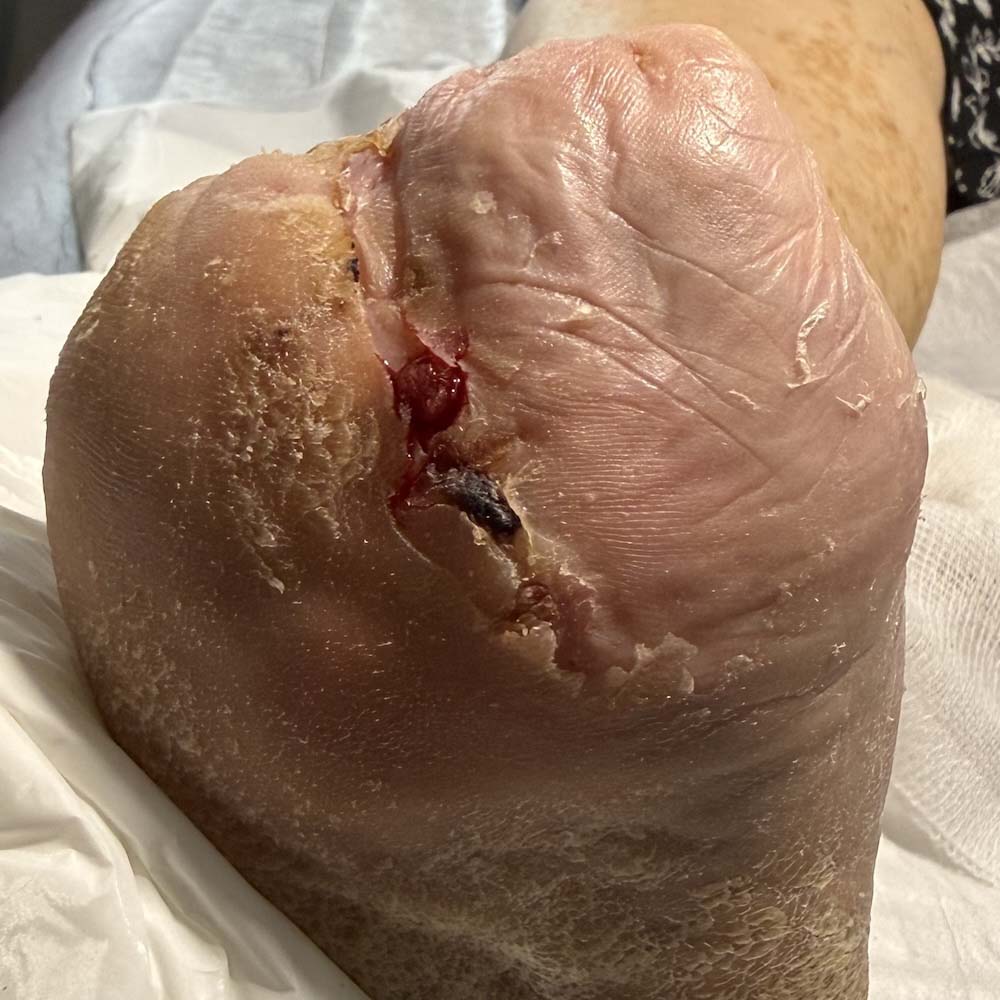
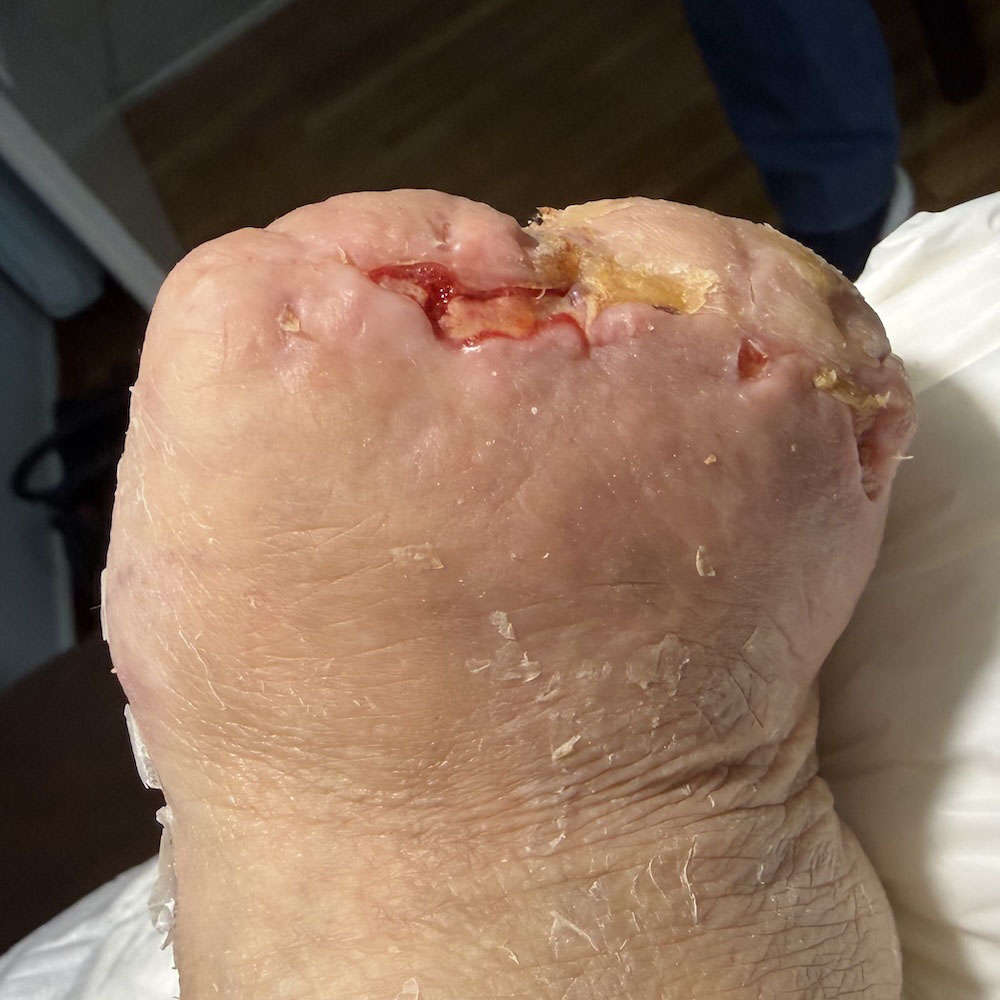
The wound healed successfully following primary closure, with only minor superficial wound-healing issues that resolved during follow-up. The patient was subsequently fitted with a custom prosthetic filler and specialized therapeutic footwear, restoring a stable, plantigrade foot and enabling safe ambulation. This case demonstrates that, in selected patients with extensive metatarsal osteomyelitis, a Lisfranc amputation may provide superior long-term function compared with multiple isolated metatarsal resections.
Concerned About a Diabetic Foot Problem?
Request a diabetic foot assessment and provide our team with the information needed to review your case.
Request a Diabetic Foot Assessment