Repeat Limb-Sparing Surgery for Recurrent Metatarsal Osteomyelitis
Clinical presentation, surgical treatment and documented healing.
- 01 / Problem
- Clinical presentation
- 02 / Procedure
- Surgical approach
- 03 / Outcome
- Healing & follow-up
Clinical photographs below include wounds and surgical treatment.
01 / CLINICAL PRESENTATION
Problem
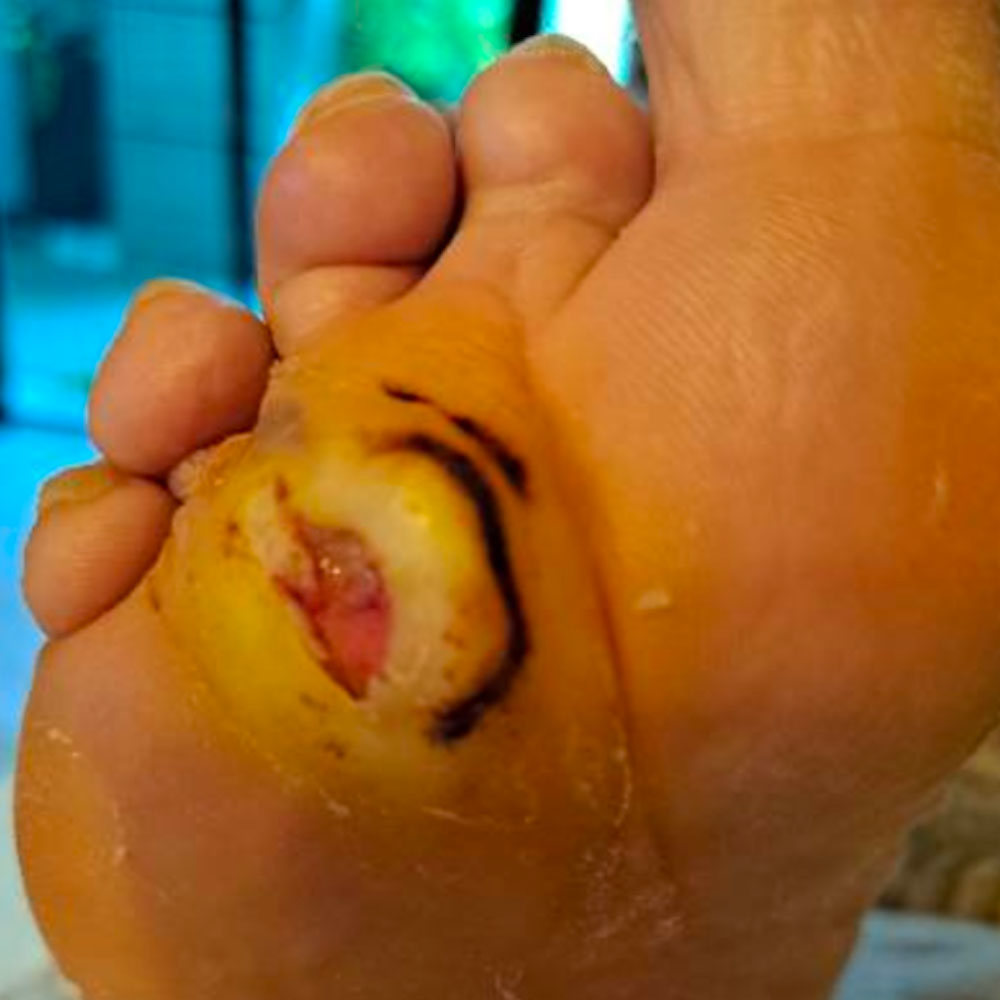
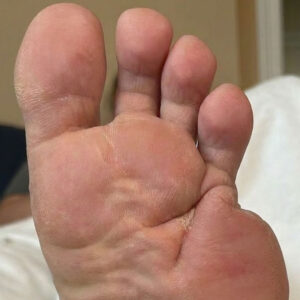
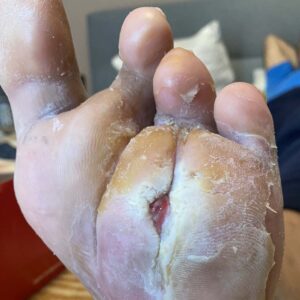
A 60-year-old woman with type 2 diabetes and peripheral arterial disease had previously undergone successful limb-sparing surgery by our team following lower-limb angioplasty for osteomyelitis of the second metatarsal. Two years later, she presented with a new plantar ulcer that had progressed to osteomyelitis involving the third metatarsal. The previous surgical scar, visible adjacent to the new lesion, demonstrates that this represented a new infectious episode rather than recurrence of the original infection.
02 / SURGICAL APPROACH
Procedure
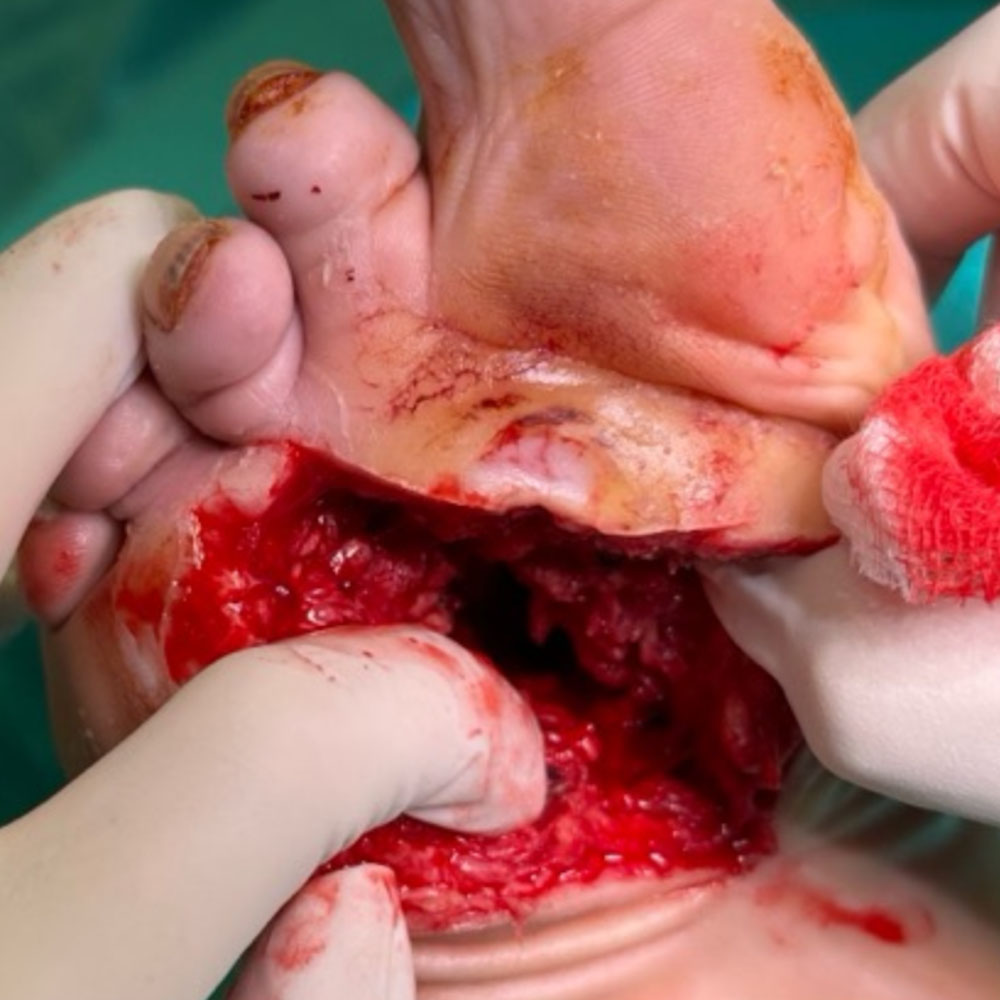
Radical surgical debridement was performed with complete resection of the infected third metatarsal and the involved phalanges until healthy, bleeding bone margins were obtained. Viable plantar soft tissues were carefully preserved and mobilized to provide durable biological coverage of the resection cavity, maintaining forefoot stability and maximizing the potential for functional healing.
03 / HEALING & FOLLOW-UP
Outcome
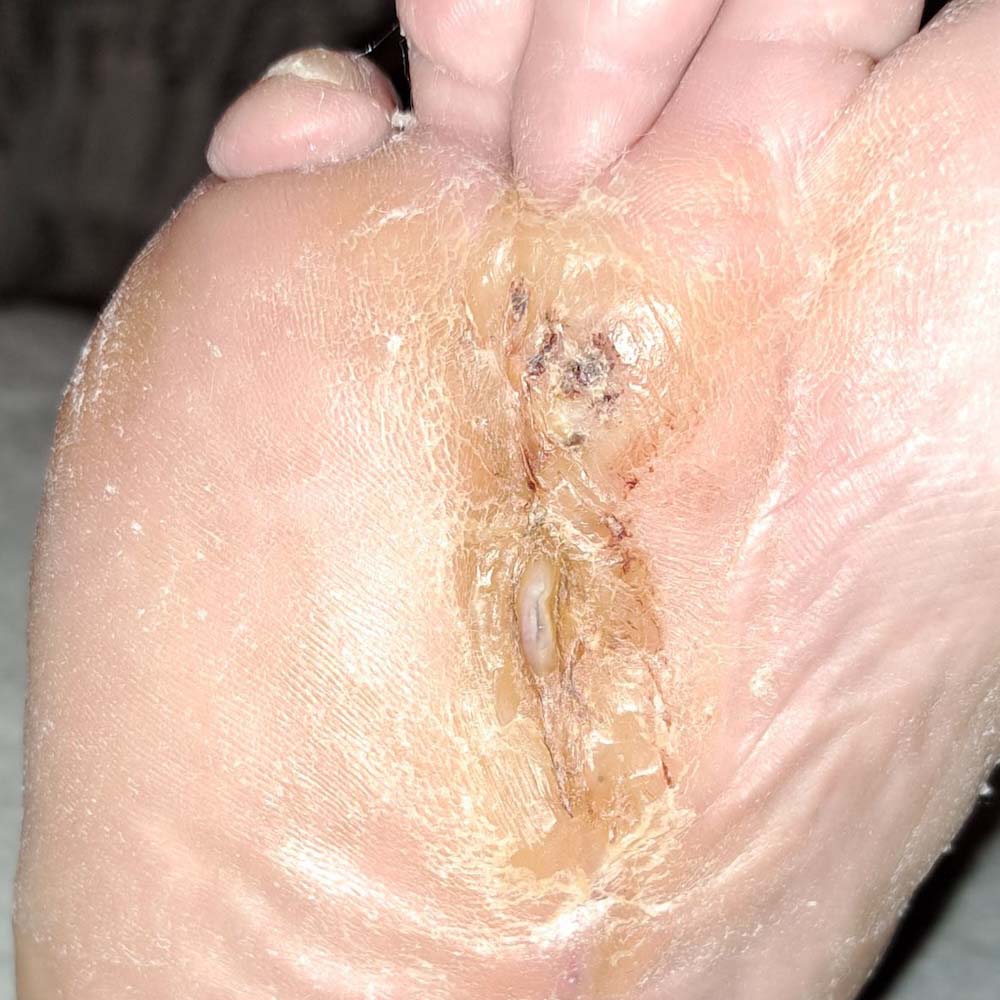
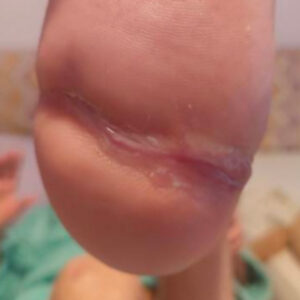
Complete wound healing was achieved in approximately three months.
Despite developing a second episode of metatarsal osteomyelitis two years after the initial limb-sparing procedure, the patient again avoided major amputation. Sequential conservative bone resections successfully eradicated infection while preserving a functional, weight-bearing foot, demonstrating that recurrent diabetic foot osteomyelitis can often be managed with repeat limb-salvage surgery rather than more proximal amputation.
Concerned About a Diabetic Foot Problem?
Request a diabetic foot assessment and provide our team with the information needed to review your case.
Request a Diabetic Foot Assessment