Open Lisfranc Amputation for Extensive Forefoot Osteomyelitis
Clinical presentation, surgical treatment and documented healing.
- 01 / Problem
- Clinical presentation
- 02 / Procedure
- Surgical approach
- 03 / Outcome
- Healing & follow-up
Clinical photographs below include wounds and surgical treatment.
01 / CLINICAL PRESENTATION
Problem
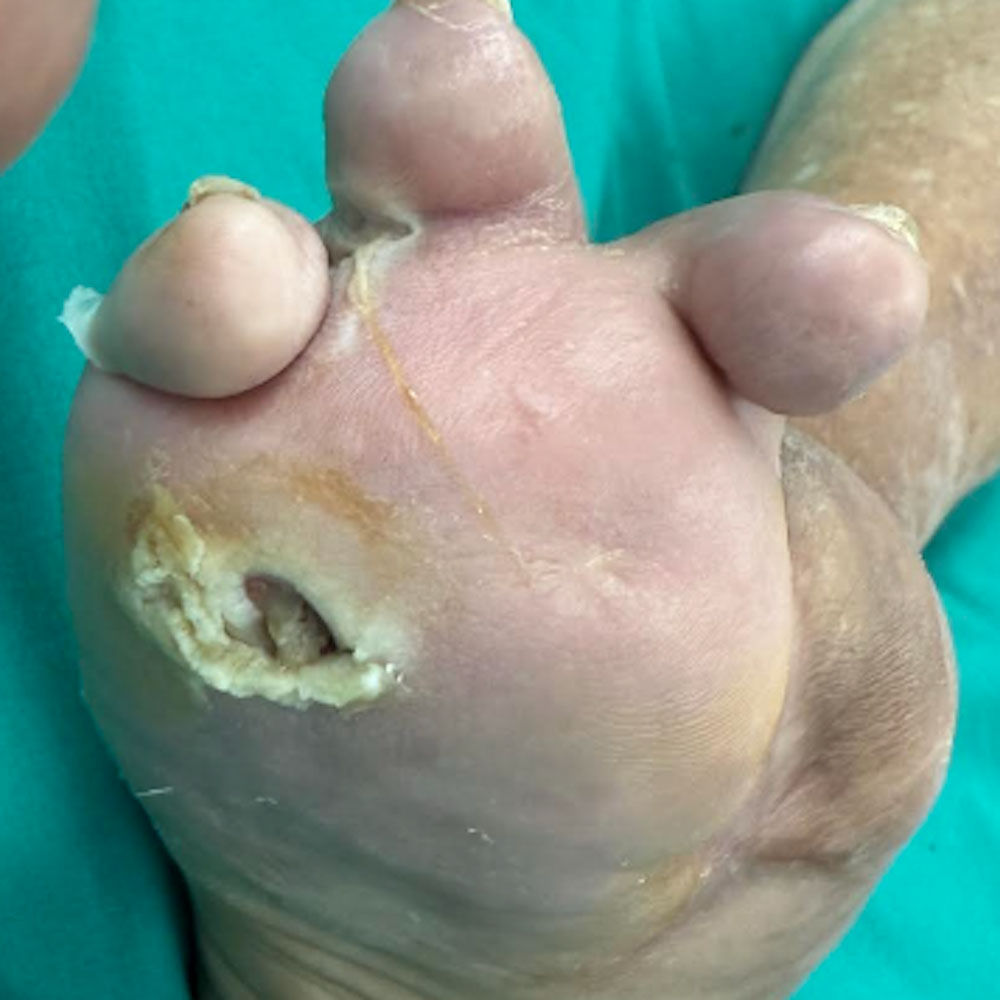
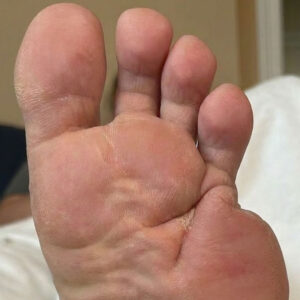
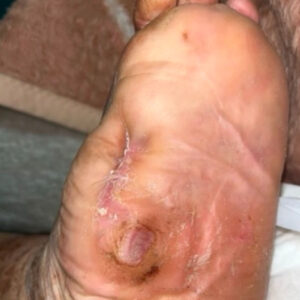
A 76-year-old man with type 2 diabetes was referred to our unit after previous amputation of the first and second rays at another hospital. He presented with a chronic plantar ulcer complicated by osteomyelitis of the fourth and fifth metatarsals, with extensive soft-tissue infection threatening further proximal spread and increasing the risk of major amputation.
02 / SURGICAL APPROACH
Procedure
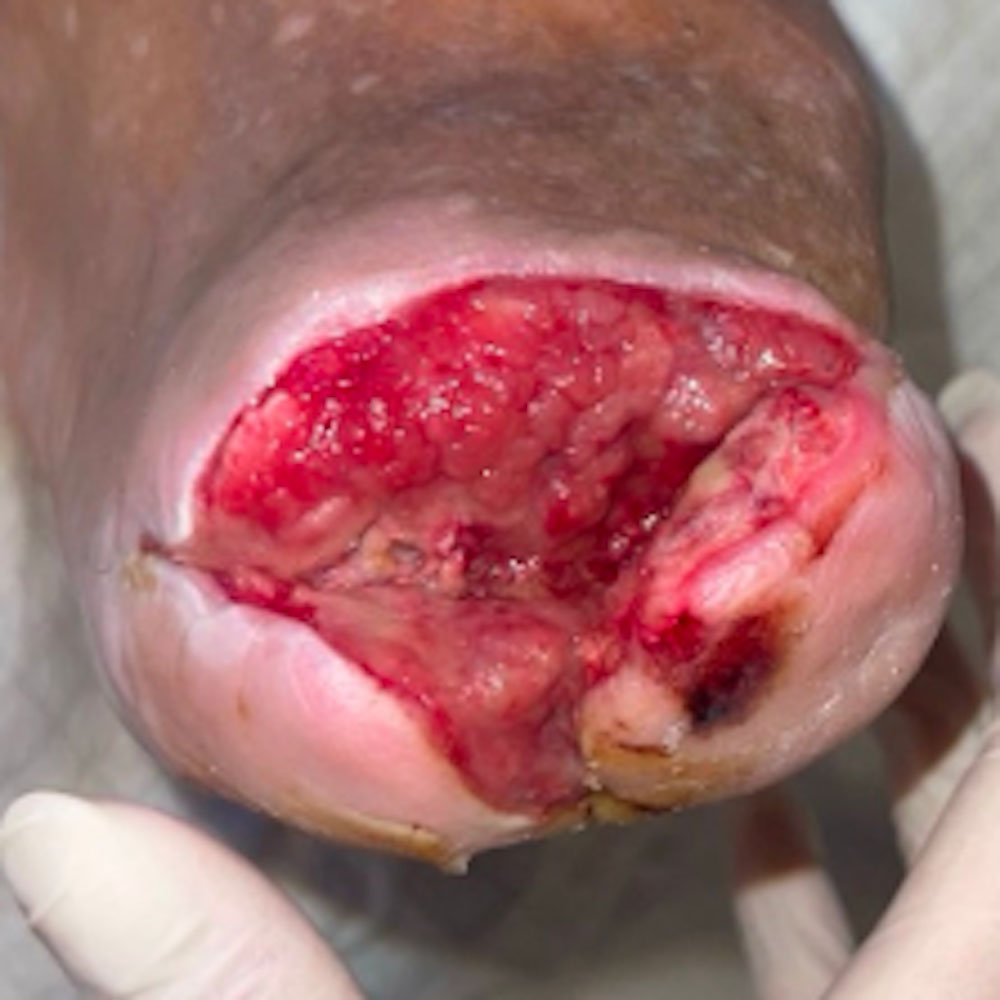
The patient underwent a Lisfranc amputation, removing all infected bone and non-viable soft tissue until healthy margins were achieved. Because of the severity of the infection, the wound was intentionally left open rather than closed primarily, allowing adequate drainage and complete local infection control. Healing was planned by secondary intention, prioritizing eradication of the infection over immediate wound closure.
03 / HEALING & FOLLOW-UP
Outcome
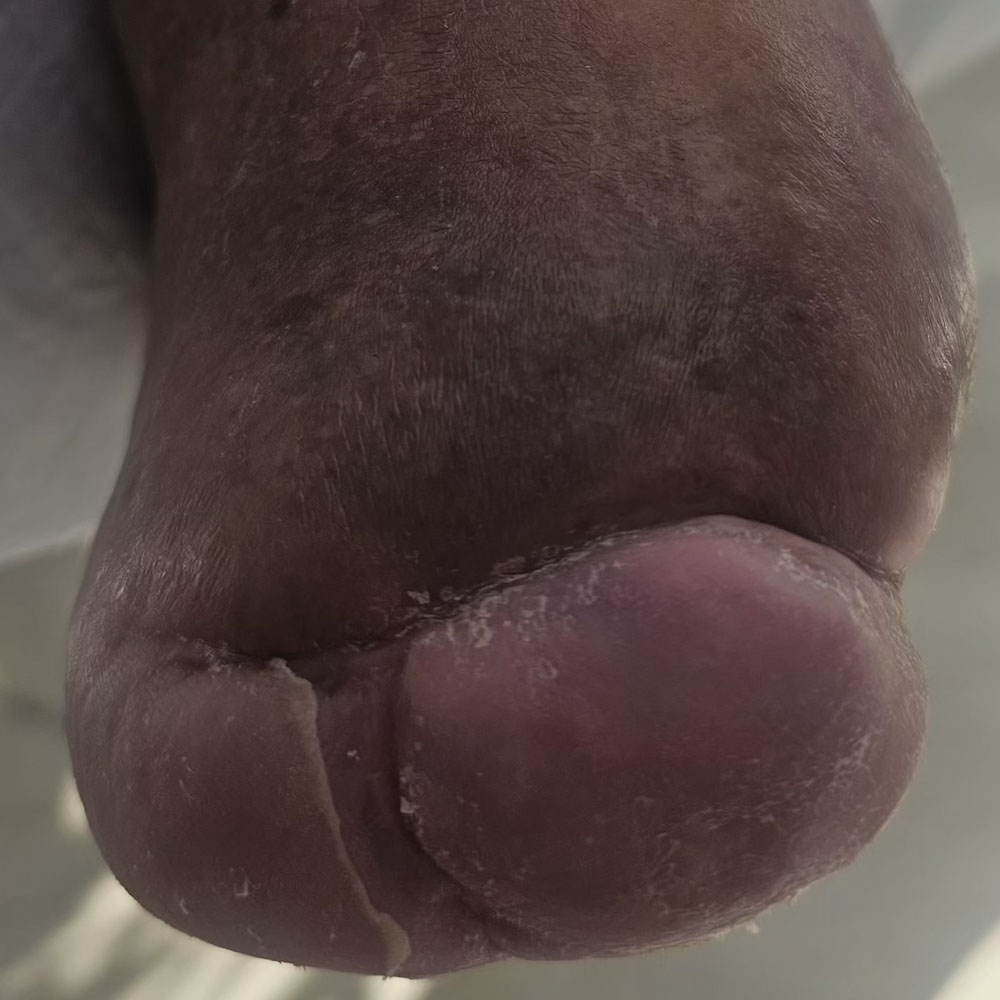
The wound healed completely over approximately three months, without recurrent infection or the need for further proximal amputation.
This approach preserved a functional residual foot suitable for ambulation with customized therapeutic footwear, demonstrating that even advanced forefoot osteomyelitis can often be managed successfully with a well-planned limb-salvage strategy.
Concerned About a Diabetic Foot Problem?
Request a diabetic foot assessment and provide our team with the information needed to review your case.
Request a Diabetic Foot Assessment