Hallux Phalanx Resection with Soft-Tissue Preservation
Clinical presentation, surgical treatment and documented healing.
- 01 / Problem
- Clinical presentation
- 02 / Procedure
- Surgical approach
- 03 / Outcome
- Healing & follow-up
Clinical photographs below include wounds and surgical treatment.
01 / CLINICAL PRESENTATION
Problem
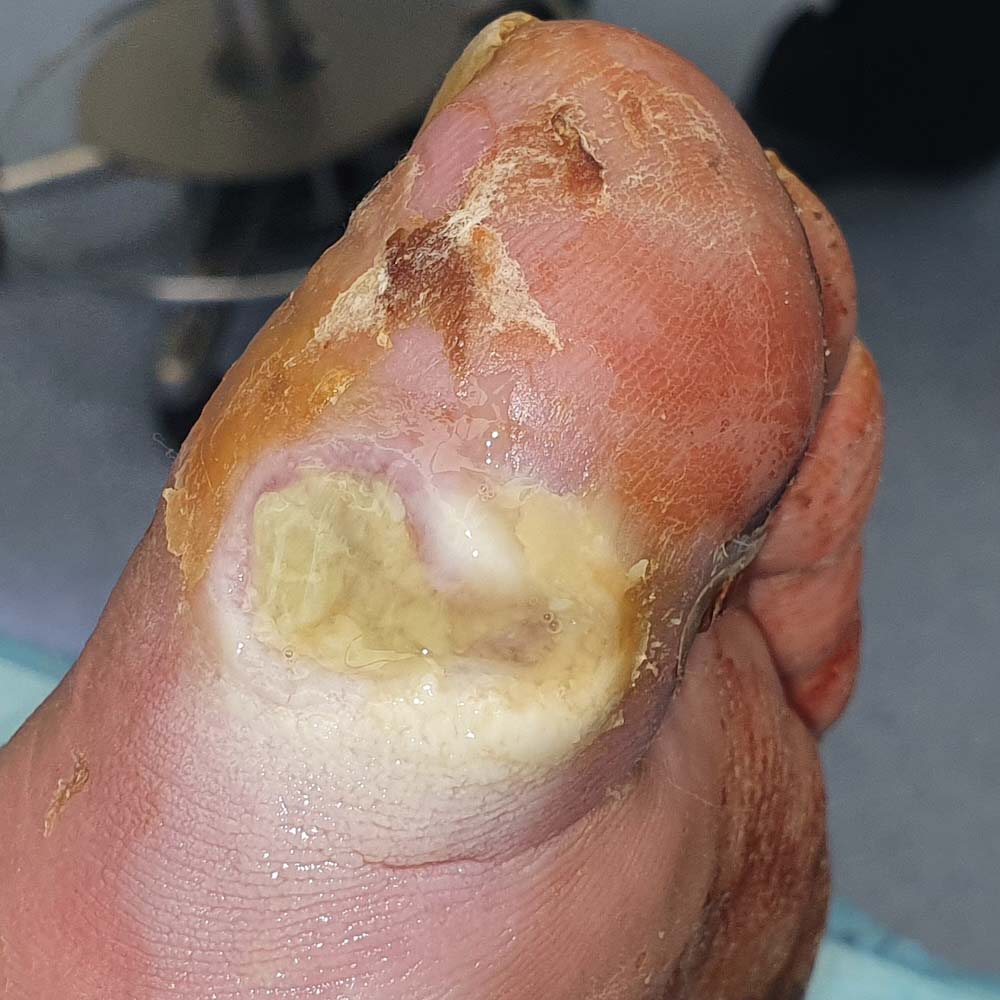
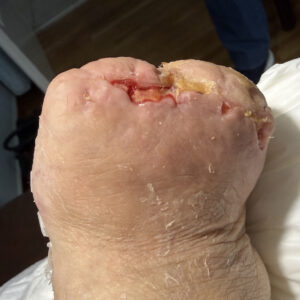
A 68-year-old man with type 2 diabetes presented with a diabetic foot ulcer complicated by osteomyelitis of the hallux phalanges. The infection extended throughout the phalanges, threatening exposure of the first metatarsal head and increasing the risk of a more proximal amputation if adequate soft-tissue coverage could not be maintained.
02 / SURGICAL APPROACH
Procedure
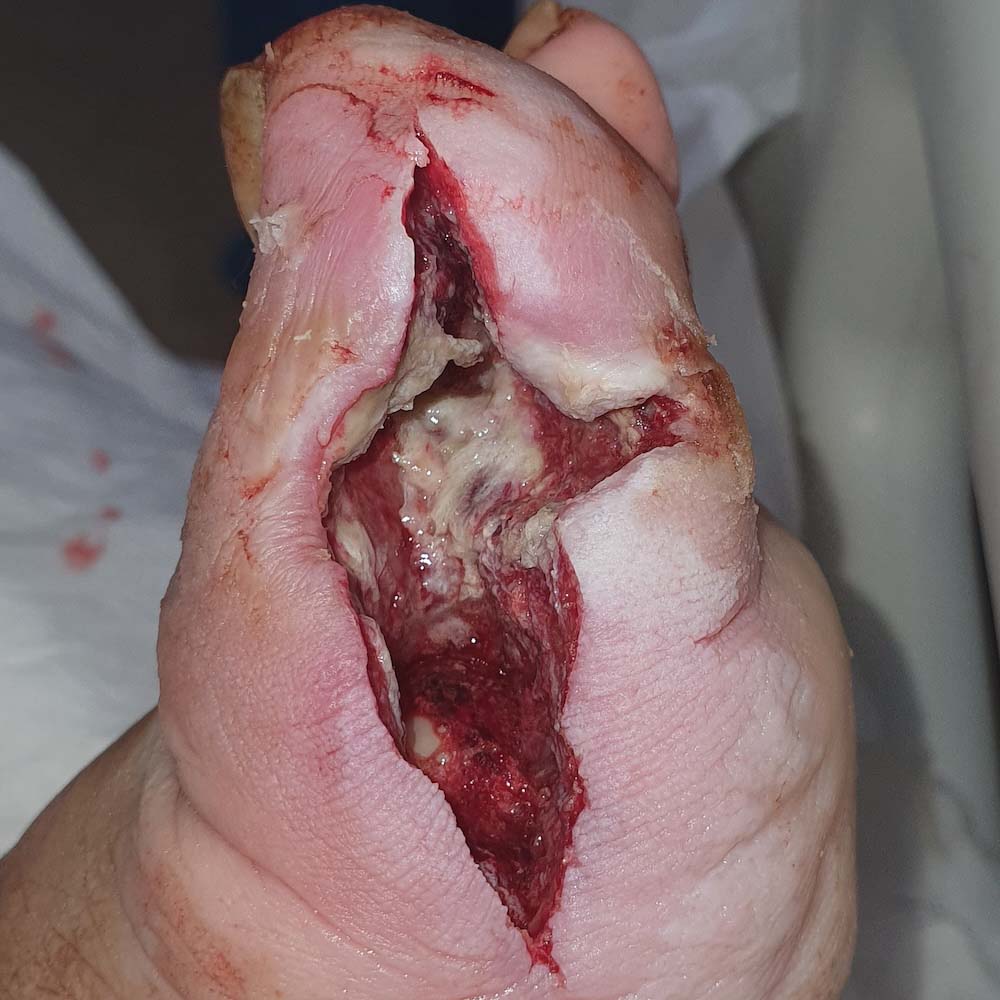
The infected hallux phalanges were resected until healthy, infection-free bone margins were achieved. Particular emphasis was placed on preserving the viable soft-tissue envelope of the hallux. Rather than sacrificing the entire toe, these preserved tissues were advanced and used as a biological flap to cover the first metatarsal head, providing durable soft-tissue coverage while allowing the wound to heal by secondary intention.
03 / HEALING & FOLLOW-UP
Outcome
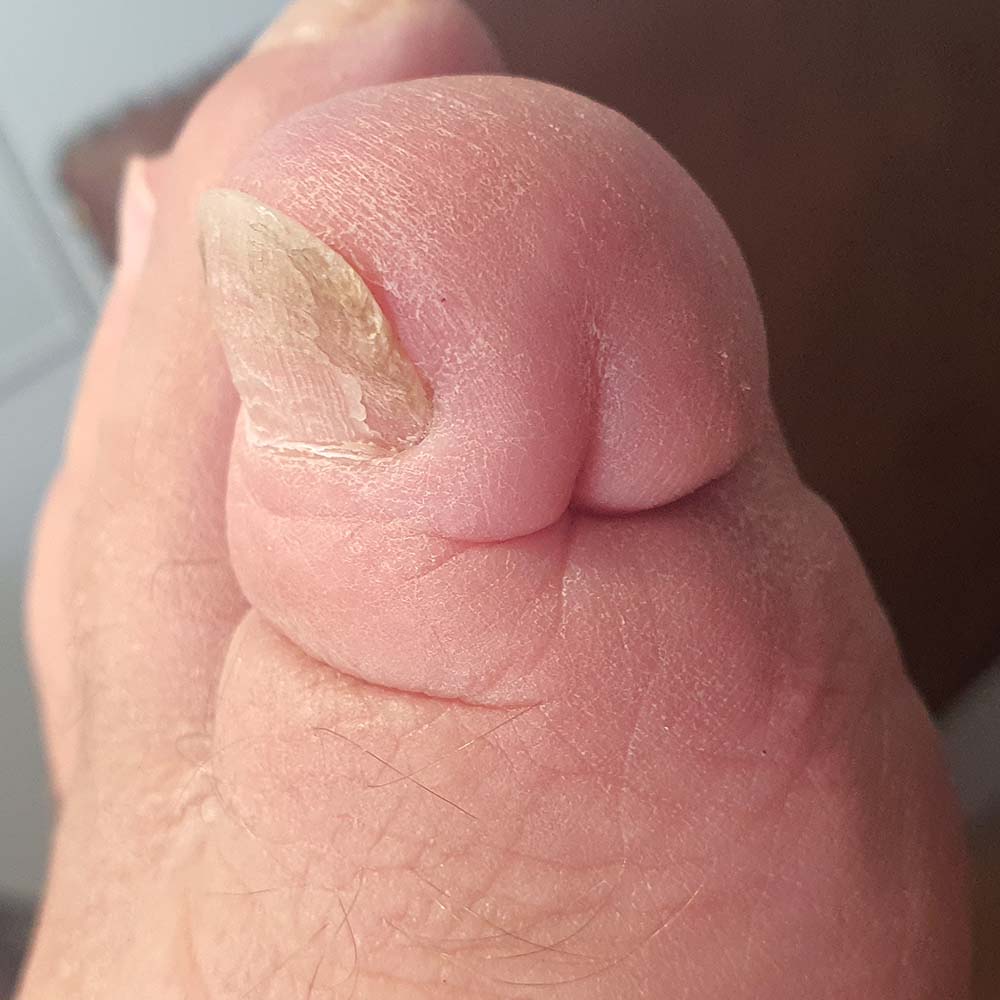
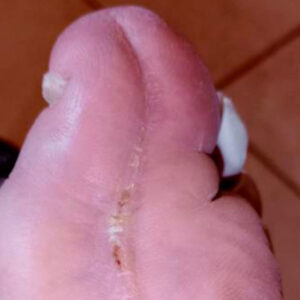
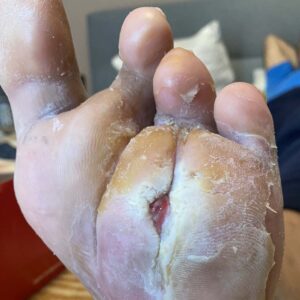
Complete wound healing was achieved within approximately 2.5 months.
By preserving and utilizing the hallux soft tissues as a biological flap, stable coverage of the first metatarsal head was achieved, infection was eradicated, and the biomechanical role of the first ray was preserved without the need for a more proximal amputation.
Concerned About a Diabetic Foot Problem?
Request a diabetic foot assessment and provide our team with the information needed to review your case.
Request a Diabetic Foot Assessment