Lisfranc Amputation for Extensive Forefoot Osteomyelitis
Clinical presentation, surgical treatment and documented healing.
- 01 / Problem
- Clinical presentation
- 02 / Procedure
- Surgical approach
- 03 / Outcome
- Healing & follow-up
Clinical photographs below include wounds and surgical treatment.
01 / CLINICAL PRESENTATION
Problem
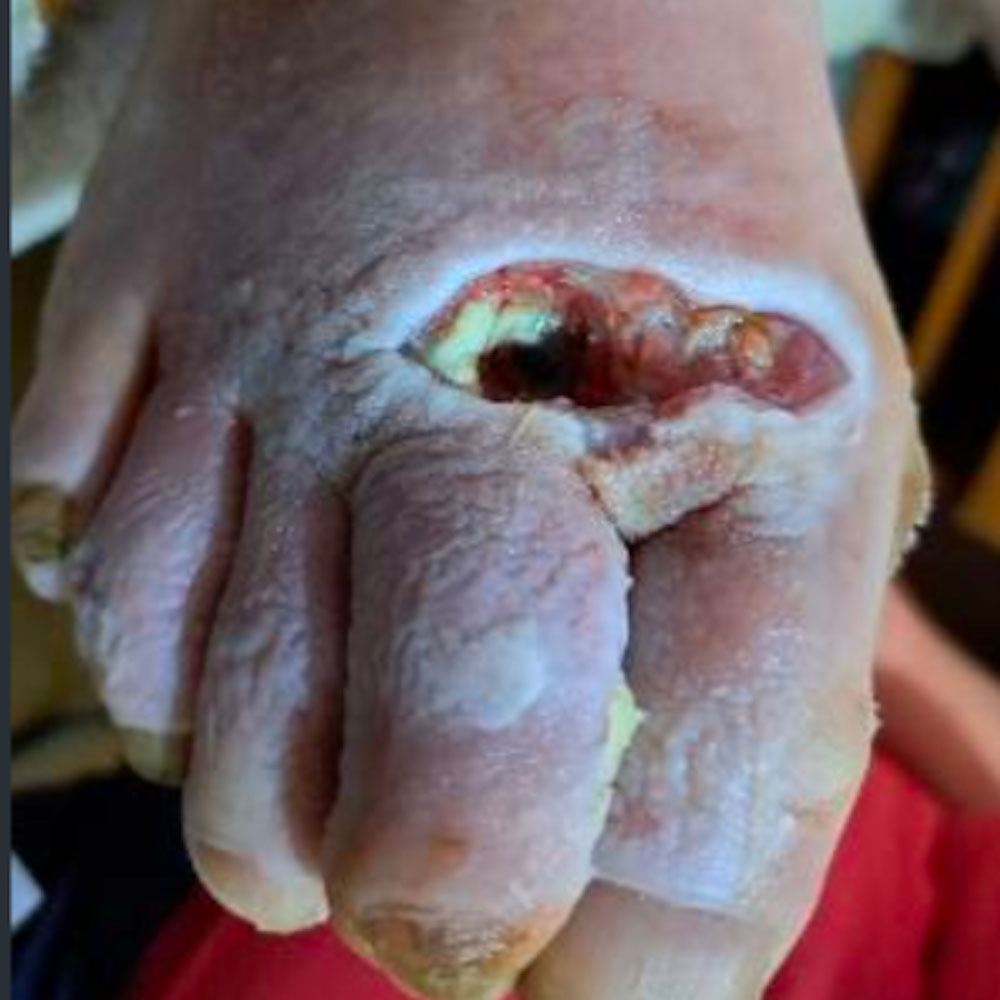
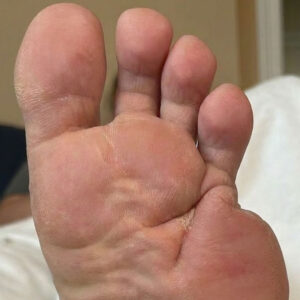
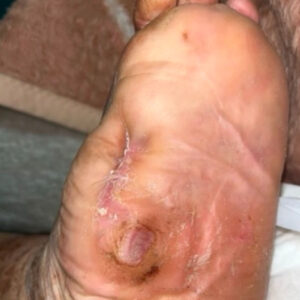
A 75-year-old man with type 2 diabetes was referred with an extensive diabetic foot infection complicated by a chronic ulcer and draining sinus tract. Imaging and intraoperative findings demonstrated osteomyelitis involving the first, second, and third metatarsals, making local bone preservation no longer feasible and placing the limb at high risk for major amputation.
02 / SURGICAL APPROACH
Procedure
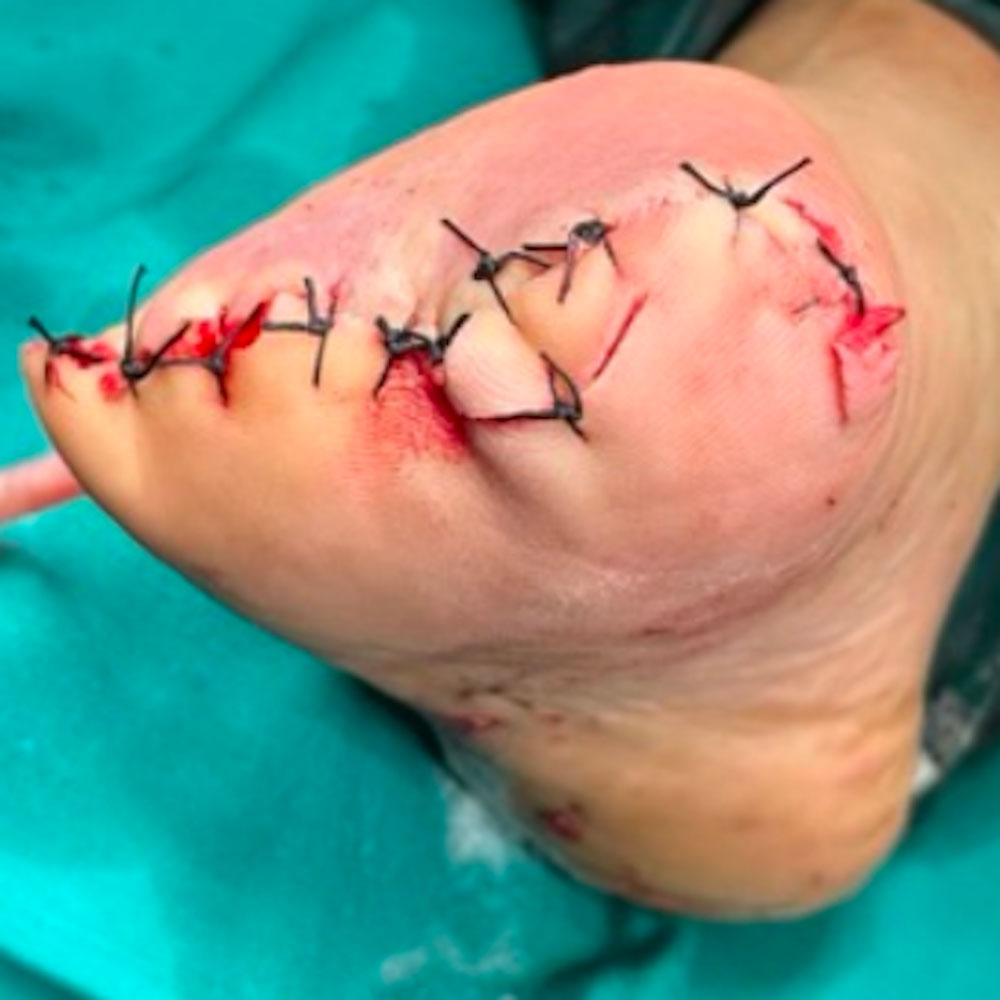
Following complete assessment, a Lisfranc amputation was performed to eradicate all infected bone while preserving the maximum possible length of the foot. All infected tissues were excised until healthy, bleeding margins were obtained, and the plantar soft tissues were carefully preserved to create a durable, weight-bearing stump suitable for future ambulation.
03 / HEALING & FOLLOW-UP
Outcome
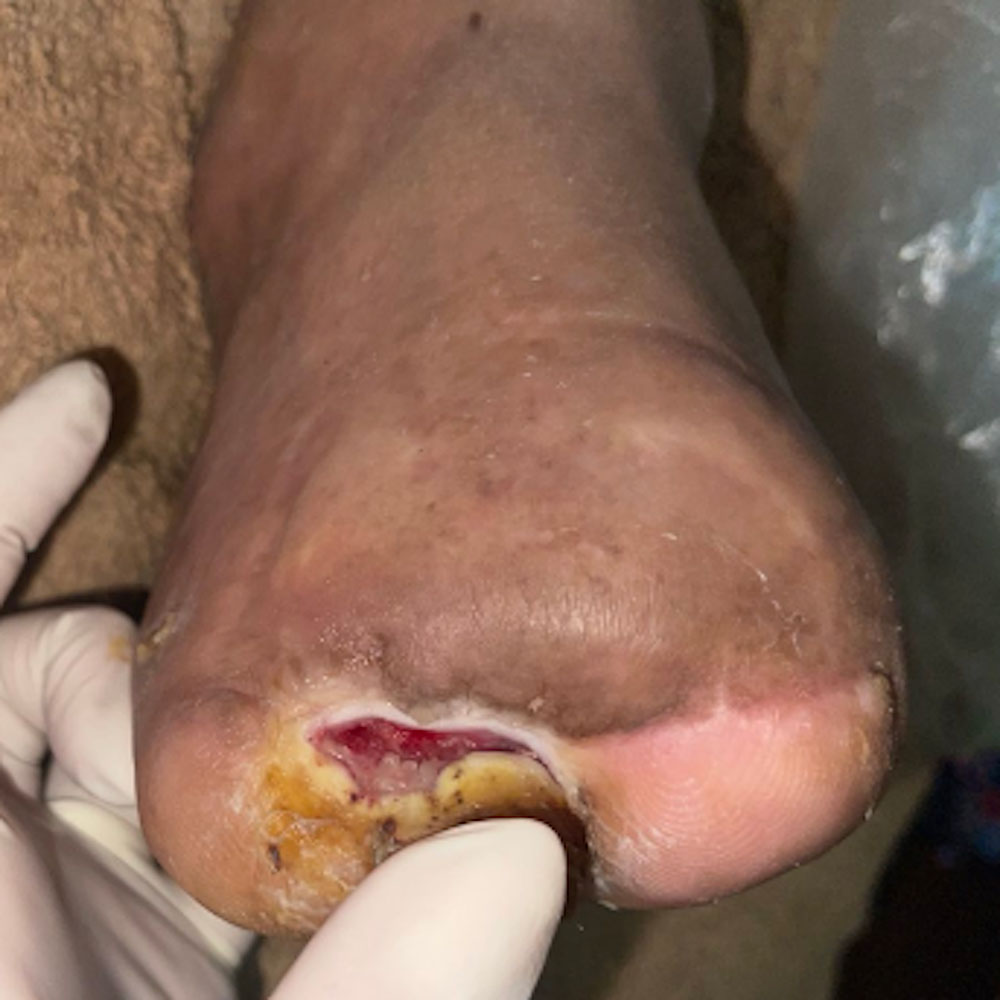
The wound healed uneventfully, allowing preservation of a functional foot and avoiding a major lower-limb amputation.
This case demonstrates that, when forefoot osteomyelitis is too extensive for isolated bone resections, a well-planned minor amputation such as a Lisfranc amputation can provide definitive infection control while maintaining limb function. Preserving a stable, weight-bearing residual foot offers substantially better rehabilitation potential than a major amputation and should be considered whenever oncologically—or in this case infectiously—safe margins can be achieved.
Concerned About a Diabetic Foot Problem?
Request a diabetic foot assessment and provide our team with the information needed to review your case.
Request a Diabetic Foot Assessment