
Diabetic Foot Osteomyelitis: Can the Foot Be Saved? Symptoms, Diagnosis and Limb-Sparing Surgery
Introduction-Diabetic Foot Osteomyelitis Diabetic foot osteomyelitis is one of the... Read more
DIABETIC FOOT SURGERY · CLINICAL CASES
Explore real diabetic foot debridement and drainage cases, demonstrating how expert surgical treatment controls infection, promotes healing, and helps preserve the limb.
Debridement and drainage are selected according to infection severity, tissue viability, perfusion and the presence of deeper structural involvement.
Surgical debridement removes infected and non-viable tissue, while drainage helps control collections and reduce the local infectious burden. The cases below demonstrate how these procedures fit within a broader diabetic foot treatment plan and, where feasible, a limb-salvage strategy.
For the complete collection organized by surgical approach, visit the Diabetic Foot Surgery – Clinical Cases hub.
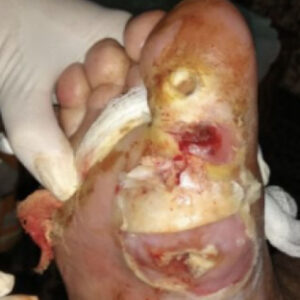
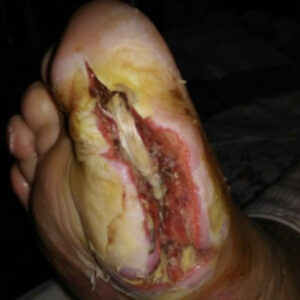
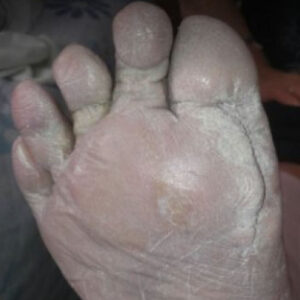
A 67-year-old woman with Type 2 Diabetes Mellitus presented with a diabetic foot plantar sinus tract associated with deep soft-tissue infection. Clinical and intraoperative assessment confirmed that the tract did not involve bone, allowing a limb-sparing procedure without osseous resection.
The entire sinus tract was surgically laid open, converting the tunnel into a single open wound, and all infected, non-viable soft tissue was meticulously excised until healthy, bleeding margins were achieved. The phalanges and metatarsals were completely preserved, as no bone involvement was identified.
The wound healed completely within 3.5 months, with complete resolution of infection. All bones were preserved, maintaining the foot’s anatomy and function while avoiding unnecessary bone resection.
This case demonstrates that plantar sinus tracts do not always require bone resection; when bone involvement is absent, meticulous surgical exploration and complete excision of the sinus tract can eradicate infection while preserving the entire osseous architecture of the foot.
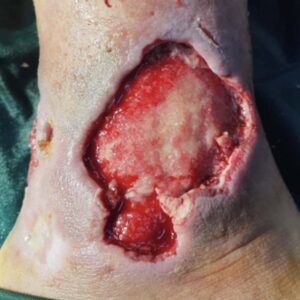
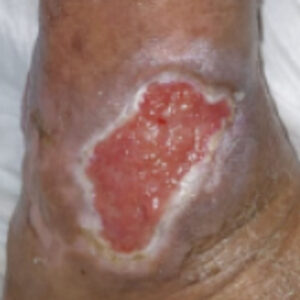
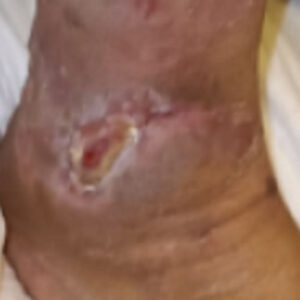
A 71-year-old man with Type 2 Diabetes Mellitus presented with a large diabetic foot ulcer over the ankle, a challenging location because of limited soft-tissue coverage and delayed healing. Extensive tissue necrosis required prompt surgical treatment to prevent progression of infection and preserve the limb.
Radical surgical debridement was performed, removing all non-viable tissue until healthy, bleeding margins were achieved. Careful wound bed preparation preserved the surrounding healthy structures and promoted progressive granulation and secondary healing.
The wound healed completely within 2.5 months, with healthy granulation tissue and progressive wound contraction, achieving successful limb salvage.
This case demonstrates that even extensive ankle ulcers—despite their notoriously poor healing potential—can heal successfully with meticulous surgical debridement, appropriate wound bed preparation
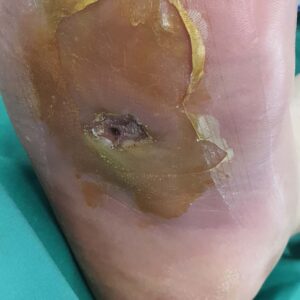
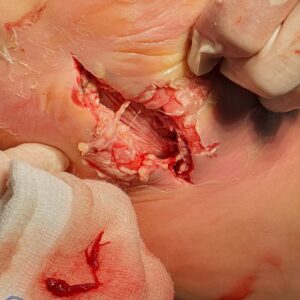
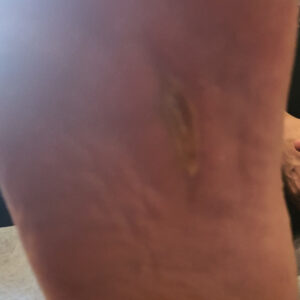
A 55-year-old woman with Type 2 Diabetes Mellitus presented with a diabetic foot plantar abscess complicated by fever and sepsis. A deep soft-tissue infection had rapidly progressed, creating an immediate threat to the foot and requiring urgent surgical intervention to control the infection.
Wide surgical incision and drainage were performed, followed by thorough debridement of all necrotic and infected tissue. The abscess cavity was fully explored, ensuring complete evacuation of purulent collections while preserving healthy tissue and promoting effective wound drainage.
The infection resolved rapidly, systemic sepsis subsided, and the wound healed completely within 2.5 months.
Early surgical source control successfully preserved the foot and prevented further spread of the infection, demonstrating that prompt and aggressive drainage of deep plantar abscesses is essential for limb salvage and can achieve complete healing without the need for amputation.
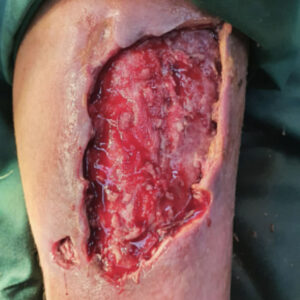
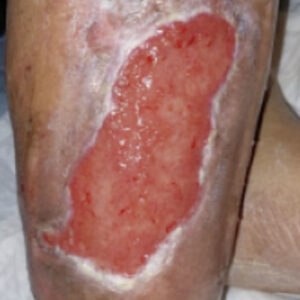
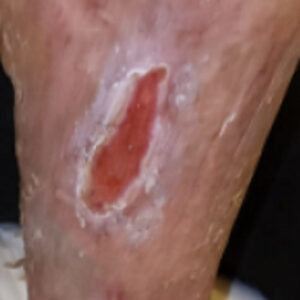
A 70-year-old man with Type 2 Diabetes Mellitus presented with an extensive diabetic leg ulcer while receiving chronic hemodialysis for end-stage renal disease. Extensive soft-tissue necrosis and severely impaired healing created a high risk of limb loss, requiring prompt surgical management.
Radical surgical debridement was performed to remove all necrotic tissue until healthy, viable margins were achieved. Careful wound bed preparation preserved the surrounding healthy tissue and promoted progressive granulation and secondary healing. Compression therapy with elastic bandaging was also applied to control edema and optimize the healing environment.
The wound healed progressively with healthy granulation tissue and marked reduction in wound size. Limb salvage was achieved despite the patient’s impaired healing capacity associated with diabetes and chronic hemodialysis.
This case demonstrates that even extensive leg ulcers in high-risk hemodialysis patients can heal successfully when meticulous surgical debridement is combined with appropriate wound care and compression therapy.
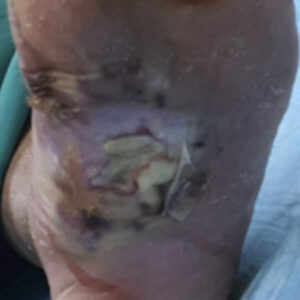
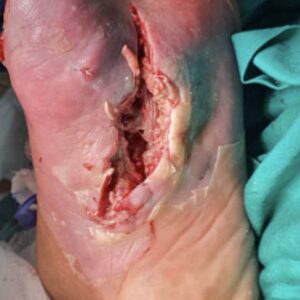
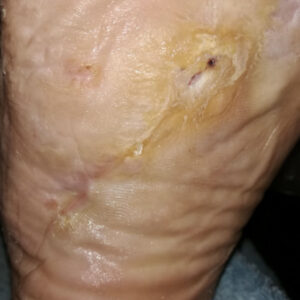
A 67-year-old man with Type 2 Diabetes Mellitus presented with a deep plantar diabetic foot ulcer complicated by severe infection, fever, and critical limb ischemia. The combination of systemic infection and poor perfusion created an immediate threat to limb viability, requiring urgent multidisciplinary management.
Endovascular revascularization was performed first to restore adequate blood flow, followed by extensive surgical debridement of all necrotic and infected tissue until healthy, viable margins were achieved while preserving as much functional tissue as possible. Postoperatively, pressure off-loading was achieved using a specialized off-loading walking device to eliminate plantar pressure and promote wound healing.
The infection resolved, the wound healed progressively, and major amputation was avoided. Limb function was successfully preserved through timely revascularization, meticulous surgical debridement, and effective pressure off-loading.
This case demonstrates that successful treatment of ischemic infected plantar ulcers requires a comprehensive limb-salvage strategy. Revascularization, meticulous surgical debridement, and appropriate pressure off-loading are equally essential for achieving durable wound healing and avoiding major amputation.
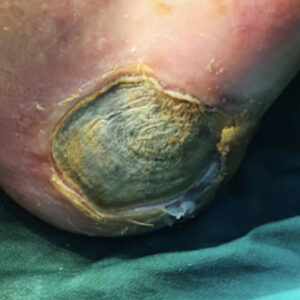
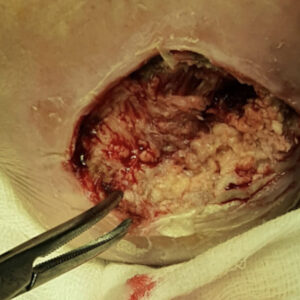
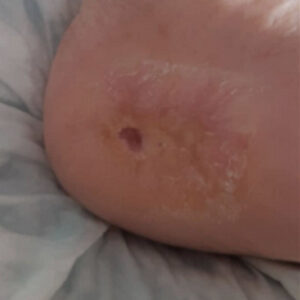
A 70-year-old man with diabetes mellitus presented with a deep heel ulcer complicated by peripheral arterial disease, severe ischemia, and extensive tissue necrosis. Critical limb ischemia threatened wound healing and limb preservation, making restoration of blood flow the essential first step before surgical treatment.
Successful lower-limb angioplasty was performed to restore adequate perfusion, followed by meticulous surgical debridement of all necrotic and infected tissue until healthy, viable margins were achieved. The wound was managed with a limb-salvage approach, preserving as much functional tissue as possible.
The wound healed progressively after revascularization and surgical debridement, avoiding major amputation and achieving durable limb preservation.
This case demonstrates that successful limb salvage in ischemic diabetic foot ulcers often depends on timely revascularization followed by meticulous surgical debridement. Restoring blood flow before surgery can transform a limb at high risk of amputation into a limb with healing potential.
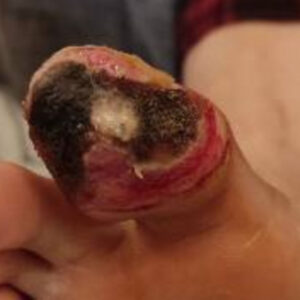
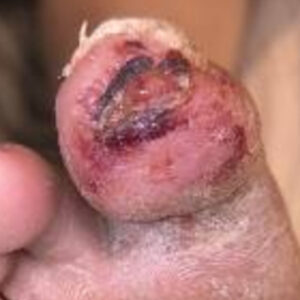
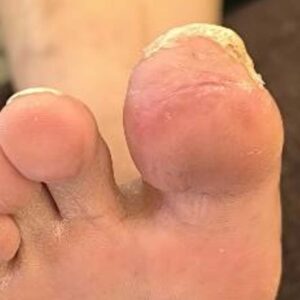
A 50-year-old woman with Type 1 Diabetes Mellitus presented with infected gangrene of the great toe. Despite the extensive soft-tissue destruction, careful clinical and surgical assessment confirmed that all phalanges remained viable, making complete preservation of the toe possible.
Meticulous excision of all necrotic soft tissue was performed while preserving every phalanx. Only non-viable tissue was removed, maintaining the toe’s anatomy and creating optimal conditions for secondary wound healing.
Complete healing was achieved within 2.5 months without infection recurrence. The toe and all phalanges were successfully preserved, maintaining toe length, stability, and function.
This case demonstrates that even extensive infected gangrene does not always require phalangeal resection. Careful surgical assessment and meticulous debridement can preserve both the toe and every phalanx when bone viability is maintained.
Each case is presented to help advanced knowledge and improve patient outcomes.
NEED A CLINICAL EVALUATION?
Every diabetic foot problem requires individual assessment of infection, circulation, tissue viability and functional risk. Clinical cases are educational examples and do not replace an examination.
Introduction-Diabetic Foot Osteomyelitis Diabetic foot osteomyelitis is one of the... Read more
Before we had metabolic surgery or GLP-1 medications, surgeons were... Read more

Most people are told that type 2 diabetes is a... Read more