
Diabetic Foot Tests: Essential Examinations for Diagnosis and Assessment
Diabetic Foot Assessment Before a Wound Develops Diabetic foot care... Read more
DIABETIC FOOT SURGERY · CLINICAL CASES
Explore real diabetic foot debridement and drainage cases, demonstrating how expert surgical treatment controls infection, promotes healing, and helps preserve the limb.
Debridement and drainage are selected according to infection severity, tissue viability, perfusion and the presence of deeper structural involvement.
Surgical debridement removes infected and non-viable tissue, while drainage helps control collections and reduce the local infectious burden. The cases below demonstrate how these procedures fit within a broader diabetic foot treatment plan and, where feasible, a limb-salvage strategy.
For the complete collection organized by surgical approach, visit the Diabetic Foot Surgery – Clinical Cases hub.
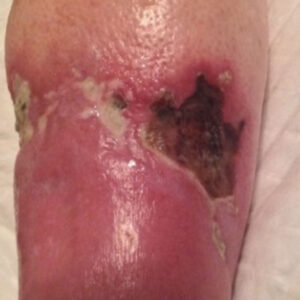
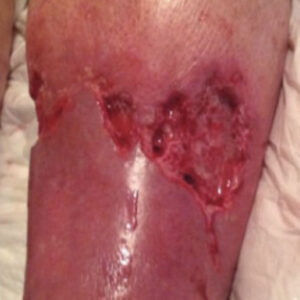
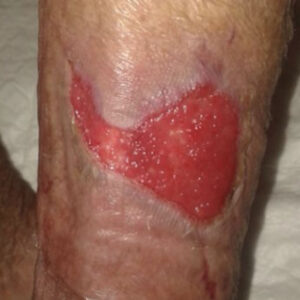
A 77-year-old patient with diabetes mellitus presented with a necrotic lower leg ulcer accompanied by severe surrounding inflammation, edema, and soft-tissue infection. The combination of tissue necrosis, infection, and swelling created an unfavorable environment for wound healing and increased the risk of progressive tissue loss.
Serial surgical debridements were performed to remove all necrotic and devitalized tissue until healthy, bleeding margins were obtained. Treatment was combined with systemic antibiotic therapy, diuretic treatment to reduce edema, and compression bandaging to improve local tissue conditions and promote healing.
The infection and inflammation resolved progressively, edema was successfully controlled, and healthy granulation tissue developed, leading to progressive wound healing.
This case demonstrates that successful healing of complex diabetic leg wounds often depends on a comprehensive multidisciplinary approach, combining meticulous surgical debridement with infection control, edema management, and compression therapy rather than surgery alone.
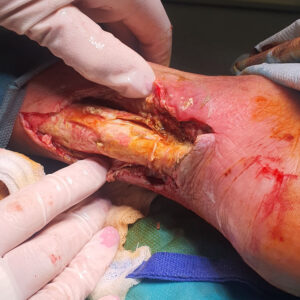
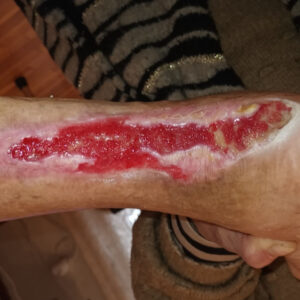
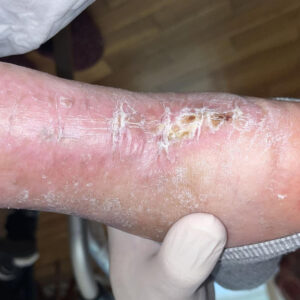
An 81-year-old woman presented with an extensive diabetic foot soft-tissue defect with exposure of the Achilles tendon, one of the most challenging wounds to heal because of the tendon’s poor vascularity and limited soft-tissue coverage. The wound carried a high risk of persistent infection, tendon desiccation, and loss of function.
Serial surgical debridements were performed, removing all devitalized tissue. Because part of the Achilles tendon had become non-viable, limited tendon debridement was necessary while preserving as much functional tendon as possible. Careful wound bed preparation and meticulous local wound care promoted progressive granulation tissue formation and healing by secondary intention.
The wound healed progressively over approximately 6 months, achieving complete soft-tissue coverage and durable wound closure. Despite partial Achilles tendon sacrifice, the patient retained independent ambulation without requiring tendon reconstruction or major amputation.
This case demonstrates that even extensive wounds with exposed Achilles tendon can be successfully managed with meticulous limb-salvage surgery, preserving both limb function and quality of life.
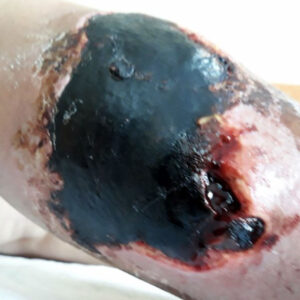
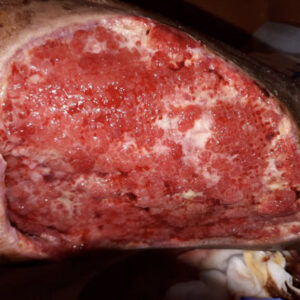
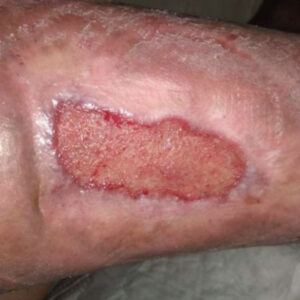
A 74-year-old man presented with extensive pretibial skin necrosis following a neglected post-traumatic hematoma. Progressive tissue necrosis led to a large full-thickness soft-tissue defect over the anterior tibia, creating a challenging wound with a high risk of infection and prolonged healing.
Radical surgical debridement was performed, completely excising all necrotic skin and devitalized subcutaneous tissue until healthy, bleeding tissue was reached. The wound was managed with meticulous local wound care, allowing progressive granulation tissue formation and healing by secondary intention.
The wound healed progressively over approximately 3 months, achieving stable soft-tissue coverage without the need for skin grafting or flap reconstruction.
This case demonstrates that even extensive pretibial necrosis following a neglected hematoma can heal successfully through meticulous surgical debridement and structured wound care, avoiding more complex reconstructive procedures.
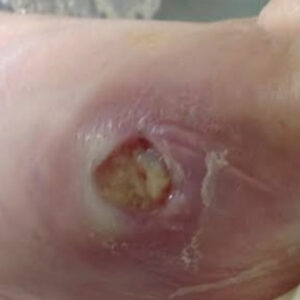
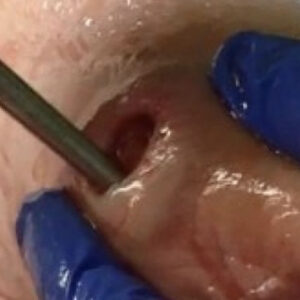
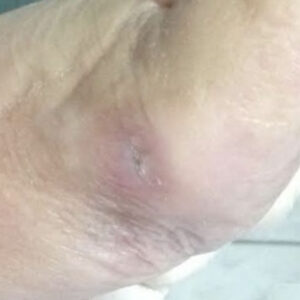
An 83-year-old woman presented with an infected diabetic foot ulcer over the first metatarsal head (hallux valgus deformity). This is a particularly challenging location because it is subjected to constant pressure during walking, making durable wound healing difficult and increasing the risk of recurrent ulceration.
Radical surgical debridement was performed, removing all infected and non-viable tissue until healthy, bleeding margins were achieved. Careful wound bed preparation and pressure off-loading promoted progressive granulation tissue formation and healing by secondary intention.
The wound healed completely within approximately 3 months, with preservation of the foot and restoration of durable soft-tissue coverage. This case demonstrates that even ulcers located over high-pressure weight-bearing areas can heal successfully when meticulous surgical debridement is combined with effective pressure off-loading and specialized wound care.
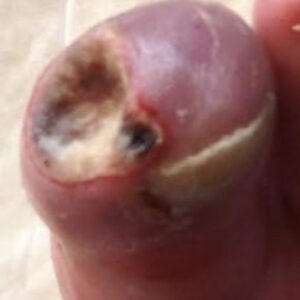
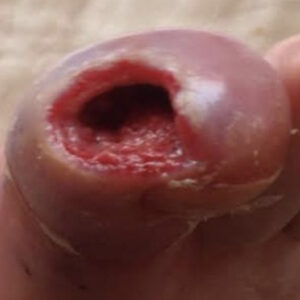
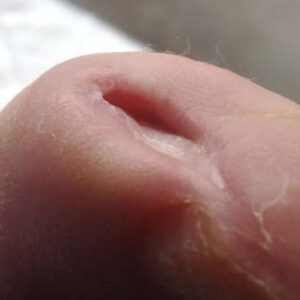
An 84-year-old woman presented with an infected ischemic diabetic toe ulcer caused by critical limb ischemia. Because adequate tissue perfusion is essential for wound healing, revascularization was required before definitive surgical wound management could be undertaken.
Successful lower-limb revascularization was performed, restoring adequate blood flow to the foot. Following reperfusion, surgical debridement removed all non-viable and infected tissue until healthy, bleeding margins were achieved, allowing the wound to heal by secondary intention.
The wound healed completely within approximately 2.5 months, with preservation of the toe and resolution of the infection.
This case highlights that successful revascularization is often the cornerstone of limb salvage, transforming a non-healing ischemic wound into one capable of complete healing while avoiding amputation.
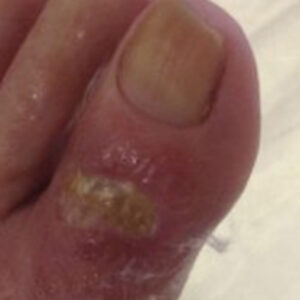
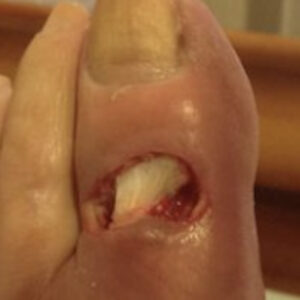
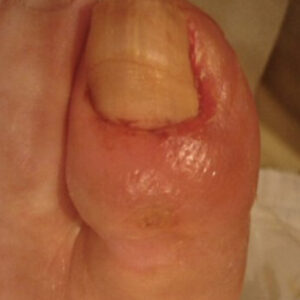
An 82-year-old woman presented with an infected diabetic toe ulcer with exposure of the extensor tendon. Tendon exposure represents a particularly challenging wound because of its poor vascularity and the high risk of persistent infection, delayed healing, and toe loss.
Serial surgical debridements were performed, removing all infected and non-viable tissue until healthy, bleeding margins were achieved. The exposed tendon was carefully preserved while meticulous wound bed preparation promoted progressive granulation tissue formation and secondary healing.
The wound healed completely with full coverage of the previously exposed tendon, avoiding amputation and preserving the toe’s anatomy and function.
This case demonstrates that exposed tendons are not synonymous with amputation; with meticulous surgical debridement and specialized wound management, durable healing and complete toe preservation are achievable.
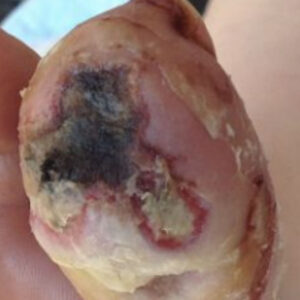
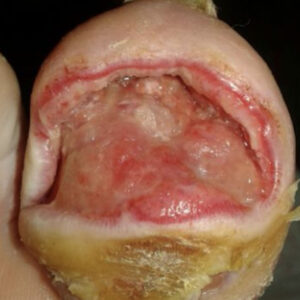
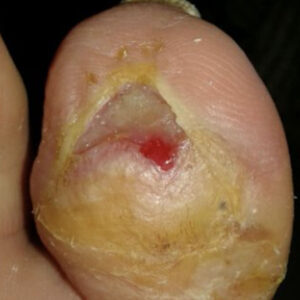
A woman with poorly controlled Type 2 Diabetes Mellitus and morbid obesity presented with infected gangrene of the great toe. Despite the severity of the infection, careful clinical and intraoperative assessment confirmed that the underlying phalanges remained viable, allowing a limb-sparing approach without bone resection.
Serial surgical debridements were performed, removing all necrotic and infected soft tissue until healthy, bleeding margins were achieved. All phalanges and the entire toe were preserved, as no osseous resection was required.
The wound healed progressively with complete resolution of the infection. The entire toe and all underlying bones were preserved, maintaining toe length, stability, and function while avoiding amputation.
This case demonstrates that even infected toe gangrene does not necessarily require bone resection or toe amputation; meticulous surgical debridement and careful assessment of bone viability can achieve complete toe preservation.
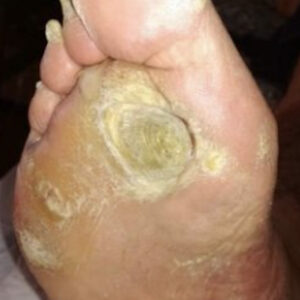
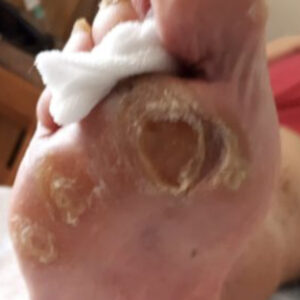
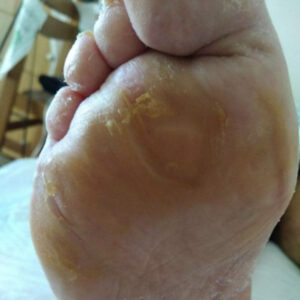
A 70-year-old woman with Type 2 Diabetes Mellitus receiving chronic hemodialysis presented with a diabetic foot neuropathic plantar ulcer. Because diabetic neuropathy reduces protective sensation, repetitive pressure during walking can damage the skin without causing pain, leading to chronic ulceration despite preserved blood flow.
Surgical debridement removed all devitalized tissue until a healthy wound bed was achieved. Treatment was combined with customized off-loading using a therapeutic shoe to eliminate pressure on the ulcer and promote uninterrupted healing.
The ulcer healed completely with restoration of intact skin. Effective off-loading, combined with meticulous surgical debridement, prevented continued mechanical stress and achieved durable wound closure despite the patient’s impaired healing capacity associated with chronic hemodialysis.
This case demonstrates that successful treatment of neuropathic plantar ulcers depends not only on surgical debridement but also on strict pressure off-loading, which is essential for durable healing and prevention of recurrence.
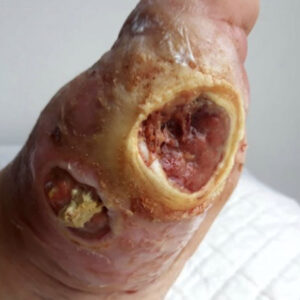
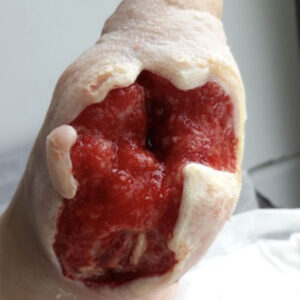
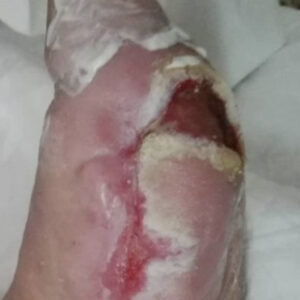
A 47-year-old woman with Type 2 Diabetes Mellitus and morbid obesity presented with diabetic foot complicated by multiple interconnected plantar sinus tracts caused by deep soft-tissue infection. Clinical and intraoperative assessment confirmed that no bone involvement was present, allowing complete soft-tissue treatment without skeletal resection.
All sinus tracts were fully laid open and converted into a single wound. Extensive debridement removed all infected and non-viable tissue until healthy, bleeding margins were achieved, while preserving every phalanx and metatarsal because no osseous infection was identified.
The wound healed completely within 3.5 months, with complete resolution of infection. All bones were preserved, maintaining the foot’s anatomy and function while avoiding unnecessary bone resection.
This case demonstrates that even extensive plantar sinus tracts do not necessarily require bone resection; meticulous surgical exploration can preserve the entire skeletal architecture when bone viability is maintained.
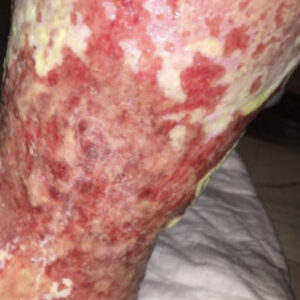
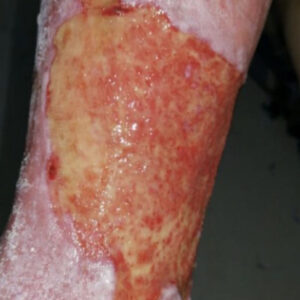
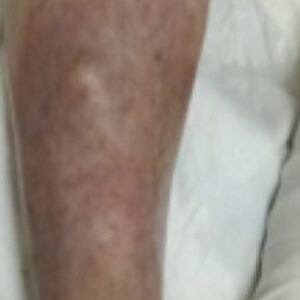
An 80-year-old woman with Type 2 Diabetes Mellitus presented with a chronic diabetic leg ulcer complicated by progressive soft-tissue necrosis, fever, and severe lower-limb edema. Persistent infection and marked edema impaired wound healing, requiring definitive surgical treatment and comprehensive medical management.
Extensive surgical debridement was performed, removing all necrotic tissue and thoroughly curetting the wound until healthy, bleeding tissue was exposed. Careful wound bed preparation created optimal conditions for granulation tissue formation and secondary healing. Compression therapy and diuretic treatment were also instituted to reduce lower-limb edema and optimize wound healing.
The infection resolved completely, healthy granulation tissue developed, and the wound healed completely within 5 months. Limb preservation was successfully achieved through meticulous surgical management combined with effective edema control.
This case demonstrates that successful healing of chronic diabetic leg ulcers depends not only on meticulous debridement but also on aggressive management of edema, creating the optimal environment for durable wound closure and limb salvage.
Each case is presented to help advanced knowledge and improve patient outcomes.
NEED A CLINICAL EVALUATION?
Every diabetic foot problem requires individual assessment of infection, circulation, tissue viability and functional risk. Clinical cases are educational examples and do not replace an examination.
Diabetic Foot Assessment Before a Wound Develops Diabetic foot care... Read more

What Does “Diabetic Foot” Mean? Many people with diabetes have... Read more

Overview Limb-sparing surgery in the diabetic foot represents a modern... Read more