
Diabetic Foot Tests: Essential Examinations for Diagnosis and Assessment
Diabetic Foot Assessment Before a Wound Develops Diabetic foot care... Read more
DIABETIC FOOT SURGERY · CLINICAL CASES
Explore real minor amputation cases showing how limb-sparing surgical techniques preserve foot length, stability, and function while avoiding major amputation whenever possible.
The level of a minor amputation is selected according to infection extent, tissue viability, circulation and the functional value of preserving the remaining foot.
Minor amputations may be necessary when infection or tissue loss cannot be controlled through debridement alone. Toe and ray procedures aim to remove non-viable structures while preserving the greatest possible functional portion of the foot within a broader diabetic foot treatment plan and limb-salvage strategy.
For the complete collection organized by surgical approach, visit the Diabetic Foot Surgery – Clinical Cases hub.


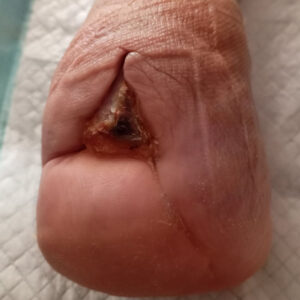
A 78-year-old patient with type 2 diabetes presented with critical limb ischemia requiring urgent limb-salvage treatment. Endovascular revascularization (angioplasty) was successfully performed first, restoring blood flow and allowing a distal amputation instead of a major lower-limb amputation.
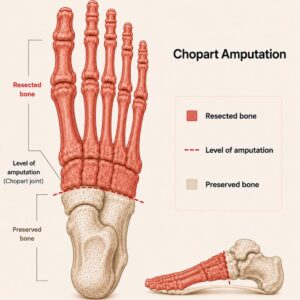
A Chopart amputation was performed, removing the toes, metatarsals, and the tarsal bones distal to the Chopart joint, while preserving the hindfoot. The wound was left to heal by secondary intention, achieving gradual closure over approximately 8 months.
Complete wound healing was achieved, preserving a functional residual limb suitable for weight bearing. The patient was fitted with a custom prosthetic device and specialized therapeutic footwear, restoring the ability to walk independently. This case demonstrates that successful revascularization combined with a Chopart amputation can preserve limb function and provide an alternative to major amputation in selected patients.
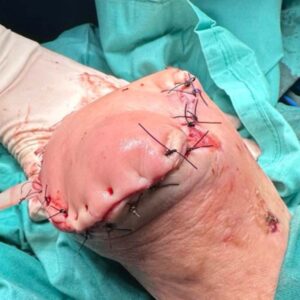
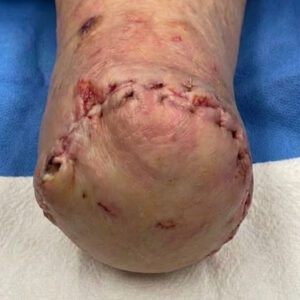
A 68-year-old patient with type 2 diabetes presented with critical limb ischemia and diabetic foot gangrene. Successful endovascular revascularization (angioplasty) restored adequate blood flow, allowing a limb-salvage procedure instead of a major amputation.
A Chopart amputation was performed, removing the toes, metatarsals, and tarsal bones distal to the Chopart joint, while preserving the hindfoot. The wound was closed with primary suturing, achieving stable soft-tissue coverage.
The surgical wound healed uneventfully with excellent stump formation. The patient was subsequently fitted with a custom prosthetic device and specialized therapeutic footwear, enabling safe ambulation and preserving functional independence. This case illustrates how timely revascularization combined with a well-planned Chopart amputation can provide durable limb salvage and restore mobility in patients with diabetic foot disease.
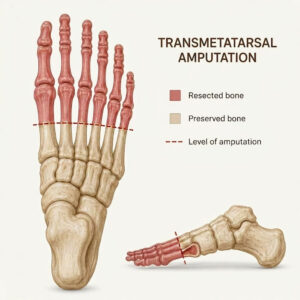
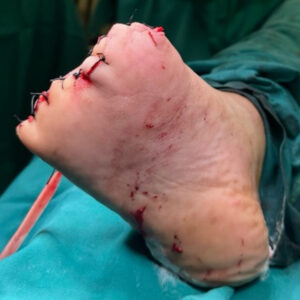
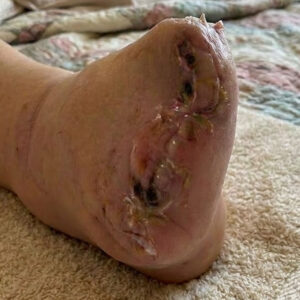
A patient with type 2 diabetes presented with toe gangrene caused by critical limb ischemia. Successful endovascular revascularization (angioplasty) restored adequate perfusion, making limb-salvage surgery feasible instead of a more proximal amputation.
A transmetatarsal amputation was performed, removing the phalanges and the distal halves of the metatarsals while preserving the proximal metatarsals and hindfoot. The wound was closed with primary suturing, providing a stable, well-contoured residual foot.
The surgical wound healed well without major complications. The patient was subsequently fitted with a custom forefoot prosthetic filler and specialized therapeutic footwear, allowing comfortable ambulation and restoration of daily activities. This case demonstrates how successful revascularization combined with a transmetatarsal amputation can preserve limb function while avoiding a major lower-extremity amputation.
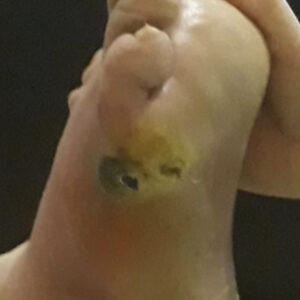
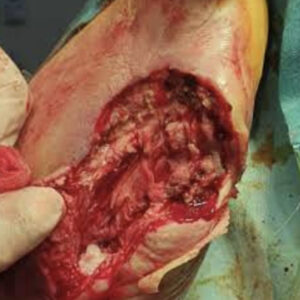
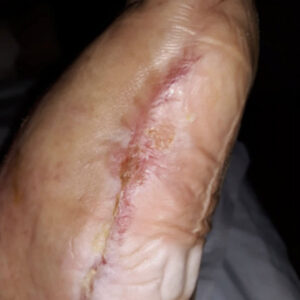
A 70-year-old patient presented with a diabetic foot complicated by a severe ischemic ulcer over the lateral aspect of the fifth metatarsal. Progressive tissue necrosis made limb-preserving treatment impossible, while the remaining forefoot was adequately perfused and suitable for a limited ray resection.
A fifth ray amputation, including the fifth toe and the corresponding fifth metatarsal, was performed to completely remove all ischemic and non-viable tissue. Because of the local tissue condition, the wound was intentionally left open and managed with secondary intention healing, together with meticulous wound care and pressure off-loading.
The wound healed completely by secondary intention within three months, resulting in a durable, plantigrade foot without recurrent infection or tissue loss. By limiting the amputation to a single lateral ray and preserving the remaining forefoot, normal weight distribution was largely maintained, allowing the patient to regain stable ambulation while maximizing long-term limb function.
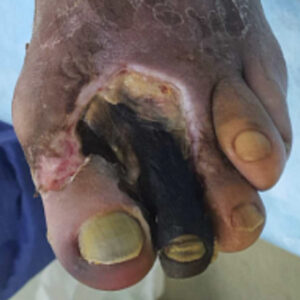
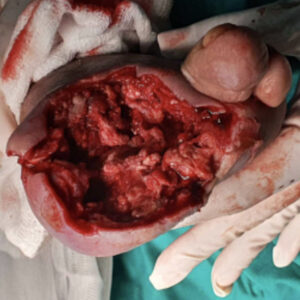
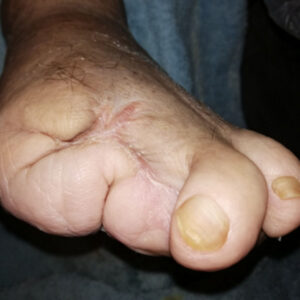
A 70-year-old patient with diabetes presented with extensive ischemic gangrene involving the second toe, extending to the corresponding metatarsal, with additional ischemic involvement of the first and third toes. Severe diabetic peripheral arterial disease required endovascular revascularization (angioplasty) before any definitive foot surgery could be safely performed. The referring hospital had recommended a major amputation of the entire foot.
Following successful restoration of blood flow, the patient underwent limb-salvage surgery consisting of amputation of the first, second, and third toes together with partial resection of the corresponding metatarsals. All non-viable tissue was excised while preserving the maximum amount of functional forefoot compatible with complete eradication of ischemic disease.
The wound healed completely within five months, preserving a stable, plantigrade foot and avoiding the major amputation initially recommended. This case illustrates how timely revascularization combined with carefully planned, limited foot amputation can transform a limb considered unsalvageable into a functional extremity, preserving both ambulation and quality of life.
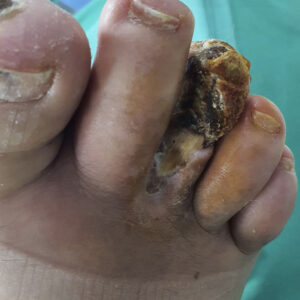
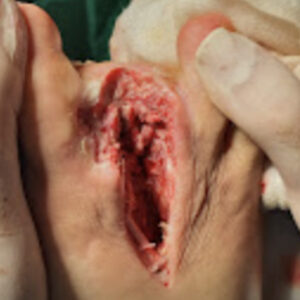
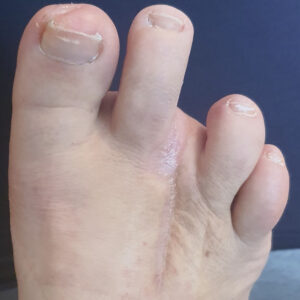
A 67-year-old woman with type 2 diabetes presented with an ischemic ulcer and gangrene of the third toe caused by diabetic peripheral arterial disease. To maximize the chances of limb salvage, endovascular revascularization (angioplasty) was performed before definitive surgical treatment.
Following successful restoration of blood flow, the patient underwent amputation of the third toe together with partial resection of the third metatarsal head to ensure complete removal of all ischemic and non-viable tissue. The wound was intentionally left open and managed by secondary intention healing with meticulous wound care and pressure off-loading.
The wound healed completely by secondary intention within three months, preserving the adjacent rays and maintaining forefoot stability. This case demonstrates that successful revascularization followed by a limited, well-planned ray amputation can eradicate ischemic disease while preserving foot function, avoiding a more extensive amputation, and allowing the patient to return to stable ambulation.
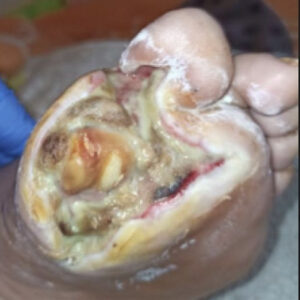
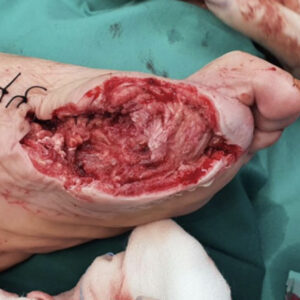
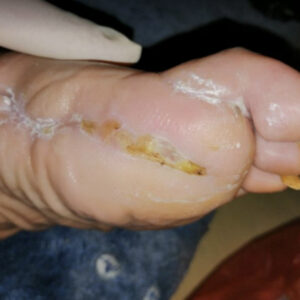
An 89-year-old patient with type 2 diabetes presented with a severe ischemic and infected ulcer involving the great toe and extending to the corresponding first metatarsal. Because of advanced diabetic peripheral arterial disease, endovascular revascularization (angioplasty) was performed before surgery to restore adequate perfusion and maximize the potential for limb salvage.
Following successful revascularization, the patient underwent first ray amputation, including removal of the great toe and the first metatarsal, with complete excision of all ischemic and non-viable tissue. The surgical wound was intentionally left open and managed by secondary intention healing, supported by meticulous wound care and pressure off-loading.
The wound healed completely by secondary intention within 5.5 months, resulting in a durable, stable stump without recurrent infection. This case demonstrates that major tissue loss does not necessarily require a major limb amputation. When blood flow is restored before surgery and non-viable tissue is removed while preserving the remaining foot, even extensive ischemic diabetic foot lesions can heal successfully and maintain functional ambulation.
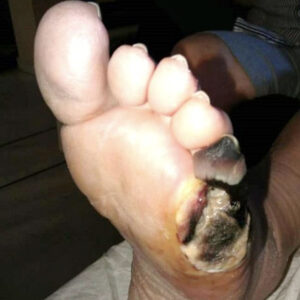
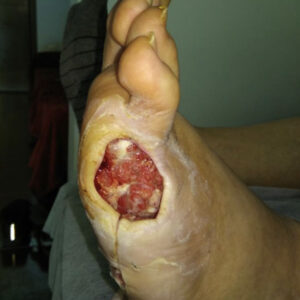
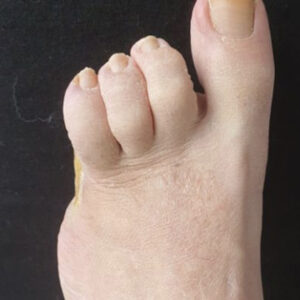
A 57-year-old man with type 2 diabetes presented with a severe ischemic ulcer and dry gangrene of the fifth toe, associated with diabetic peripheral arterial disease. To maximize tissue viability and limb salvage, the patient first underwent endovascular revascularization (angioplasty) before surgical treatment.
Following successful restoration of blood flow, a fifth ray amputation was performed, including removal of the fifth toe and the distal half of the fifth metatarsal. All ischemic and non-viable tissue was excised while preserving as much of the lateral column of the foot as possible. The wound was intentionally left open and managed by secondary intention healing with meticulous wound care and pressure off-loading.
Complete healing was achieved by secondary intention within 3 months, resulting in a stable, infection-free lateral foot with preservation of overall foot function. This case highlights that revascularization followed by a limited, well-planned ray amputation can eradicate ischemic disease while preserving the architecture of the foot, avoiding more proximal amputations and allowing patients to regain functional ambulation.
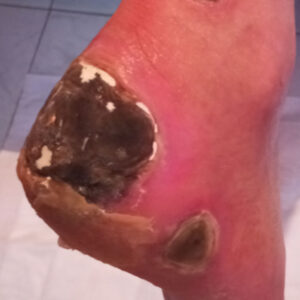
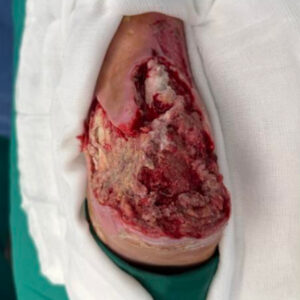
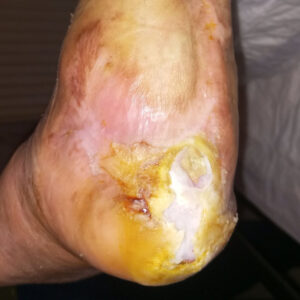
A 67-year-old patient with diabetes was referred from another hospital after undergoing endovascular revascularization (angioplasty) for a severe ischemic heel ulcer with gangrene. Because of the extensive tissue necrosis, the patient had been advised to undergo a major foot amputation.
After confirming adequate limb perfusion, the patient underwent heel-sparing surgery with partial calcanectomy, removing the infected and non-viable portion of the calcaneus together with all necrotic soft tissue, while preserving as much of the heel as possible. The wound was intentionally left open and managed by secondary intention healing, with meticulous wound care and strict pressure off-loading throughout the healing period.
Complete healing was achieved by secondary intention within 6 months, preserving a stable, weight-bearing heel and avoiding a major amputation. This case demonstrates that even extensive ischemic heel gangrene—often considered an indication for below-knee amputation—can be successfully treated when revascularization is followed by carefully planned, tissue-preserving surgery. Preserving the heel preserves the patient’s ability to stand and walk, offering a functional limb instead of a prosthesis.
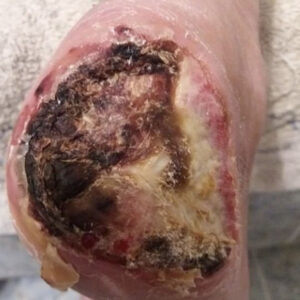
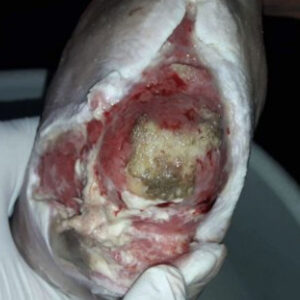
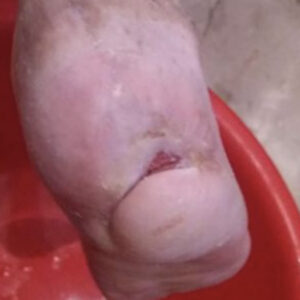
An 80-year-old patient with type 2 diabetes presented with a severe ischemic heel ulcer caused by diabetic peripheral arterial disease. Before referral for surgical treatment, the patient underwent endovascular revascularization (angioplasty) to restore blood flow and improve the potential for limb salvage.
After successful revascularization, a heel-sparing partial calcanectomy was performed, removing the infected and non-viable portion of the calcaneus together with all necrotic soft tissue while preserving the remaining heel. The wound was intentionally left open and managed by secondary intention healing, combined with meticulous wound care and strict pressure off-loading.
Complete healing was achieved by secondary intention within 8 months, resulting in a durable, weight-bearing heel and preservation of independent ambulation. This case demonstrates that even large ischemic heel defects can heal successfully without major amputation when blood flow is restored and only the non-viable calcaneal bone is removed. Preserving the heel preserves the patient’s ability to stand, walk, and maintain functional independence.
Each case is presented to help advanced knowledge and improve patient outcomes.
NEED A CLINICAL EVALUATION?
Every diabetic foot problem requires individual assessment of infection, circulation, tissue viability and functional risk. Clinical cases are educational examples and do not replace an examination.
Diabetic Foot Assessment Before a Wound Develops Diabetic foot care... Read more

What Does “Diabetic Foot” Mean? Many people with diabetes have... Read more

Overview Limb-sparing surgery in the diabetic foot represents a modern... Read more