
Diabetic Foot Osteomyelitis: Can the Foot Be Saved? Symptoms, Diagnosis and Limb-Sparing Surgery
Introduction-Diabetic Foot Osteomyelitis Diabetic foot osteomyelitis is one of the... Read more
DIABETIC FOOT SURGERY · CLINICAL CASES
Explore real minor amputation cases showing how limb-sparing surgical techniques preserve foot length, stability, and function while avoiding major amputation whenever possible.
The level of a minor amputation is selected according to infection extent, tissue viability, circulation and the functional value of preserving the remaining foot.
Minor amputations may be necessary when infection or tissue loss cannot be controlled through debridement alone. Toe and ray procedures aim to remove non-viable structures while preserving the greatest possible functional portion of the foot within a broader diabetic foot treatment plan and limb-salvage strategy.
For the complete collection organized by surgical approach, visit the Diabetic Foot Surgery – Clinical Cases hub.
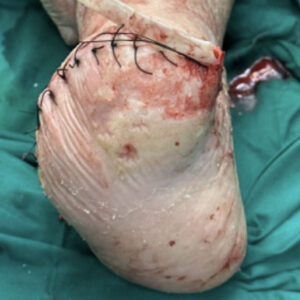
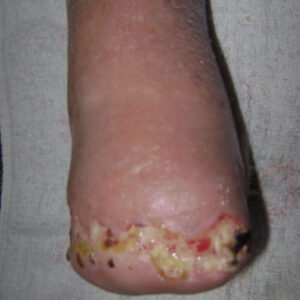
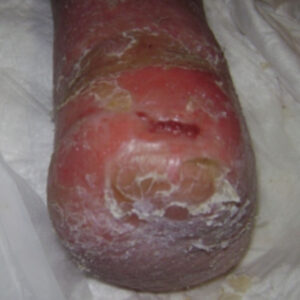
A patient with diabetes presented with extensive ischemic gangrene involving multiple toes and the forefoot, making local toe amputations insufficient for complete removal of non-viable tissue. Limb preservation required a more proximal but function-preserving approach.
A Lisfranc amputation was performed, removing all toes and metatarsals while preserving the tarsal bones and hindfoot. The wound was closed primarily with sutures. Minor superficial wound-healing complications at the incision line resolved with local wound care over the following 6 weeks. After healing, the patient was fitted with a custom prosthetic filler integrated into a therapeutic shoe, restoring forefoot length and improving gait.
The surgical site healed successfully, allowing the patient to regain functional ambulation with specialized footwear while preserving the heel and ankle. This case highlights that a Lisfranc amputation can provide an excellent limb-salvage solution for extensive forefoot ischemic gangrene, preserving a stable, weight-bearing foot and avoiding a higher-level amputation that would result in substantially greater functional disability.
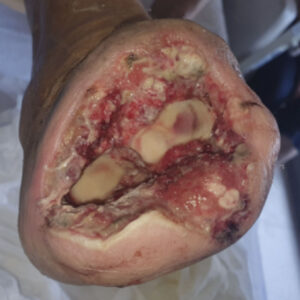
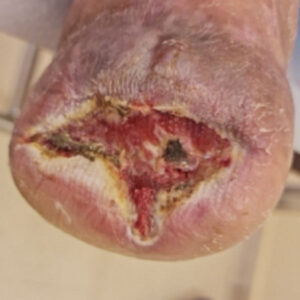
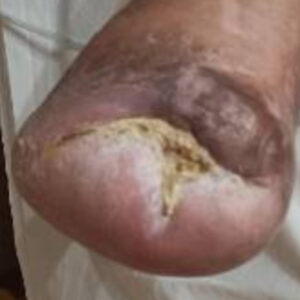
An elderly patient with type 2 diabetes presented with extensive ischemic gangrene of the diabetic foot, extending beyond the forefoot into the midfoot. Revascularization with angioplasty was performed first to restore limb perfusion before definitive surgical treatment.
Following successful revascularization, a Chopart amputation was performed, removing the forefoot together with part of the tarsal bones while preserving the hindfoot. The wound was intentionally left open and managed with secondary intention healing, allowing progressive granulation and epithelialization without primary closure.
Complete wound healing was achieved after 5 months, preserving a functional weight-bearing hindfoot and avoiding a major below-knee amputation. This case demonstrates that even extensive ischemic gangrene extending into the midfoot does not necessarily require loss of the entire limb. When combined with successful revascularization, a Chopart amputation can provide durable limb salvage while maintaining meaningful function and independence.
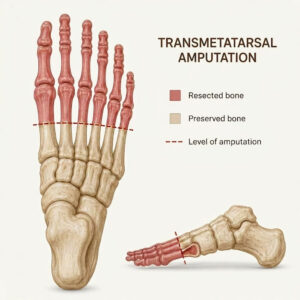
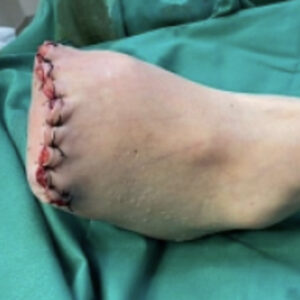
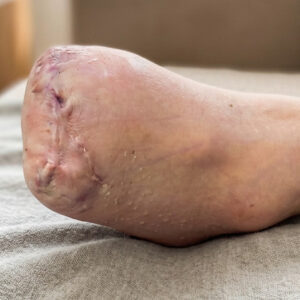
An 81-year-old patient with diabetes presented with ischemic gangrene of the first and second toes, threatening progression of infection and tissue loss. A limb-salvage strategy was selected to preserve as much foot length and function as possible.
A transmetatarsal amputation was performed at the midshaft of the metatarsals, removing the gangrenous forefoot while preserving the midfoot and hindfoot. The wound was closed primarily with sutures and healed uneventfully. Following recovery, the patient was fitted with a custom forefoot prosthetic filler worn inside a regular therapeutic shoe to restore foot shape and improve gait.
Primary wound healing was achieved with an excellent functional result, allowing the patient to return to walking using customized footwear. This case illustrates that transmetatarsal amputation can successfully preserve a stable, weight-bearing foot, offering an effective alternative to higher-level amputations while maintaining mobility, independence, and quality of life.
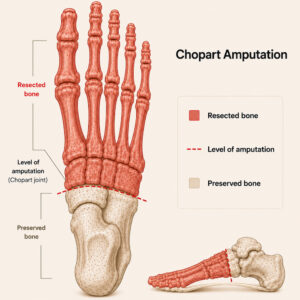
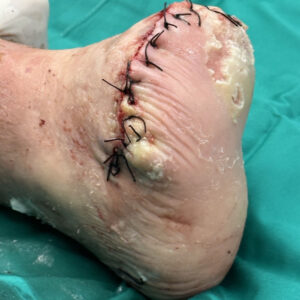
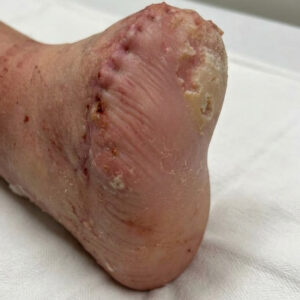
A 69-year-old man with type 2 diabetes presented with advanced diabetic foot ischemia despite severe peripheral arterial disease. Following successful endovascular revascularization (angioplasty), the foot was considered suitable for limb-salvage surgery rather than major amputation.
A Chopart amputation was performed, removing the forefoot, metatarsals, and part of the tarsal bones while preserving the hindfoot. This level of amputation provided complete excision of non-viable tissue while maintaining a stable, weight-bearing heel for future ambulation.
The wound healed satisfactorily with preservation of a functional residual foot. This case demonstrates that after successful revascularization, a Chopart amputation can be an effective limb-salvage procedure, preserving weight-bearing capacity and functional mobility while avoiding a higher-level below-knee amputation.
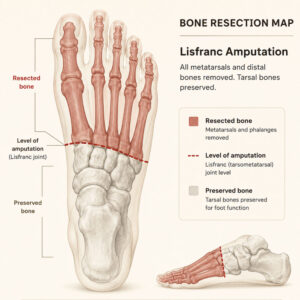
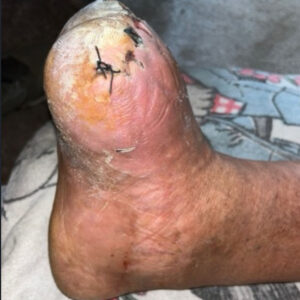
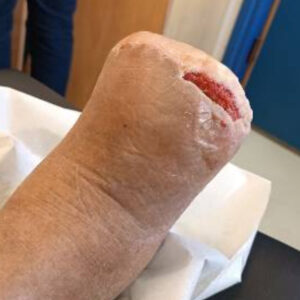
A 63-year-old man with type 2 diabetes presented with critical limb ischemia affecting the forefoot. Successful endovascular revascularization (angioplasty) restored adequate perfusion, allowing limb-salvage surgery instead of a major lower-limb amputation.
A Lisfranc amputation was performed, removing the toes and metatarsals while preserving the tarsal bones. Minor postoperative wound-healing delays occurred but resolved with local wound care over the following 2 months.
The surgical site healed successfully, preserving a functional, weight-bearing foot. The patient was fitted with a custom forefoot prosthetic filler and specialized therapeutic footwear, enabling him to return to work. This case illustrates how timely revascularization combined with a Lisfranc amputation can preserve limb function and restore mobility while avoiding a higher-level amputation.
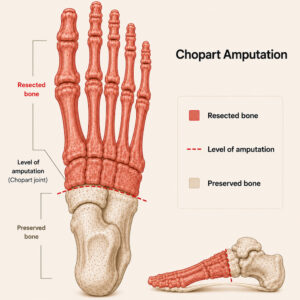
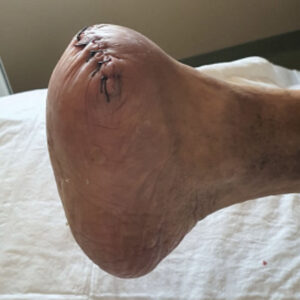
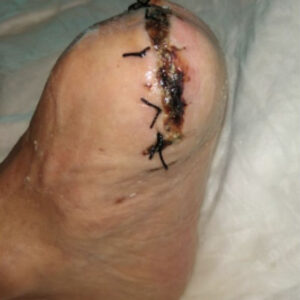
A patient with type 2 diabetes presented with critical limb ischemia, forefoot gangrene, and severe infection. Endovascular revascularization (angioplasty) was successfully performed first, restoring blood flow and creating the conditions for limb-salvage surgery instead of a major amputation.
A Chopart amputation was performed, removing the toes, metatarsals, and the midfoot (tarsal) bones distal to the Chopart joint, while preserving the hindfoot. The wound was closed primarily and healed without major complications.
The surgical wound healed successfully, preserving a stable, functional weight-bearing limb. The patient was subsequently fitted with a custom prosthetic filler and specialized therapeutic footwear, allowing safe ambulation and maintaining independence. This case demonstrates how successful revascularization combined with a Chopart amputation can achieve durable limb salvage and avoid a major lower-limb amputation.
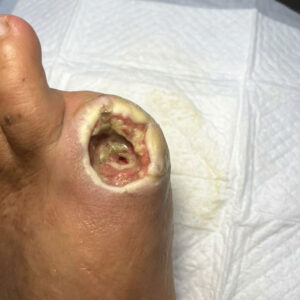
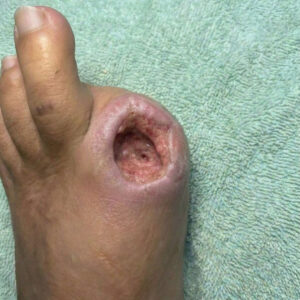
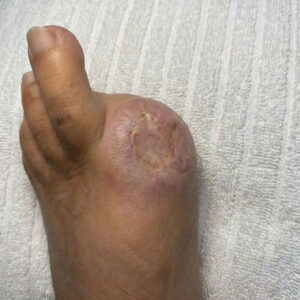
A patient with diabetes presented with ischemic gangrene of the great toe. Following vascular assessment, the necrotic hallux was deemed non-salvageable, while the first metatarsal head remained viable and free of infection. The primary goal was complete removal of the ischemic tissue while preserving the structural integrity of the forefoot.
An open hallux amputation was performed, preserving the first metatarsal head. The wound was intentionally left open because of tissue ischemia and allowed to heal by secondary intention, with regular wound care, off-loading, and close follow-up until complete epithelialization.
The wound gradually filled with healthy granulation tissue and healed completely by secondary intention without further bone resection. Preservation of the first metatarsal head maintained the first ray and helped preserve forefoot biomechanics, reducing gait disturbance while achieving definitive control of the ischemic lesion.
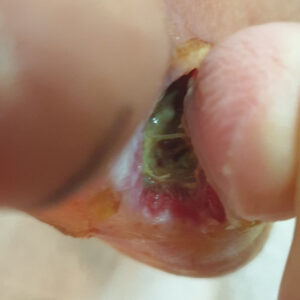
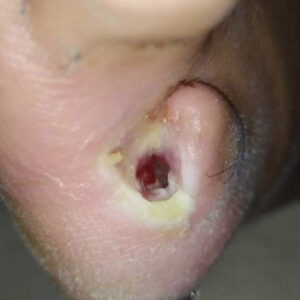
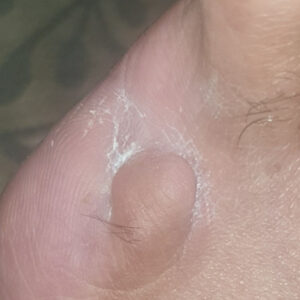
A 45-year-old man with poorly controlled type 1 diabetes presented with ischemic gangrene of the fifth toe. Tissue necrosis was confined to the toe, while imaging and clinical evaluation confirmed that the fifth metatarsal and its head remained viable, with no evidence of osteomyelitis. Preserving these structures was considered essential to maintain the mechanical stability of the foot.
The necrotic fifth toe was removed through an open minor amputation. Because of the ischemic tissue and the local wound conditions, the surgical site was intentionally left open and allowed to heal by secondary intention rather than being closed with sutures. The fifth metatarsal head was completely preserved, avoiding unnecessary bone resection.
The wound healed completely by secondary intention without further surgery. By preserving the fifth metatarsal head, the lateral column of the foot and normal load distribution during walking were maintained, allowing the patient to retain a stable, functional gait while successfully treating the ischemic infection with the smallest possible amputation.
Each case is presented to help advanced knowledge and improve patient outcomes.
NEED A CLINICAL EVALUATION?
Every diabetic foot problem requires individual assessment of infection, circulation, tissue viability and functional risk. Clinical cases are educational examples and do not replace an examination.
Introduction-Diabetic Foot Osteomyelitis Diabetic foot osteomyelitis is one of the... Read more

Before we had metabolic surgery or GLP-1 medications, surgeons were... Read more

Most people are told that type 2 diabetes is a... Read more